By Shahin Modarres, Will Kingston-Cox, Shir Mor, and Martina Ferraresi - Iran Team
Introduction
When Iran closed the Strait of Hormuz in early 2026, it did not merely disrupt oil tankers - it detonated a geopolitical order that had been quietly reconstructing itself since the Abraham Accords. The closure of the world's most consequential maritime chokepoint has simultaneously exposed the fragility of the global energy and food system, handed Moscow a fiscal lifeline, and accelerated an unprecedented strategic realignment across the Middle East. The Iran War is not simply a bilateral conflict: it is a stress test of the entire post-Cold War regional architecture, and its aftershocks are reshaping alliances, economies, and threat perceptions from Riyadh to Rome.
This article first looks at why Tehran chose to close the Strait, then draws on three analytical perspectives - the economic shock radiating from the Strait itself, the geopolitical windfall accruing to Russia, and the accelerating strategic convergence between Israel and Persian Gulf states - to offer a composite assessment of the war's structural consequences.
Tehran's Calculus: Why Close the Strait?
For decades, closing Hormuz was the threat Tehran kept in reserve. Iranian officials raised it during the sanctions crisis of 2011–12 and again in 2018, and in June 2025, after the American strikes on Fordow, the Majlis voted in favour of closure. The final decision was left to the Supreme National Security Council, and it was never taken. The reasons for holding back were obvious. Iran ships its own oil through the same waters, and China, its most important customer, depends on the Strait more than almost anyone. So why did the leadership decide in March 2026 that the price was now worth paying?
Part of the answer lies in how this war began. The US-Israeli strikes of 28 February went after nuclear sites, military facilities and the leadership itself, and killed Ali Khamenei. Seen from Tehran, this was no longer a limited exchange like the twelve-day war of June 2025. It was a campaign against the survival of the system, and in that situation the old arguments for restraint carry much less weight. Mona Yacoubian has observed that the Islamic Republic appears to treat this as its 'final war', and its behaviour fits: within six days it had struck targets in fourteen countries (Yacoubian, 2026). Iran cannot compete with American or Israeli air power. What it can do is choose where the costs of the war land, and Hormuz is the one place where it can make them land on almost everyone.
The closure is also a bargaining chip. Tehran has presented it as a response to American and Israeli attacks, one that will last as long as those attacks do. Daniel Byman argues that the Iranian leadership believes it can outlast Washington: for Tehran the conflict is existential, while most Americans would rather see it over and forgotten. A capability that had been discussed for years but never tested has become Iran's best lever for extracting concessions (Byman, 2026). The aim is to make the war expensive enough for importers, insurers and, in the end, American voters that the pressure for a ceasefire comes from outside, and Iran never has to be the one asking for it (Frantzman, 2026).
How the closure has been enforced says a good deal about its purpose. Iran has not tried to stop all traffic. In late March, Foreign Minister Abbas Araghchi put it bluntly: 'There is no reason to allow the enemy to pass through the strait.' Vessels linked to the United States, Israel and the Persian Gulf states involved in the war were turned away, while ships serving China, Russia, India, Iraq and Pakistan were allowed through (IANS, 2026). Tehran wants to punish Washington and its regional partners while keeping Beijing and New Delhi on side and some of its own revenue flowing. Whether that balance can hold is doubtful. As the sections below show, the same pressure is pushing Persian Gulf capitals closer to Israel, and every pipeline built around the Strait weakens the lever Tehran is now pulling. But the decision was a calculated one, taken by a leadership that believed it had very little left to lose.
The Strait of Hormuz: Anatomy of a Crisis
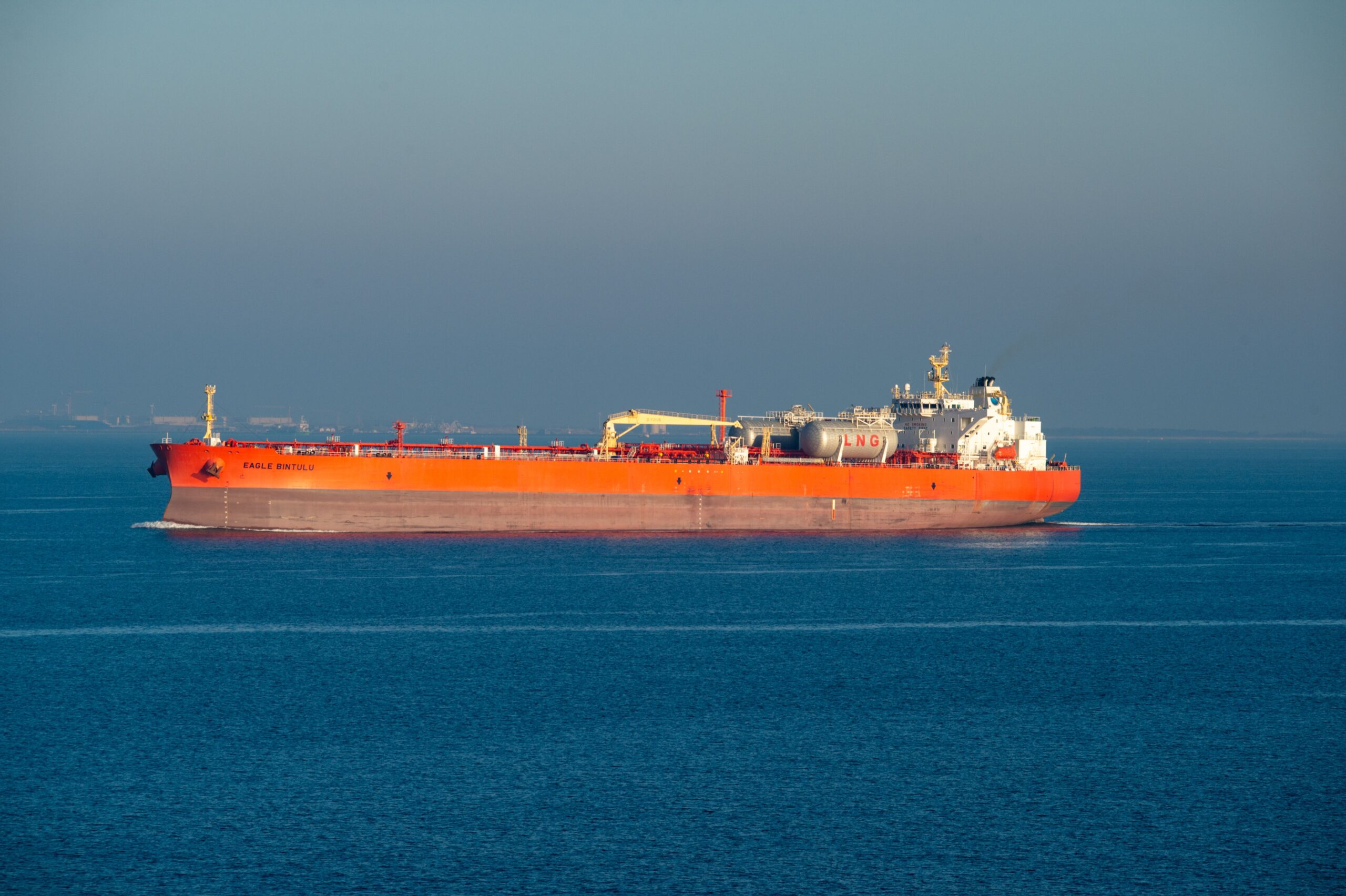
The Strait of Hormuz has long served as the circulatory system of the international energy order. Through this narrow corridor flows approximately 20% of the world's oil and 20% of globally traded liquefied natural gas. Saudi Arabia, Iran, Iraq, Kuwait, and the UAE together produce nearly a third of the world's oil output and hold almost half of global reserves, making Hormuz the indispensable shipping lane of the global commodity system (Exiger, 2026; Reuters, 2026).
Yet the most critical dimension of the Hormuz crisis is not oil or gas. One-third of the global seaborne fertiliser trade - essential for the nitrogen inputs that sustain global agriculture - also passes through the Strait. Persian Gulf states import up to 90% of their food through this corridor. The conflict has compounded this with a secondary supply shock: Iran has blocked food exports and is itself a primary supplier of fruit and vegetables to the UAE (NDTV, 2026; DW, 2026). Beyond food and energy, Qatar and Bahrain together supply nearly 10% of global aluminium. Iranian drones and missiles have directly targeted critical supply chain infrastructure - most notably the Ras Laffan facility in Qatar, which produces one-third of the global helium supply (Exiger, 2026). The macroeconomic toll is severe: the UAE faces a projected GDP contraction of 8–10% in 2026, while Saudi Arabia's GDP is expected to decline by 5% (Bloomberg, 2026).
Russia's Windfall: War by Proxy Benefit
The closure of the Strait of Hormuz has transformed the Iran War into a strategic windfall for Moscow - and Russia does not need to be directly involved to reap the benefits. Indeed, direct military involvement would stretch its already beleaguered capacity while it remains entrenched in its war of attrition against Ukraine. Nevertheless, the war is altering the structure of global energy markets decisively in the Kremlin's favour.
Since 2022, Russian oil has been subject to embargoes, sanctions, and price cap mechanisms designed to keep Russian barrels on the market - avoiding global shortages given Russia's commodity superpower status - while limiting Kremlin revenues. The Hormuz closure has fundamentally altered that calculus. The Strait carried around a quarter of all global seaborne oil trade in 2025, with China, India, Japan, and South Korea accounting for 74% of Hormuz crude and condensate flows in the first half of the year. When Persian Gulf supply is disrupted, buyers face stronger incentives to tolerate sanctions risk, higher freight costs, shadow fleet logistics, and compliance ambiguity in order to secure Russian oil.
Before the crisis, pressure on Russia was mounting. Chatham House noted that in February 2026 Russian oil and petroleum-product revenues had fallen to $9.5 billion - their lowest level since the full-scale invasion - while export volumes dropped to 6.6 million barrels per day. The Hormuz shock has reversed that squeeze entirely. CREA estimates that in April 2026, Russian fossil-fuel revenues rose to €733 million per day, the highest in two and a half years, despite a 7% fall in export volumes; crude revenues were 68% above February levels and 44% above April 2025, while sanctioned 'shadow' tankers carried a record 54% of exports. Price caps function most effectively under conditions of oversupply. In scarcity - a direct consequence of the Hormuz closure - discounts narrow, waivers become tempting, and elevated prices increase the revenues available to sustain Russia’s war effort.
The Abraham Accords Reborn: Strategic Convergence in the Persian Gulf
While the war extracts an enormous economic cost from Persian Gulf states, it has simultaneously accelerated unprecedented strategic cooperation between Israel and its Arab neighbours. Shared concerns over the Islamic Republic's regional ambitions, missile capabilities, and Iran-aligned armed groups and proxy networks have created new opportunities for political, military, and technological partnerships that would have been unimaginable a decade ago.
The clearest illustration is the deepening partnership between Israel and the United Arab Emirates. During the war, reports revealed that Israel deployed Iron Dome systems and military personnel to the UAE to assist in defending Emirati territory from Iranian missile and drone attacks - a historic milestone in regional security cooperation that demonstrated the operational depth of trust now underpinning the Abraham Accords (Rosenberg, 2026). Bahrain and other Abraham Accords states have similarly strengthened cooperation with Israel in maritime security, intelligence sharing, and regional defense coordination. Bahrain's strategic location in the Persian Gulf and its close ties with the United States make it a pivotal partner in efforts to counter Iranian influence and protect regional stability.
In parallel, cooperation between Israel and Saudi Arabia appears to be deepening despite the absence of formal diplomatic normalisation. While Riyadh publicly maintains a cautious posture - conditioning normalisation on meaningful progress toward a Palestinian state - regional assessments point to growing quiet coordination in intelligence and security matters (Washington Institute, 2026; Khuzaie, 2026). Saudi leaders now perceive greater political risks in openly aligning with Israel, particularly given strong domestic support for the Palestinian cause. Yet the shared threat posed by Tehran continues to drive quiet convergence behind the scenes.
More broadly, the conflict has catalysed discussions across Persian Gulf states about integrated air-defence systems, joint intelligence-sharing mechanisms, and coordinated responses to missile and drone threats. Israel's advanced defence technologies, combined with Persian Gulf financial and logistical capabilities, are generating durable incentives for long-term security architecture. Crucially, the shared economic devastation wrought by the Hormuz closure appears to be reshaping regional threat perception: for many Persian Gulf states, Iran appears to have increasingly displaced Israel as the most immediate strategic security concern, opening the possibility of a meaningful expansion of the Abraham Accords framework.
Conclusion
The Iran War has exposed the degree to which geography, energy, and geopolitics remain inextricably intertwined. The closure of the Strait of Hormuz has simultaneously disrupted the global food and energy system, handed Russia a fiscal reprieve that Western sanctions were designed to foreclose, and compressed decades of cautious Arab-Israeli diplomatic evolution into months of operational military partnership. These are not isolated shocks - they are structurally connected consequences of a single chokepoint losing its freedom of navigation.
The emerging picture is a difficult paradox: the states bearing the greatest costs from the war, the UAE, Saudi Arabia, Bahrain, and their neighbours, are also the ones moving closer to Israel most rapidly. In that sense, the conflict appears to be accelerating a process that diplomacy had already set in motion. Some analysts argue that this wartime cooperation could lead to deeper regional integration, while others caution that many of the underlying political disputes remain unresolved. Whether these new partnerships prove durable will depend on how the conflict ends, the future of Palestinian statehood discussions, and whether the economic shock of 2026 leads to lasting institutional cooperation or simply a partnership of convenience. What is already clear, however, is that the regional order that existed before the closure of the Strait of Hormuz is unlikely to return unchanged.
No comments.