By Sandra Watson Parcels - China & Asia Team
Upgrading Espacio Lejano Deep Space Station: What China's Request in Argentina Reveals About Its Global Space Network
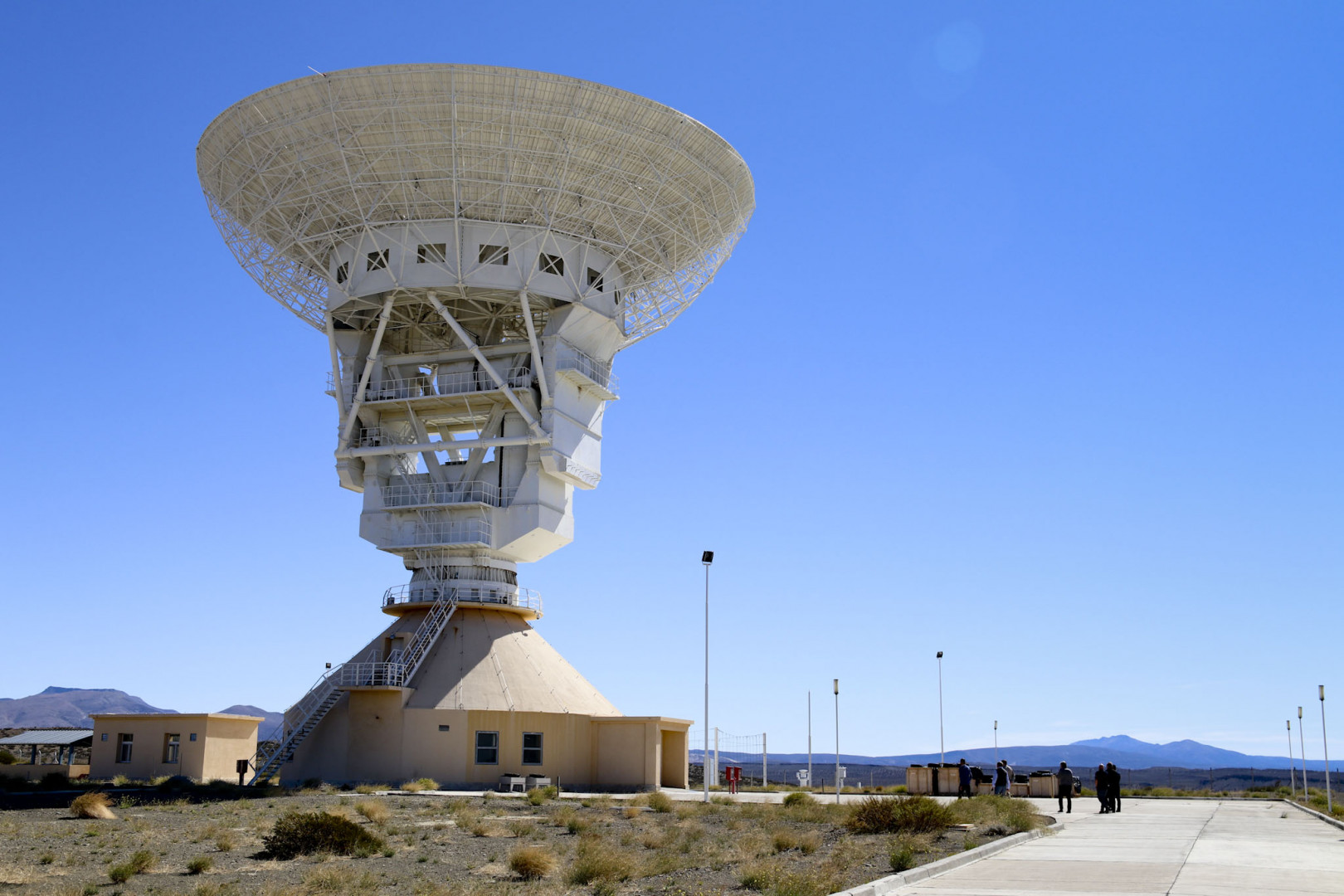
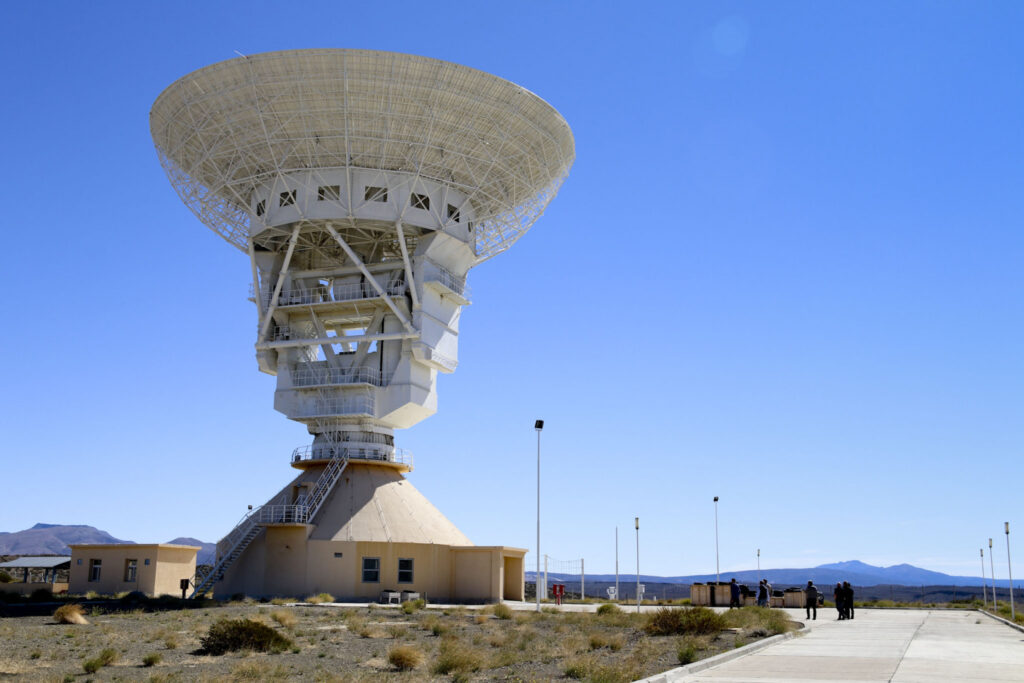
China has requested to upgrade one of its most important space facilities abroad, installing new equipment at its Espacio Lejano deep space station in Argentina that could sharpen the station's sensitivity, data processing and monitoring. The request is technical in form, but in substance it tests how Beijing maintains a growing network of ground stations on foreign soil, and on what terms its host states remain willing to accept it.
The request, first reported by Argentine media in August 2026, concerns the station near Bajada del Agrio, in Neuquén province. It is one of only three Chinese deep space ground stations, and the only one outside China's borders. The Argentine government has referred the request to the Ministry of Defence for a military opinion.
That referral produced a detailed official assessment of the request. The Argentine Air Force examined the proposed equipment and found no evidence that China intends to add a new antenna. It did find a significant upgrade to the station's capabilities, one with potential use in tracking objects in orbit, the same capability militaries use to monitor other states' satellites. On that basis, the Air Force advised against automatic approval and set out conditions: an equipment inventory, inspections before and after installation, and notice of any future changes. The decision is now with Buenos Aires, but the more revealing choice is whether Beijing will accept these conditions.
Why the station matters to Beijing
For China, Espacio Lejano enables access geography would otherwise not allow. Its other two deep space stations, at Kashgar and Jiamusi, sit inside China. A dish on the opposite side of the globe allows the Beijing Aerospace Control Center, which directs China's lunar and deep space missions, to stay in contact with spacecraft when they are out of view from Chinese territory. Analysts at the Center for Strategic and International Studies (CSIS) have noted this permits more frequent communication with Chinese satellites. The station played a critical role in China's 2019 landing on the far side of the Moon. It remains part of the infrastructure behind China's lunar programme, including the Chang'e-7 mission to the Moon's south pole, postponed in August 2026 and now expected in 2027, and the planned International Lunar Research Station.
The operator matters as much as the location. The station is run by China Satellite Launch and Tracking Control General, part of the People's Liberation Army (PLA) space tracking system. In April 2024, the PLA dissolved its Strategic Support Force and placed space operations under a new Aerospace Force. According to the Jamestown Foundation, the Xi'an Satellite Control Center, known as Base 26, now manages a worldwide network of ground stations and control centres under that force. The station's chain of command changed, but its public description did not: Beijing still presents it as a civilian facility for space technology cooperation with Argentina, open and transparent in its operations.
This is the core of the debate, often framed as a choice between two readings. Argentine visitors to the station have reported a small civilian staff, consistent with Beijing's account. Critics point to its place within a tracking network run by the military. These are not rival explanations. Espacio Lejano is a dual-use facility, serving scientific and strategic purposes at once, and that is what makes any upgrade contentious.
China's growing ground station network, and its limits
Espacio Lejano is one node in a fast-expanding network. The United States (US) Defense Intelligence Agency's 2026 space assessment describes overseas sites as an important source of supplementary satellite-tracking data. A CSIS study published in January 2026 documented Chinese-built or expanded ground stations and space facilities in Pakistan, Egypt, Ethiopia, Venezuela and Namibia, many within the last five years. A month later, a US House select committee report identified at least eleven China-linked space facilities across Argentina, Venezuela, Bolivia, Chile and Brazil. At Swakopmund, in Namibia, satellite imagery shows a new antenna at a station China first established in 2001. That station is also managed by Base 26.
China has also learned that access abroad can be withdrawn. In 2020, the Swedish Space Corporation announced it would not renew contracts supporting Chinese satellites at its ground stations, including in Sweden, Chile and Australia, citing changes in the geopolitical situation since the contracts were signed in the early 2000s. It did not specify what those changes were or when the contracts would expire, though it noted such contracts typically run for about ten years. A year earlier, Sweden's defence research agency had warned that the officially civilian cooperation could ultimately be controlled by China's military.
In January 2026, Chile went further, cancelling a planned Chinese-backed observatory at Cerro Ventarrones in the Atacama Desert. The project, agreed in 2023 between Chile's Universidad Católica del Norte and the National Astronomical Observatories of China, was intended to study objects near Earth. Chile's foreign ministry cited legal grounds, ruling that international astronomy agreements must be made between states or through the University of Chile. The decision also followed US warnings that the facility could track satellites in orbit. Beijing countered that the project was scientifically comparable to US-funded telescopes in Chile, and attributed its cancellation to geopolitical pressure.
After losing access in Sweden and Chile, China appears to be investing in the stations it already holds. Swakopmund has received a new antenna, and Espacio Lejano is now the subject of an upgrade request. Building a new station abroad is slow, visible and politically costly. Upgrading an existing one, under agreements already in force, is quieter and preserves access that has proven hard to secure. From Beijing, the Espacio Lejano request looks like routine modernisation.
For Argentina, the issue is how little control the original agreements secured. The agreements behind Espacio Lejano run for 50 years and commit Argentina not to interfere with the station's operations. Argentine officials can visit, but only by prior arrangement, accompanied by Chinese staff and limited to what the operator chooses to show. The agreements give Argentina no right to inspect the station's equipment or operations on its own terms, which is why its 2024 visit was described as a scientific visit rather than an inspection. The civilian-use clause was added only in 2016, after construction had begun. Operational control belongs to China Satellite Launch and Tracking Control General, now under the PLA Aerospace Force, which limits how far Argentina can exercise sovereignty over a facility on its own territory. Because the station is dual-use, any gain in capability serves both its scientific and strategic purposes. An upgrade request brings these gaps into view.
What Beijing's answer will signal
Argentina's Air Force has recommended three conditions: an equipment inventory, inspections before and after installation, and notice of any future changes. China's response to them will be read well beyond Buenos Aires. Beijing has kept the relationship steady across successive Argentine governments, including one that campaigned against China. In August 2026, Argentina renewed its currency swap with the People's Bank of China, worth about US$19 billion, for a further five years, despite US pressure to end it. On 6 August, in a separate dispute over a Neuquén electricity cooperative's data-centre talks with Huawei, China's embassy accused the US of obstructing cooperation between the two states. Beijing responds from a position of strength.
Beijing has four main options based on its record. First, it could accept the Air Force's conditions, as it accepted the 2016 Additional Protocol limiting Espacio Lejano to civilian use, while the station's operations continued unchanged. The cost is precedent and access: other host states could demand the same, and inspections could reveal what the station may be doing. Second, it could negotiate, offering to formalise Argentina's existing visits on a regular schedule in place of the inspections the Air Force has recommended, keeping access on China's terms. Even so, regular visits would give Argentine experts repeated sight of the station's equipment and any changes to it, and Argentina and the US may still see the offer as evasion. Alternatively, it could argue that the conditions are discriminatory unless Argentina imposes the same requirements on the European Space Agency's deep space station at Malargüe, in Mendoza province. Argentina visited both stations on consecutive days in April 2024, and Beijing made a similar argument over Ventarrones. The argument works better as pressure than an offer: the European Space Agency would likely accept the same conditions, leaving China with no grounds to refuse inspection.
Third, it could reject the conditions and frame them as US interference, as its embassy did in April 2024, when it called the US ambassador's criticism of the station 'inappropriate'. The cost is that this reinforces US concerns and risks Argentina refusing the upgrade. Fourth, it could withdraw or delay the request. China is working to reduce its reliance on overseas ground stations, and Chinese researchers have proposed linking its lunar relay satellites with its Tianlian relay network for that purpose. But the same researchers note that overseas stations such as Espacio Lejano greatly improve communication, so withdrawing would still mean giving up a capability China values. These options are not mutually exclusive. In the sale of CK Hutchison's Panama Canal port terminals, Beijing sought a stake for the state-owned shipping company COSCO while its foreign ministry publicly accused the US of seeking to control the canal. Its approach there was to negotiate quietly while contesting publicly.
None of these options is cost-free. Whichever Beijing chooses will show what it values most: operational freedom at Espacio Lejano, its standing with Argentina, or the precedent it sets for host states across its network. Espacio Lejano's uniqueness weighs on that choice. As China's only deep space station abroad, it is harder to replace than any other site in the network, which makes withdrawal costly and gives Argentina more leverage than most host states.

Lessons for host states
Other governments hosting Chinese ground stations, from southern Africa to South America, face versions of the same question. So does the European Union (EU). Its March 2026 Ports Strategy calls on member states to screen foreign control of ports treated as strategic dual-use infrastructure, and Regulation 2026/1386, adopted in June, extended EU investment screening to strategic transport infrastructure. Both are designed for the moment of investment.
Israel's 2015 concession for Haifa's Bayport, operated by the state-owned Shanghai International Port Group, goes further: the port stays in Israeli ownership, the operator must follow Israeli security instructions in emergencies, and the state can revoke its licence. Critics argue even these safeguards are incomplete, but they were written in at signature and apply for the life of the concession. Espacio Lejano's agreements had neither form of protection. Argentina's Congress approved the treaty only after construction had begun, and the agreements gave Argentina no right of inspection. As a result, the hardest decisions come years after the contract was signed, when the operator of an asset already in place requests an upgrade. By then, a host state's say depends largely on the terms it secured at the start. Argentina's 2016 Additional Protocol shows that terms can be added later, but it limited how the station may be used, not how Argentina can verify that use.
Conclusion
The request to upgrade the Espacio Lejano deep space station provides a window into how China sustains and entrenches a global space network beyond its borders. This request, the new antenna at Swakopmund and the access China lost in Sweden and Chile together suggest that Beijing's priority is to keep, and improve, the access it already has. For host states, the risk is gradual: sovereignty erodes in practice, one upgrade at a time. Each change made under terms they cannot verify widens an already asymmetric relationship, in which China holds the operational control and the information, and the host holds the territory. How China responds to Argentina's conditions will show whether Beijing is prepared to trade some operational freedom for the consent of its hosts.
No comments.