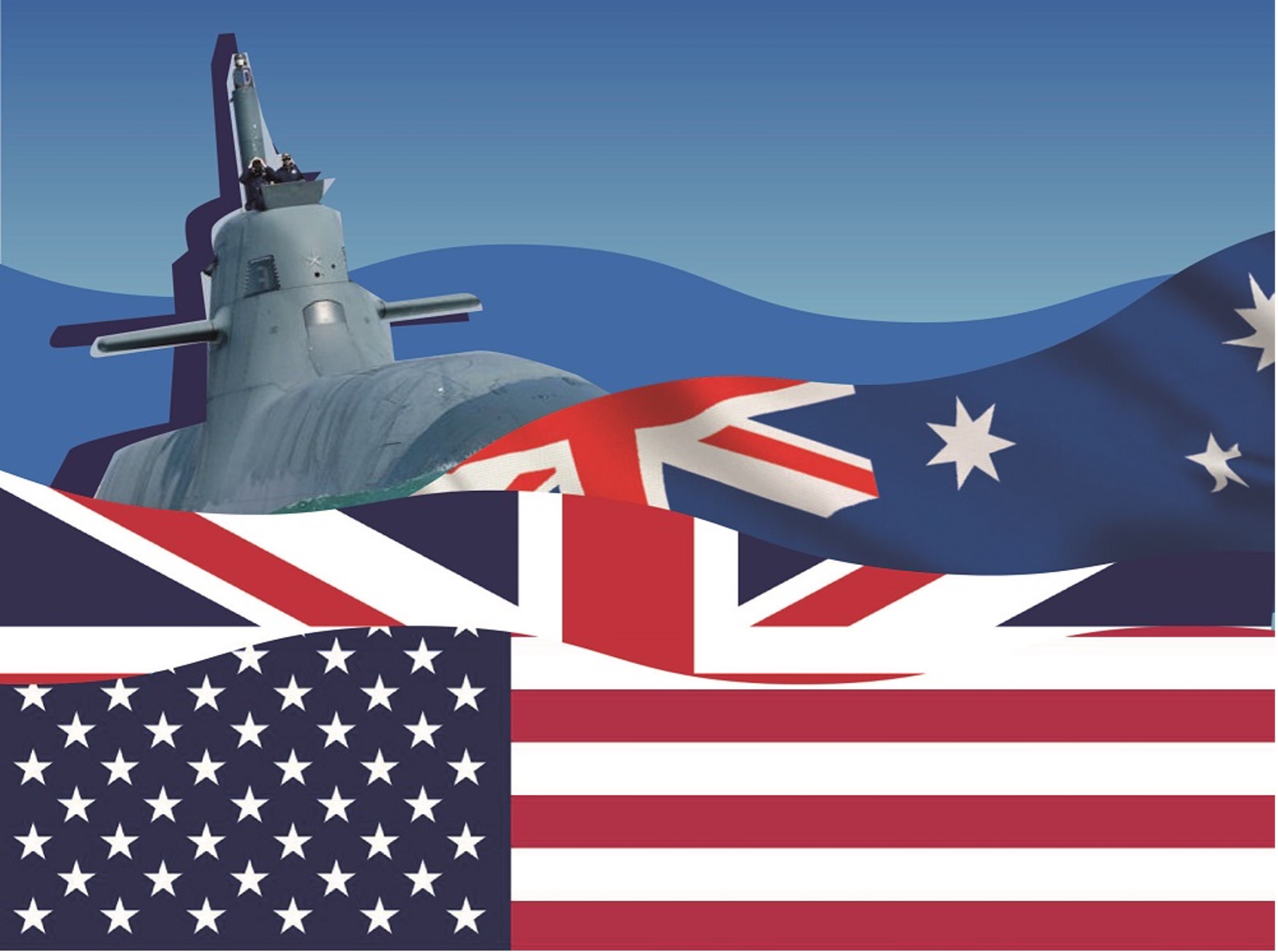
On 15th September 2021, a trilateral security agreement, AUKUS, was announced by the United States, United Kingdom, and Australia, as part of a broader US foreign policy effort in the Indo-Pacific. Although not explicitly specified in the text, the agreement seems to be directed as a wider strategy to counter China’s growing influence in the region. Despite AUKUS being a standard security agreement and apparently harmless for the EU, it has caused the biggest diplomatic crisis in transatlantic relations since the Iraq War in 2003, as it came as a surprise package to the European Union and France in particular. As written in the text, AUKUS will contribute to build eight nuclear-powered submarines in Australia and “will focus specifically on deepening integration in defense-related science, technology, industrial bases and supply chains, with particular emphasis on cyber capabilities, artificial intelligence, quantum technologies and new undersea capabilities”.
This partnership however, unleashed the anger of Emmanuel Macron, who called AUKUS a betrayal vis-à-vis Paris and the EU as a whole, describing it as a “stab in the back” from Australia and a “brutal and unilateral decision” from Washington by the French foreign minister, Jean-Yves Le Drian. As a sign of protest against the signing of this agreement, on the 17th September President Macron immediately recalled his ambassadors to the U.S and Australia.
The reasons for France's discontent are numerous. The first one is that Australia unexpectedly scrapped France from a A$90bn (£48bn) submarine contract, signed with the contractor Naval Group in 2016, to purchase 12 conventional attack submarines and to replace its old six conventionally powered Collins-class submarines. Moreover, Paris was not informed by Canberra beforehand and found out about the agreement together with the rest of the world, showing a serious breach of trust between the two countries. Last, but not least, this agreement also had an unfortunate timing: AUKUS was announced to the public the same day the EU published its own strategy for the Indo-Pacific, putting the EU in a disadvantageous position compared to the other Western powers and reviving the discussions on the EU’s strategic autonomy.
Even though the submarine contract between France and Australia was a bilateral issue only with no other EU member state being affected, the AUKUS deal resulted in a serious breach of trust with deep consequences not only for France but for the EU in general: this agreement raises, first of all, serious doubts within the EU about Biden’s administration pledge to multilateralism, demonstrating de facto that this administration is still acting unilaterally, continuing to carry on what is becoming an American trait. Secondly, and most importantly, this strategic agreement relegates the EU to a secondary player position with no real say in decisions concerning the Indo-Pacific, highly contradicting what was written in Biden’s administration Interim National Security Strategic Guidance, in which it is clearly stated that in order to deal with an increasingly assertive China, the US pledged to restore and further strengthen its alliances both in Europe and in the Indo-Pacific region.
With that being said, both the events of Afghanistan and AUKUS have forced EU officials to seriously think about a common European defense strategy, which will come to a head with the definition of a Strategic Compass intended for adoption in March 2022. A newly found strength behind the implementation is likely to come as France will hold the EU’s rotating Presidency for the first half of 2022. France has not only been the most affected by the agreement but it has also been a strong advocate of a European defense strategy especially in the Indo-Pacific, where almost 2 million French citizens live, thus making France the biggest European player in the region.
Bernard Finel talks about his most recent research work on US-China competition from the perspective of the “united front” strategy currently being pushed by US leadership. In this session, Professor Finel discusses divergent approaches adopted by US friends and allies in dealing with the rise of Chinese power. Bernard Finel is a professor of National Security Strategy at the National War College and Georgetown University in Washington D.C.
Interviewers: Aida Cavalera and István Hagyó.
This is ITSS Verona Member Series Video Podcast by the International Systems USA Team.
The International Team for the Study of Security Verona is a not-for-profit, apolitical, international cultural association dedicated to the study of international security, ranging from terrorism to climate change, from artificial intelligence to pandemics, from great power competition to energy security.
Prof. David Burigana, Professor in International History of Science and Technology and History of International Organizations at the University of Padua, shares his insights on the European Union (EU)'s Defence Strategy. He talks about the main issues regarding a common European army, the historical precedents of European cooperation at the strategic and militarly level, and the development of a coherent procurement and defence policy at the European level.
Interviewer: Danilo delle Fave.
This is ITSS Verona Member Series Video Podcast by the Military Strategy and Intelligence Team.
ITSS Verona - The International Team for the Study of Security Verona is a not-for-profit, apolitical, international cultural association dedicated to the study of international security, ranging from terrorism to climate change, from artificial intelligence to pandemics, from great power competition to energy security.
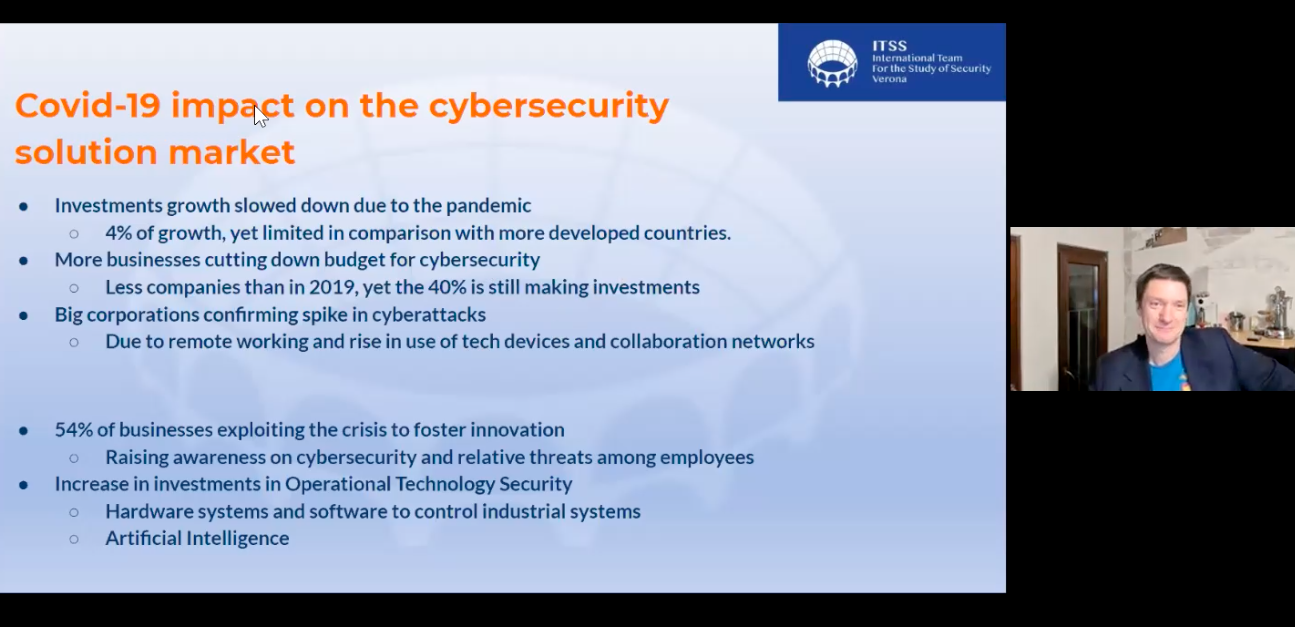
For its third event of the 2021/22 Webinar Series, ITSS Verona members Ludovica Brambilla, Chiara Aquilino, Sarah Toubman, and Julia Hogdings discuss with world-leading cyber security expert Andrea Rigoni the question of cyber security in Italy, with particular reference to the creation of the new Cyber Security Agency and its current and future implications.
The ITSS Verona's International System's Team focussing on China and Asia interview Joanna Chiu, a senior journalist for the Toronto Star, Canada’s largest newspaper, and the author of China Unbound: A New World Disorder. As a globally-recognized authority on China, she is a commentator for international broadcast media and was previously based for seven years in Beijing and in Hong Kong as a foreign correspondent, including for Agence France Presse (AFP) specializing in coverage of Chinese politics, economy and legal affairs for one of the world’s biggest news operations.
She shares her insighs on China's relationship with Italy, the Hong Kong protests and elaborates on China's human rights violations in the Uyghur Province and United Front Organisation which she touches upon in her book as well. A review of her book by Sandra Parcels, member of the ITSS Verona’s China and Asia team can be found here.
We regret that due to technical error the video was cut short abruptly. Nonetheless, we thank Joanna for her time and for her valuable insights on the pressing issues related to China.
Interviewing Team: Sandra Watson Parcels and Carlotta Rinaudo.
Tyra Tucker shares her insights about the changing nature of digital diplomacy in the post-pandemic world, and the barriers and triumphs experienced in her journey to becoming a global voice for cultural affairs.
Tyra Tucker is the Founder of Culture Scoop, a digital platform creating educational, yet interesting, content about world cultures. She holds a Post Graduate degree from Oxford University in Diplomatic Studies and is also a member of the ITSS Verona Expert Team.
Interviewers: Leigh Dawson, Julia Hodgins, Sofia Staderini.
Today, with our guest Andrej Movchan, we had the chance to probe today's geopolitical situation, so that we can understand as best as possible what our future holds. We discussed the contrasts between Russia and Japan, its relations with Ukraine and Afghanistan, the northern development and how the Federation is facing the large demand for gas from European states.
Andrej Movchan is a Russian economist and a nonresident scholar in the Economic Policy Program at the Carnegie Moscow Center. His research focuses on Russia's economy, the Eurasian Economic Union, and the future of Russia's economic relations with the EU. Movchan has been a top executive for Russian and international financial institutions since 1993. He was an executive director of Troika Dialog for six years. From 2003 to 2009, Movchan headed Renaissance Investment Management Group, which he founded, and from 2006 to 2008, he was the CEO of Renaissance Credit Bank. He also founded the Third Rome investment company, and was its CEO and managing partner from 2009 until the end of 2013. Movchan has also authored numerous publications on economics and finance. His op-eds and commentary regularly appear in the media. He won two PRESSzvaniebusiness journalism awards in 2011 and 2013.
Interviewers: Alessio Calzetti and Igor Shchebetun.
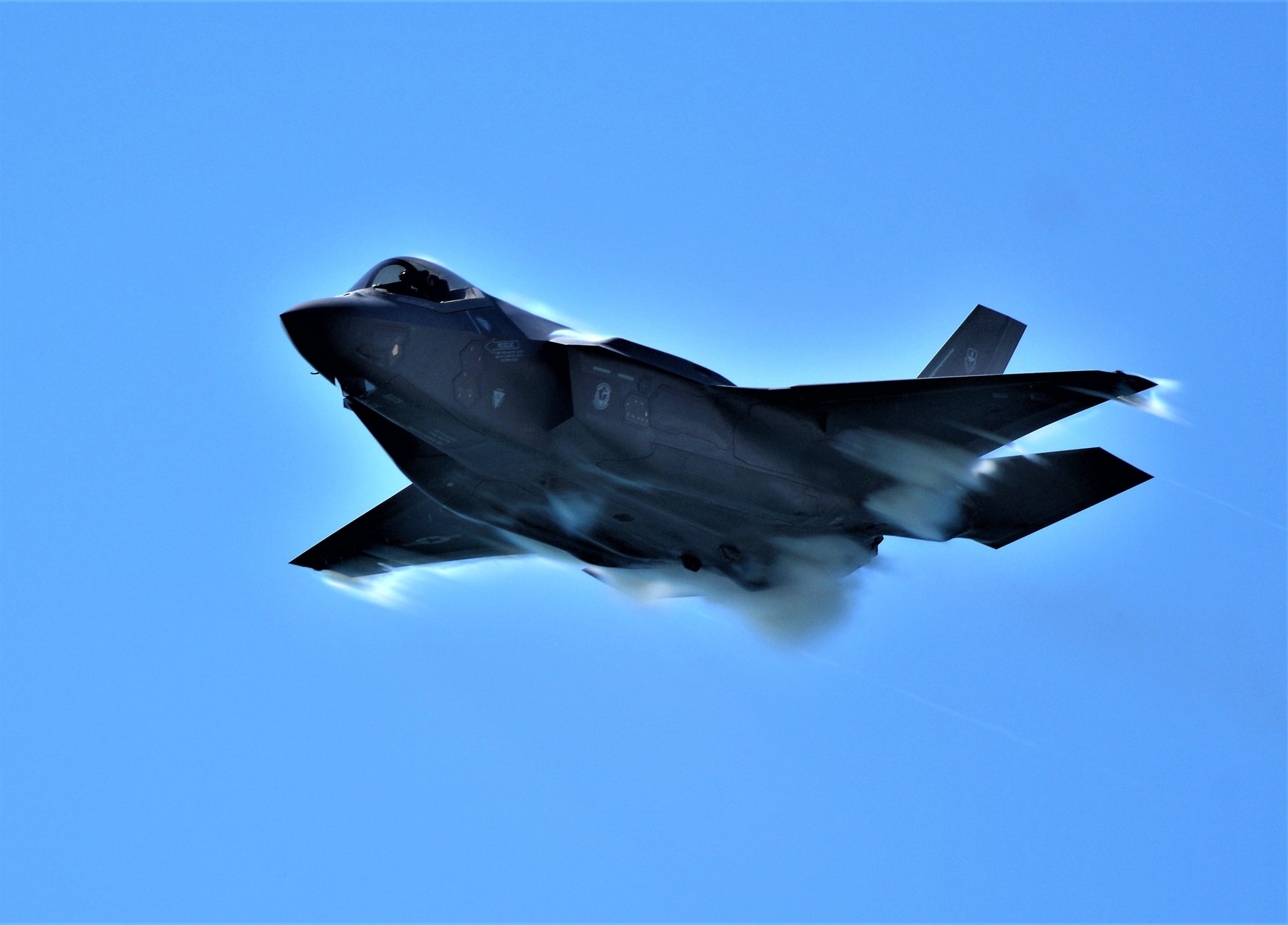
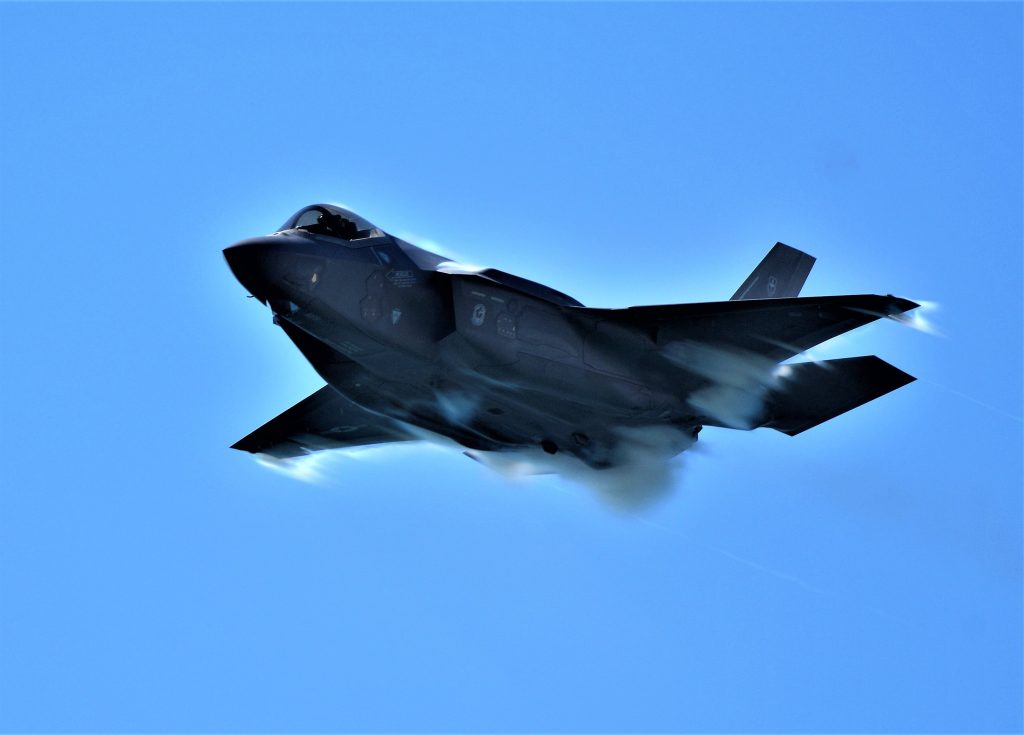
Finland is currently seeking to replace its aging F-18 with a global competition dubbed H-X worth $11 billion. It is expected that a decision will be made public before the end of 2021. Arguably, fighter jets represent a crucial component of States’ security and a decisive hard power asset in every conflictual context. This article aims at uncovering the underlying dynamics of the Western defense industry implied by the evolution of the Finnish tender.
As of December 2021, the Finnish Ministry of Defense has received responses for its request for information from the European Eurofighter Typhoon, the Swedish Saab Gripen, the French Dassault Rafale, and the American Boeing F/A-18E/F Super Hornet and Lockheed Martin F-35.
Divided European contenders open the way for American offers
The Finnish request for information received answers from all major Western fighter jets producers; hence the comparison of contenders allows us to identify several factors shaping the evolutions of the industry. The very fact that Finland launched its fleet’s renewing process very close to the expected decommission date for its current Hornets, as their “structural fatigue” denounces, exemplifies how procurement programs are not at the top of policy-makers agenda (Finnish Ministry of Defense).
The cost borne by single states with limited expenditure margins is becoming increasingly untenable, especially where political pressure on taxpayers’ spending is large (e.g., the United Kingdom). Moreover, countries may not dispose of design and production capacity over the entire technological spectrum, such as Italy and Spain. The relative political frenzy generated in recent decades made transnational fighter jets’ fleets a common feature of Western air forces. However, the pan-European Eurofighter Typhoon underwent difficulties showcasing the complexity of such projects, with reluctant transfers, unclear directions, and soaring costs due to fragmented production.
Meanwhile, the individual offers from France and Sweden do not seem greatly superior. The Dassault Rafaleand the Saab Gripen offer suffer from their limited interoperability and relatively isolated stance in the current geopolitical equilibrium. Indeed, the political logic of defense procurement programs vastly supersedes the economic aspects of the choice. Was Finland to purchase the Saab Gripen underdog from its neighbor, its strategic prospects would be very limited and centered on Russian containment. The Rafale, in turn, would signify Finland’s alignment on the French posture of European strategic autonomy from the U.S. The 1,340km-long border Helsinki shares with Russia makes this perspective impossible. Therefore, although the Rafale has recently been sold to Croatia and Greece, Dassault’s offer seems compromised.
The American bidders consequently benefit from the lack of unity of European actors and put forward the geopolitical continuity they represent as a sales’ argument. The Boeing F/A-18 E/F Super Hornet proposal would minimize the H-X program costs due to pre-existing maintenance and operating capacities while selecting the F-35 would guarantee the acquisition of new, cutting-edge capacities.
A degrading security environment
In recent years, we have witnessed a degradation of the international security environment with Russia’s resurgence and the growing assertiveness of China’s behavior. Primarily concerned with Russia, Finland finds itself in a delicate position as it is the E.U. member that shares the largest border with Russia. Russia has been particularly active in recent years by bolstering its military, as demonstrated by its intervention in the Syrian front, its attempts to upset the status quo, and its destabilization of NATO from within. Growing tensions between Russia and Ukraine are fueling a sense of regional insecurity with a Russian troop buildup as well as creating some levels of uncertainty regarding Russia’s intentions. Amid a large scale rearmament program, Russia has been able to field the SU-57, a modern stealth fighter aircraft, and develop lighter fifth-generation aircraft, the Checkmate, focused on export markets and somewhat reminiscent of the F-35.
Given the growing insecurity of its regional environment, Finland may be looking to maintain its strategic relationship with the U.S. and reinforce its indirect relationships with NATO. A critical political and strategic factor to consider is the interoperability of weapon systems within the North Atlantic Treaty Organization (NATO). Although Finland is not a member of the Alliance, the Lockheed Martin’s F-35 and Boeing’s F-18 Super Hornet would expand the reach of NATO and its ability to share data, engage in secure communication, and increase interoperability capabilities between the U.S. and other U.S.-allied European assets. Thus, beyond the interoperability aspect of those deals, acquiring the F-35 or the F-18 does bring diplomatic benefits and strengthen relationships with the United States.
The case of buying a strategic relationship with the U.S.
When it comes to large military hardware procurement, countries’ decisions are influenced by the prospect of a future strategic relationship with the procuring country. Buying U.S. material implies future interoperability, a valuable prospect in a world of growing tensions. In addition, the Foreign Military Sales (FMS) framework is largely seen as a political instrument by Washington to deepen relationships with key allies. As such, the F-35 initially developed to replace aging F-16s, is poised to become one of America’s biggest exports. By strengthening military interoperability with U.S. allies across the globe and elevating their airpower capabilities, the F-35 is instrumental to America’s containment military strategies. Furthermore, some experts argue that the F-35 program acts as America’s Belt and Road Initiative, at least from a strategic and military standpoint. It provides a network and a platform acting as ‘a generator of wealth and peaceful co-existence on a global scale.’
Even soaring costs do not prevent countries from buying the F-35. Small players such as the Netherlands, Belgium, Poland have already chosen to buy the F-35 jets, notwithstanding questionable financial dispositions. This perfectly illustrates the underpinning political challenge at stake. For example, Switzerland agreed to buy 36 F-35As in July 2021 and Patriot air defense systems, even though the decision was controversial and considered overkill.
Thus, buying American-made fighter jets does bring significant commercial, industrial, and geopolitical benefits. Indeed, by buying American fighter jets, Finland would essentially strengthen its strategic relationship with the U.S.
Conclusively, given the degrading security environment Finland finds itself in and the growing importance of the U.S. strategic relationship, Finland is more likely to acquire U.S. technologies to replace its aging F-18s. Arguably, the F-35 appears better suited to meet Finland’s short and long-term requirements by strengthening its military and political relationship with the U.S. and acquiring an aircraft that could address the existing and emerging military threat as Russia deploys additional advanced stealth combat airborne platforms.
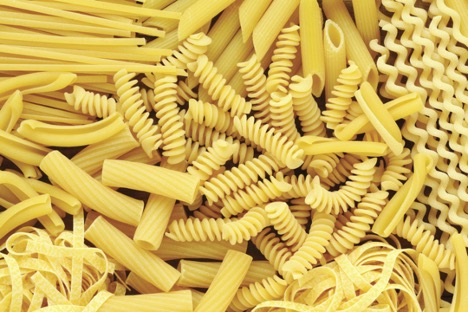
Global supply chain issues have recently manifested as a consequence of lockdowns implemented by world governments to curb the impact of Covid-19. Due to restrictions on movement, many producers are unable to adequately deliver goods across international borders in a timely manner, posing severe implications to both economic and food security across the globe. In Italy, these global supply chain issues have directly impacted consumers by raising the average costs of food, and limiting the earnings of the country’s large agricultural sector, which is a leading exporter of many goods, including pasta, wine, and olive oil. In the past three years, global demands on pasta surpassed production due to an increase in consumption as well as an inadequate response to the spike in demand by supply chain leaders. This has resulted in the loss of 3 million tons of wheat, causing an increase in pasta prices. Overall, supply chain problems in Italy compound pre-existing international economic and food insecurity caused by Covid-19 by decreasing the variety and quantity of key exports.
While Italy’s agricultural supply chain has no doubt been harmed by the impacts of Covid-19, it is this new complication in conjunction with other variables which has had such a severe impact on agricultural exports. For example, prior to the Covid-19 pandemic, Italy lacked a robust labour force of truck drivers compared to other European countries. Additionally, Italy sources a large percentage of the wheat it uses to make pasta from Canada and Russia. Supply chain issues alone could have hampered the import of Canadian and Russian grain into Italy, but both countries also experienced ecological disasters in 2021 which led to poor wheat harvests. Canadian wildfires in the summer of 2021 and an exceptionally cold winter 2021 in Russia damaged both countries' harvests.
Difficulties concerning imports from Canada have particularly impacted the Italian supply chain. As Italy’s primary foreign provider of wheat, the poor harvest in Canada halved imports of the grain into Italy from 6.5 to 3.5 million tons. Already, this scarcity has caused the costs of wheat to increase by 60%, and prices are forecasted to rise by a further 15% by the end of December 2021.
At present, supply chain resilience is the main solution being promoted to tackle the ongoing issues undermining agricultural output. There has been an outstanding trend in the encouragement of reshoring strategies, which are aimed at redirecting the supply chain production within national borders, and by integrating artificial intelligence into supply chain processes to optimize and improve the time management of production. While Italy imports around 40% of wheat necessary for the supply chain to meet the demand, according to Coldiretti (National Confederation of Growers), the spike in pasta prices can be dealt with by encouraging the Italian production of wheat. For this reason, growers have been advocating for agreements between agricultural and industrial businesses in order to establish prices that will not go below production costs. Fostering the Italian production of wheat to cope with the current supply chain crisis would also ensure better regulated goods, as Italy forbids the use of chemical herbicide for agricultural purposes, in contrast to Canada.
The Italian pasta and wheat industries have not been the only ones affected by Covid-19 induced supply chain issues. Italian exports of milk and dairy products, beef cattle, eggs, flowers, and wine all fell between March-May 2019 and March-May 2020, with the latter plummeting by a shocking 37%. However, this dramatic decrease likely resulted from the global closures of the bar and restaurant sectors in addition to supply chain issues. A few industries even saw modest improvements in production despite the lockdowns, with Italian exports of fruits, vegetables, oil, cereal, pigs, and sheep and goats increasing between March-May 2019 and March-May 2020. Most major Italian trade partners imported fewer goods in 2020, with only Switzerland and China importing more agricultural products, food, and drinks from the country than they had in 2019. Germany, typically the top importer of Italian products, decreased its agricultural imports by 21% and food and drinks by 28% in 2020.
Particularly in the first few months of the lockdown of 2020, Italian industry suffered from labour shortages, slowed operations, and supply chain bottlenecks. Many farm and factory workers were ill with Covid-19 or in a mandatory quarantine, and consequently unable to work. Borders closures also meant that the fruit and vegetable agricultural sectors were unable to rely on seasonal workers from elsewhere in the European Union as usual. Thus, in the early months of the pandemic, the Italian supply chain was suffering more in the production stage than in transport and distribution. Challenges with the transport and distribution side of the supply chain in Italy have instead emerged more recently.
While the Italian agricultural sector remained functional during periods of lockdown, it suffered from secondary effects related to the pandemic. Other areas of production in the Italian economy were directly closed or restricted as part of measures taken by the government to slow the spread of the virus. It has been estimated that government restrictions “locked” up to 52% of the Italian state GDP due to the closure of sectors deemed nonessential. For example, 40% of Italy's twenty most economically crucial sectors were locked, including the retail trade and food services by an April 2020 decree of the Italian Prime Minister. Agricultural production in Italy is deeply interconnected with some of these other sectors, specifically hospitality. As a result, the closure of these sectors poses a risk to the economic security of Italian agri-business.
Difficulties and shortages jeopardised Italian agricultural and economic security even prior to the global pandemic crisis generated by the outbreak of Covid-19. Labour shortages, supply chain bottlenecks, closures and an extended lockdown inevitably impacted demands from the international market. At the same time, further economic insecurity due to the pandemic stemmed from Italy’s difficulty in importing essential goods such as wheat. Continued issues with rising food prices, struggles in meeting the demand and limited earnings can be tackled through resilience strategies to lift the sector up using national production and innovative approaches.
Italiano
Problemi nella supply chain globale si sono recentemente manifestati come conseguenze di lockdowns implementati dai governi per frenare l’impatto del Covid-19. A causa delle restrizioni implementate, molti produttori sono impossibilitati a fornire adeguatamente beni destinati al mercato internazionale rispettando tempistiche adeguate, compromettendo la sicurezza economica ed alimentare a livello globale. In Italia queste problematiche hanno diretto impatto sui consumatori a causa dell’incremento nella media dei prezzi degli alimenti e del limitato guadagno del paese nell’esteso settore agricolo, esportatore leader di numerosi beni,tra cui pasta, vino e olio d’oliva. Negli ultimi tre anni, la domanda di pasta a livello economico globale ha superato la produzione a causa di un incremento nella consumazione e di un’adeguata risposta a questo picco. Il risultato è stata la perdita di tre milioni di tonnellate di grano duro e l’aumento dei prezzi della pasta. Problemi relativi alla supply chain italiana risalivano all’epoca pre-Covid-19 e alla preesistente insicurezza economica ed alimentare, che è poi stata ulteriormente peggiorata dalla pandemia e dalla diminuzione di varietà e quantità di esportazioni cruciali.
La filiera agricola italiana ha senza dubbio subito l’impatto del Covid-19, una crisi che si è sommata ad altre variabili che già da tempo avevano avuto un severo impatto su esportazioni agricole. Ad esempio, prima della pandemia l’Italia soffriva di una forte mancanza di manodopera di autotrasportatori rispetto ad altri paesi europei. Inoltre, l’Italia acquista una grande percentuale del grano duro utilizzato nella sua produzione di pasta da Canada e Russia. Le questioni relative alla catena di approvvigionamento da sole avrebbero potuto ostacolare l'importazione di grano canadese e russo in Italia, ma entrambi i paesi hanno inoltre subito disastri ecologici nel 2021 che hanno portato a raccolti di grano poveri. Gli incendi in Canada nell'estate del 2021 e un inverno 2021 eccezionalmente freddo in Russia hanno infatti danneggiato i raccolti di entrambi i paesi.
Le difficoltà relative alle importazioni dal Canada hanno avuto un impatto particolare sulla filiera italiana. Come primo fornitore straniero di grano all'Italia, il cattivo raccolto in Canada ha dimezzato le importazioni di grano in Italia da 6,5 a 3,5 milioni di tonnellate. Questa carenza ha già causato un aumento del 60% dei costi del grano, e i prezzi potrebbero aumentare di un ulteriore 15% entro la fine di dicembre 2021.
Attualmente, la resilienza della catena di approvvigionamento è vista come soluzione principale ed è promossa per affrontare le questioni in corso che minano la produzione agricola. C'è stata una tendenza eccezionale nell'incoraggiare strategie di reshoring, che mirano a riorientare la produzione della catena di approvvigionamento all'interno dei confini nazionali, e integrare l'intelligenza artificiale nei processi della catena di approvvigionamento per ottimizzare e migliorare la gestione dei tempi di produzione. Mentre l'Italia importa circa il 40% del grano necessario alla filiera per soddisfare la domanda, secondo la Coldiretti (Confederazione Nazionale dei Coltivatori), l'impennata dei prezzi della pasta può essere affrontata incoraggiando la produzione italiana di grano. Per questo motivo, i coltivatori hanno chiesto accordi tra aziende agricole e industriali al fine di stabilire prezzi che non scendano al di sotto dei costi di produzione. Promuovere la produzione italiana di frumento per far fronte all'attuale crisi della filiera garantirebbe anche una migliore regolamentazione delle merci, in quanto l'Italia vieta l'uso di diserbanti chimici per scopi agricoli, a differenza del Canada.
L'industria italiana della pasta e del grano non è stata l'unica ad essere colpita da problemi di supply chain indotti da Covid-19. Le esportazioni italiane di latte e prodotti lattiero-caseari, bovini da carne, uova, fiori e vino sono diminuite tra marzo-maggio 2019 e marzo-maggio 2020, con quest'ultimo che precipita di un impressionante 37%. Tuttavia, questa drastica diminuzione è probabilmente dovuta alla chiusura globale dei settori bar e ristoranti, oltre che a problemi di supply chain. Alcune industrie hanno visto anche modesti miglioramenti nella produzione nonostante i blocchi, con l'aumento delle esportazioni italiane di frutta, verdura, olio, cereali, suini e ovini e caprini tra marzo-maggio 2019 e marzo-maggio 2020. La maggior parte dei principali partner commerciali italiani ha importato meno merci nel 2020, con solo la Svizzera e la Cina che importano più prodotti agricoli, cibo e bevande dal paese rispetto al 2019. La Germania, tipicamente il primo importatore di prodotti italiani, ha ridotto le sue importazioni agricole del 21% e il cibo e le bevande del 28% nel 2020.
In particolare nei primi mesi del blocco del 2020, l'industria italiana ha sofferto di carenze di manodopera, rallentamento delle operazioni e strozzature della catena di approvvigionamento.
Molti lavoratori agricoli e di fabbrica sono stati affetti da Covid-19 o in una quarantena obbligatoria, e di conseguenza incapaci di lavorare. La chiusura delle frontiere ha inoltre impedito ai settori dell'agricoltura di contare, come di consueto, su lavoratori stagionali provenienti da altri paesi dell'Unione europea. Così, nei primi mesi della pandemia, la filiera italiana soffriva più in fase di produzione che di trasporto e distribuzione. Le sfide legate al trasporto e alla distribuzione della supply chain in Italia sono invece emerse più di recente.
Altre aree di produzione nell'economia italiana sono state direttamente chiuse o limitate nell'ambito delle misure adottate dal governo per rallentare la diffusione del virus. È stato stimato che le restrizioni governative "hanno bloccato" fino al 52% del PILdello Stato italiano a causa della chiusura di settori ritenuti non essenziali. Ad esempio, il 40% dei venti settori economicamentepiù cruciali dell'Italia sono stati bloccati, tra cui il commercio al dettaglio e i servizi alimentari da un decreto del primo ministro italiano dell'aprile 2020. La produzione agricola in Italia è profondamente interconnessa con alcuni di questi altri settori, in particolare l'ospitalità. Di conseguenza, la chiusura di questi settori rappresenta un rischio per la sicurezza economica dell'agroindustria italiana.
Nel complesso, l'indebolimento delle difficoltà e delle carenze aveva messo a repentaglio la sicurezza agricola ed economica italiana anche prima della crisi pandemica globale generata dal Covid-19. La carenza di manodopera, le strozzature della catena di approvvigionamento, le chiusure e un blocco prolungato hanno inevitabilmente inciso sulla domanda del mercato internazionale. Allo stesso tempo, l'ulteriore insicurezza economica dovuta alla pandemia deriva dalla difficoltà dell'Italia di importare beni essenziali come il grano. Indubbiamente, l'aumento dei prezzi dei prodotti alimentari, le lotte per soddisfare la domanda e i limitati guadagni devono ora essere affrontati attraverso strategie resilienti che possono aiutare a risollevare il settore, basandosi soprattutto sulla produzione nazionale e su approcci innovativi.
Debora Pinzana, human rights and gender advisor, in occasion of the International Campaign “16 days of activism” discusses about the concept of gender-based violence, the importance of GBV prevention and the significant impact of women’s inclusion and participation during transition, taking as an example the situation in Lybia.
Interviewers: Arianna Caggiano, Diletta Cosco.
This is ITSS Verona Member Series Video Podcast by the Human Rights Team.
ITSS Verona - The International Team for the Study of Security Verona is a not-for-profit, apolitical, international cultural association dedicated to the study of international security, ranging from terrorism to climate change, from artificial intelligence to pandemics, from great power competition to energy security.