October 12, 2021 — No Comments

Ethics in Military Training: Israel involvement in Operation Falcon Strike 21

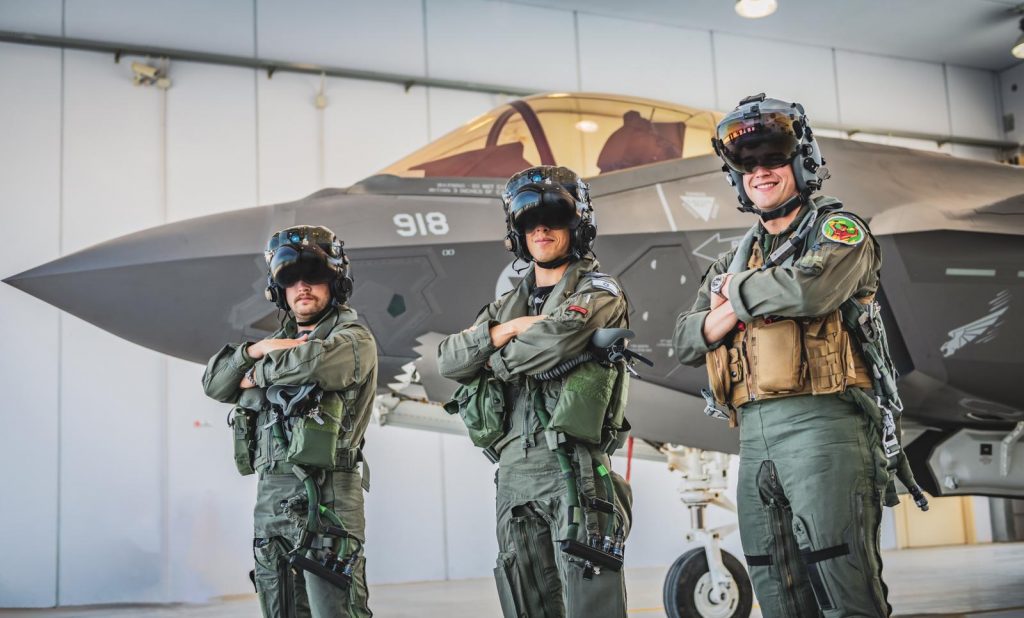
Image Source: Ari Gross Judah,ย In first, Israeli F-35s train in Italy โ€” with Iran in their sights, 2021,ย https://www.timesofisrael.com/in-first-israeli-f-35s-train-in-italy-with-iran-in-their-sights/

By: Maria Chiara Aquilino

Operation Falcon Strike 21 was initiated from the Italian Military Air Force base in Amendola (FG), Italy on 6th June 2021. It was promoted by the Stato Maggiore della Difesa (Defence Staff) in partnership with NATO, mainly with the United States of America and the United Kingdom and Israel. The involvement of Israeli Air Force (IAF) in the twelve days of aeronaval training, its consequential collaboration with the Italian, American and British military forces gathered the Italian public attention and raised questions on the role of ethics in the decisions made by the NATO powers. 

While there are not many details available on how the Operation Falcon Strike 21 originated, it facilitated the integration from airplanes between the 4th and 5th generation of fighters and increased the level of cooperation between powers in the logistic field and concerning the transfer of F-35 fighter jets. Thus, strengthening the interoperability of allied air forces and partners during joint operations. Exercises to master the use of the most advanced missile defence systems took place in between Sardinia and regions of Southern Italy (Il Manifesto, 2021). 

As the Operation was initiated, an old debate on the role of ethics in military trainings emerged, due to the public fear for how the development of knowledge in the field could be exploited by Israel in its own military operations. Indeed, the participation of this Middle-Eastern Power in exercises that are strategically designed to test the firepower of new F-35 fighter-bombers provided. The debate in fact dates back to 2016 when IAF received its first F-35 fighter jets. Initial trainings with the collaboration with the Western military forces, in particular with the Royal Air Forces and the US Marines, started in 2019. It included the Tri-Lightning exercise and continued with the Enduring Lightning ones organised by Israel and the United States (Aviation Report, 2021).

Since the IAF received its first F-35 fighter jets, it has strived to obtain more of them to be added to its fleet in groups of twos and threes throughout the past years, reaching the current level of 27 planes in total. Additionally, by 2024 23 F-35 jets will be owned by Israel to meet the Israel Defence Forcesโ€™ (IDF) purpose of acquiring a total of 50 aircraft. The Israeli officials have also confirmed that they are planning to purchase more of these aircrafts (The Times of Israel, 2021). 

Undoubtedly, the possibility of Israel deploying the acquired assets to fight its own wars within the Middle East generates an evident threat, which has indeed awakened concerns among the public. In particular, strikes have been organised in the areas close to the military air force base in Amendola, from where the operation was launched as pro-Palestine organisations have mobilized to show their disapproval for the partnership with Israel (Rete Italiana Pace e Disarmo, 2021). The exhibited disagreement with practices strengthening Western powers relationship with Israel was further emphasised since a statement released by one of IAF senior officials claimed that the extensive training conducted in Italy would be a historic chance to train its pilots to future wars in the Middle-Eastern area, particularly in Iran (Il Manifesto, 2021). 

Hence, the rise of concerns among pro-Palestine groups regarding the consequences of including Israel in the trainings is inevitable. Yet, this only seem to strike the attention of worried civilians, as indeed even after the IAF statement, the Operation was successfully carried out. 

Operation Falcon 21 was arguably an implicit declaration that it is ultimately ethical to include powers such as Israel in advanced military training conducted by NATO powers, regardless of the knowledge that the former might use the abilities and means gained to fight its own wars. The United States, United Kingdom and Italy have inevitably provided Israel with an outstanding opportunity to improve its military capabilities by supplying it with arms and helping in the development of knowledge about their use. This comes as a direct contradiction of the values of human rights and peace-keeping that these Western Powers claim to uphold. It appears though that for the Western powers, the role of ethics in strategic military decisions is overshadowed where there is a need to build partnerships with key powers such as Israel. 
October 12, 2021 — No Comments

Laura Silvia Battaglia on the ongoing humanitarian crisis in Yemen

Laura Silvia Battaglia, freelance journalist and reporter, discusses about the current situation in Yemen, by providing us major insights about the humanitarian access, Yemeni journalists and foreign reporters working conditions and the status of women within the current crisis.

Interviewers: Arianna Caggiano and Diletta Cosco.

This is ITSS Verona Member Series Video Podcast by the Human Rights Team. ITSS Verona - The International Team for the Study of Security Verona is a not-for-profit, apolitical, international cultural association dedicated to the study of international security, ranging from terrorism to climate change, from artificial intelligence to pandemics, from great power competition to energy security.ย 

October 8, 2021 — No Comments

The great contemporary human security crises of South Asia: Kashmir and Afghanistan

Authors: Esther Brito Ruiz, Arslan Sheikh and Ludovica Brambilla

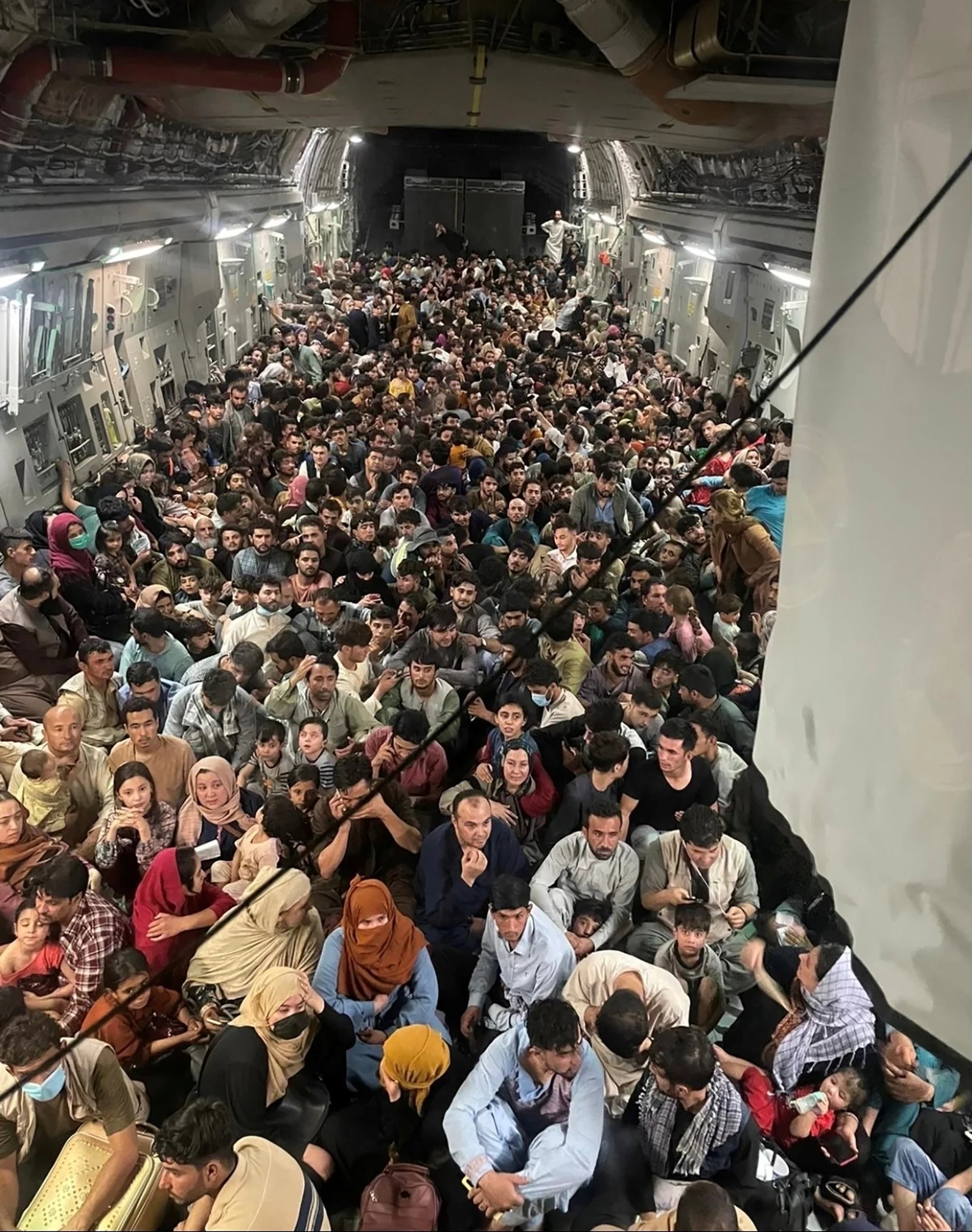
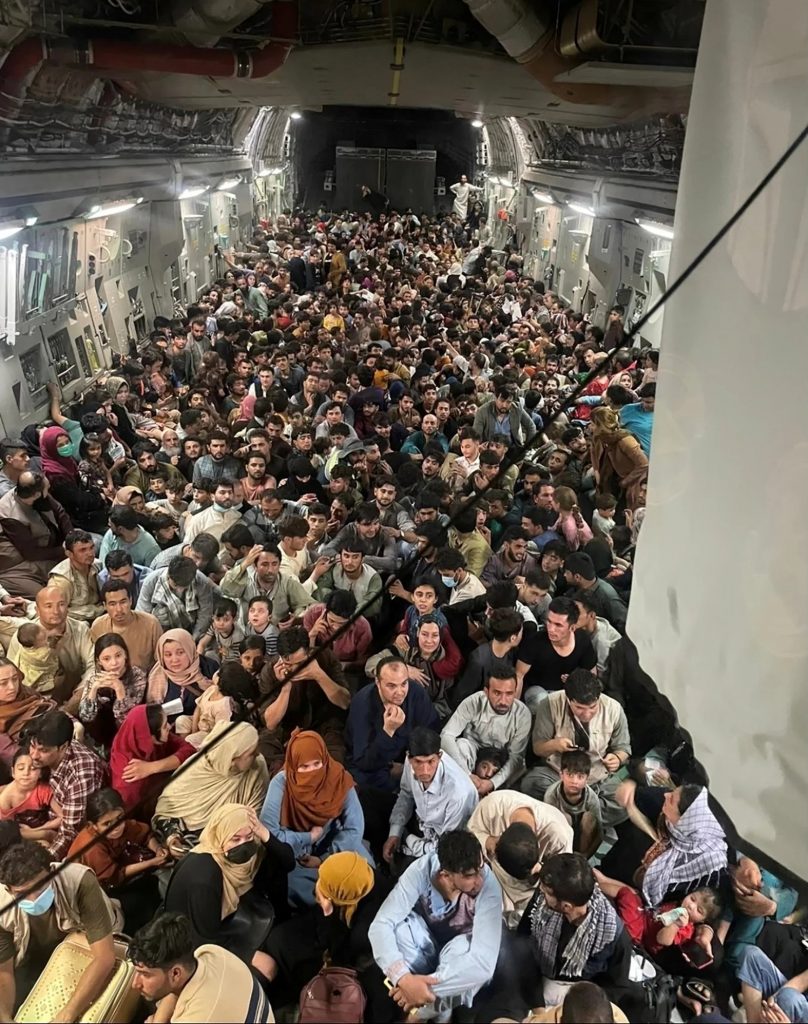
Source: https://upload.wikimedia.org/wikipedia/commons/3/39/C-17_carrying_passengers_out_of_Afghanistan.jpg

The last two years have been the site of unexpected human security crises -  ranging from a global pandemic to the collapse of states. South Asia particularly has been subjected to important crises that have echoed across the region and had global consequences. Maybe the two most significant of these crises have been the Taliban takeover of Afghanistan and the enduring crises in Kashmir. Both these situations have seen human security determine the broader trajectory of national security, and can serve as examples of why to promote any kind of stability, the wellbeing of the people must come first. 

Afghanistan: the consequences of setting human security aside

โ€‹โ€‹The Afghanistan crisis clearly represents the consequence of failing to centralize and protect human security. In the wake of the United Statesโ€™ invasion of Afghanistan, which was originally deployed under the justification of anti-terrorist efforts โ€“ seeking the capture of Bin Laden and the countering of Al Qaeda โ€“ little good has remained after the end to two decades of occupation and trillions of dollars of investment. With the Taliban back in power and a looming humanitarian catastrophe โ€“ in the words of UN Secretary-General Antรณnio Guterres โ€“ this crisis is one of the most severe threats to human security today.

But the real impact we can expect on the lives of Afghans remains multifaceted. Firstly, we have seen the weeks since the US withdrawal marked by a resurgence of terrorism in the state - as evidenced by the Daesh-K August 26 attack on the Kabul airport. Secondly, as a result of the war and widespread violence, the country now has over four million Internally Displaced People (IDPs), contending not only with overcrowded camps and a lack of access to basic services - like clean water - but also with the increase of COVID-19 cases. Afghans are facing a possible famine, collapsing health services, and a paralyzed economy in the wake of the seizing of most of the countryโ€™s reserves. In fact, the countryโ€™s Central Bank has been expelled from the international banking system and refused access to both the statesโ€™ foreign reserves and any international credit and assets assistance โ€“ including that which it had been previously granted to combat the rise of COVID. As a result of this economic paralysis, prices of food and essential goods have experienced an exponential rise and most financial services and banks have been left unable to operate or provide money to residents. This compromises the survival of local populations โ€“ especially those already most vulnerable. As this situation worsens, over 40% of the Afghan population faces acute food insecurity. Beyond these circumstances, the behaviour itself from Taliban authorities  is a core threat to the rights and security of its citizens โ€“ especially for women and minorities. Massacres of ethnic and religious minorities โ€“ specifically of Hazara men in recent weeks โ€“ and retribution killings to collaborators of the US army set a worrying precedent to what opposition groups will experience in coming months, as the Taliban secure their rule and repress revolts. Indeed,  Deborah Lyons, the Special Representative and Head of the United Nations Assistance Mission in Afghanistan (UNAMA), has affirmed that โ€œthe lives of millions of Afghans will depend on how the Taliban choose to governโ€. With little response from recent UN Human Rights Council sessions and assistance on the ground from United Nations agencies and aid organizations being scaled back due to security concerns, prospects are not positive.

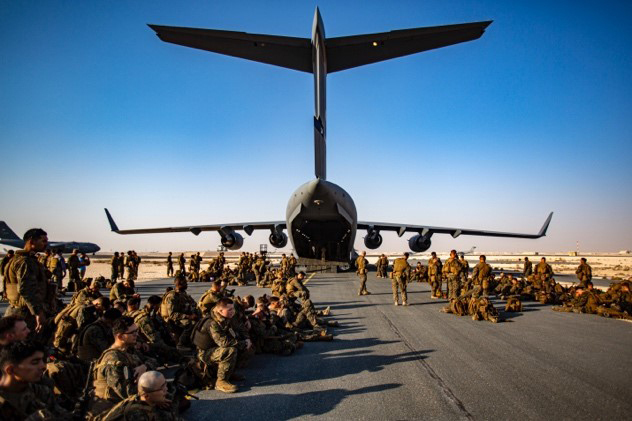
Marines assigned to the 24th Marine Expeditionary Unit (MEU) await a flight at Al Udeied Air Base, Qatar August 17. Marines are assisting the Department of State with an orderly drawdown of designated personnel in Afghanistan. (U.S. Marine Corps photo by 1st Lt. Mark Andries). Source: US Military

The severe human crisis in Afghanistan we see today is a consequence of an erroneous and militaristic view of what national security and peace requires. Peace begins with the security not of broad governments or the promotion of abstract values, but with the security of the people โ€“ established and maintained through access to the basic tenants of a dignified life; including education, food, healthcare, and jobs. By choosing not to center human security, the US acted more as an empire than as an ally for the Afghan people - and in their retreat, little care has been given to the wellbeing of locals and the crises left behind for them to endure. We can wonder what the situation would be today if the focus of the international communityโ€™s involvement in this state was for its communities to thrive โ€“ rather than the imposition of strategic goals for external parties. In the words of Ibrahim Al Marashi, โ€œAmericaโ€™s failure to address human security ended up harming its national securityโ€. 

With the world facing one of the worst humanitarian crises of the last decades, Afghanistanโ€™s people have been left to contend with the human crisis of a pandemic and a state collapse simultaneously. While proposals to extend the UN mission in Afghanistan (UNAMA) have been put forth, the likelihood of this engagement in the long term is minimal. Afghanistan now faces a human security crisis in almost every of its expressions - combining a political and economic crisis, a compromised food and healthcare system, and personal and communal threats to life. The way this crisis develops over the next few months will profoundly impact not only Afghans and their future, but the trajectory of all of South Asia. 

Kashmir: the forgotten crisis of water security

Water Security is sometimes considered the most important component of human security - since the very basic survival of life is dependent on it. Additionally, water insecurity effectively compromises all other expressions of human security; thus putting the very continued existence of human communities at grave risk. Despite this, it has often become sidelined in conversations regarding international security and humanitarian crises. Specifically, the water-security nexus over transboundary river basins among riparian countries is a growing concern, which will need to be dealt with increased urgency in the wake of the escalating consequences of climate change.

Among such various transboundary river basins, the Indus River Basin (IRB) in South Asia represents a peculiar case. The IRB flows through the erstwhile princely State of Jammu and Kashmir, which is now divided through a Line-of-Control - a de facto border between India and Pakistan. While this area has a relatively successful water management framework - in the form of Indus Water Treaty - there is no institutional and legal framework which addresses the effects of climate change on water availability in the IRB. This is a delicate situation, as the IRB has become the second โ€˜most overstressed aquiferโ€™ in the world because of the areaโ€™s growing population and the development pressures of both shoreline countries. 

The issue of water security in the region is a potential future source of state conflict and a prime human security issue. The territorial conflict over the erstwhile princely state of Jammu and Kashmir has led India and Pakistan into three conventional wars inย 1947,ย 1965ย andย 1999ย respectively. Both these countries have built major dam infrastructures on the IRB for irrigation and hydroelectricity. In India, it is one of the two main river systems supporting the countryโ€™s water deficient areas of the north-west. In fact, according toย NITI Aayog, a public policy think-tank of the Government of India, โ€œIndia is suffering from the worst water crisis in its history, with around six-hundred million people facing high to extreme water stress and about two-hundred thousand people dying every year due to inadequate access to safe waterโ€™โ€™. However, even thisย reportย mentions no data on water management and composition of the Union Territory of Jammu & Kashmir - still a delicately trodden political issue. In turn, Pakistanย is exclusivelyย dependent on IRB for irrigation and hydropower. Thus, this basin represents a vital source for their national food, water, and energy security. This dependency is worsened by theย severeย water shortages and declining water per capita availability that Pakistan has been facing in recent years. As such,ย hydro-politicsย over the IRB have put the growing population of both countries at an extreme risk - both in terms of human security and with regards to broader state conflict. With the perennialย tensionsย between India and Pakistan, and the frequent indication of IRB being used as aย geopolitical weapon,ย the water security of South Asiaโ€™s most populated region remains an imminent threat.

Conclusion

Both the cases presented evidence a simple truth - security, at any level, lays its foundations on the wellbeing of the people. In the absence of this, there can be no sense of stability or continuity. Afghanistan and Kashmir serve to remind us that even with vested national security interests, state and military involvement, and capital investment, those endeavours  that forgo human security will eventually face violence, conflict,  and possible internal collapse.

October 8, 2021 — No Comments

South Africa strategies in the international arena: is it an โ€œatypicalโ€ African country?

The โ€œInternational system & World order - Africaโ€ interviews Riaan Eksteen from the University of Johannesburg. Mr Eksteen has been a member of the South African Foreign Service for 27 years and he served at the South African embassy in Washington, D.C. He was also Ambassador and Head of Mission at the UN New York, Namibia, Geneva, and Turkey. Riaan Eksteen talks about the international role of South Africa in the BRICS, with the new US administration, and the African Union.

Interviewers: Michele Tallarini and Rebecca Pedemonte

October 5, 2021 — No Comments

The Afghan Legacy

By: Francesco Cirillo and Bianca Ferrazza

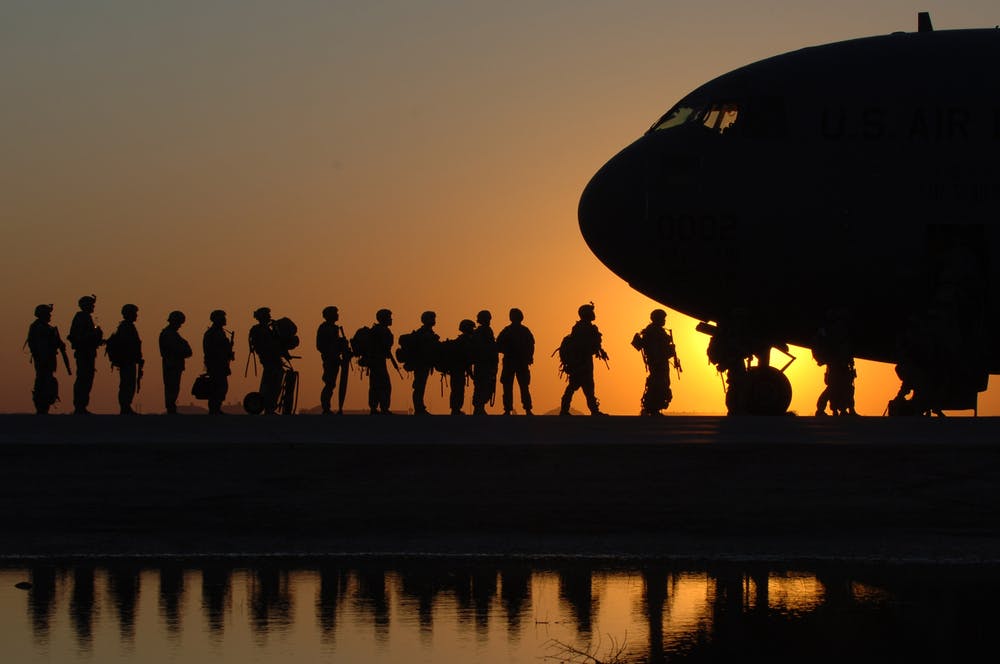
Photo by Pixabay from Pexels

Americaโ€™s longest war is worth analysing when in possession of an accurate chronology ofevents, from the very start to the newest events.

Tracing the beginning of US involvement in Afghanistan in 2001 might not be the right starting point. Going all the way back to the 1950s would help understanding much more of the conflict. At that time, Afghanistan was invested with many modernizing projects financed from the West in order to rebuild the country into a modern nation state.

Throughout the Cold War period, the US and the Soviet Union, being sworn enemies, would fight over any share of territories that might be useful for their cause. Afghanistan was one of them, representing a strategic area for the Soviets and having been the main actor during the Great Game between UK and Russian forces once century before.

The Cold War fight for Afghanistan initially began with soft war measures, such as investments from both parties, only to result much later in an actual military conflict.

The US and the Soviet both got involved in the modernizing of the country through infrastructure building.

In the 70s, Daoud Khan, then President of Afghanistan, began to establish closer alliances with the URSS. In 1978, the Saur Revolution, a marxists-leninist coup overthrows Khan and gives birth to the Democratic Republic of Afghanistan. The newly-established government engaged in some progressive policies, such as land redistribution, enhancing gender equality and expanding education. Regardless of their efforts though, they ended up upsetting autonomous leaders. At this point, the U.S. started to fuel some revolutionary groups who did not approve of the communist switch occurring in the country. By deploying money to put a stop to the spreading of communism, engaged in massive fundings of both tribalist and islamic groups well before the Soviet invasion in December 1979.

The period of time that goes from 1979 to 1992 is characterized by massive involvement of US forces in the region resulting in America investing 3 billion dollars, channeled into various mujahideen groups fighting the Afghan regime.

The Reagan administration managed to increase US spending in the country by using lobbies as a couverture (e.g. Afghan American Educational Fund).

In 1999, the United Nations Security Council, in light of the recent events, decided to proceed with the adoption of Resolution 1267. By making this move, the Council aimed at creating the Taliban Sanctions and the al-Qaeda Committee, containing more than 300 names, all identified as suspects.

After the 9/11 attack on the Twin Towers in the financial district of New York City, the US response was going to fuel the longest ever war fought by the United States of America.

U.S. forces entered Afghanistan in order to proceed with their War on Terror policy, ideated by then-President Bush. Following the Tora Bora cave bombing, in December 2001, where Osama Bin Laden was thought to be hiding, on December 6th the Taliban government was defeated and left Kabul.

Operation Anaconda, a major ground assault launched from the US against al-Qaeda and Talibans, results in a failure. The Pentagon begins to convey US resources (both intelligence and military) in Iraq.

In 2003, the USโ€™s attention completly switches to Iraq, in order to overthrown former President Saddam Hussein, invading the country and leaving the Taliban and other islamist groups the time to regroup in the southern regions of Afghanistan, on the border with Pakistan.

The 2004 elections after the fall of Kabul are considered to be part of the โ€œReconstructing Afghanistanโ€ project, consisting in various efforts brought alive by countries, ONG and OIG after the U.S. invasion. 

Intensive investments in the country were made after the fall of Kabul. World Bank statistics show huge investments made in the country, with 0,5 billion dollars in 2001 to more than 4,2 billion in 2015.

In the 20 years since 9/11, the US has invested more than 2 trillion on Reconstructing Afghanistan and Nation-Building in the area. That makes it 290$ everyday, for 7.300 days.

Eventually, the money invested in the country went on to fuel a number of projects which in most cases remained incomplete. As for the rest of the money, according to Ryan Crocker, US ambassador in Afghanistan, it has gone into a vortex of endemic corruption.

After Afghanistanโ€™s elections in 2004 and Talibanโ€™s insurgency in the south, the area witnessed an increase in the presence of NATO troops, given the fact that US troops were still deployed in Iraq. This leads to various more insurgencies from the Talibans and to the deployment of British forces.

In 2009, newly-elected President Obama proceeded with the doubling of US troops, bringing the number to 68.000 only to reach 100.000 a year later.

Washingtonโ€™s intelligence errors regarding Afghanistan, with an eye on Beijing

In the assessments of US intelligence agencies, the scenarios regarding Afghanistan posed a worrying scenario. In the months leading up to August 2021, most intelligence reports analyzed that the Afghan government and its government forces would not be able to offer adequate resistance to the Taliban forces, which in those months were advancing rapidly, without the air or ground support by US or NATO forces.

In early August, according to the Washington Post, the White House received a latest report from its intelligence services which stated that Kabul would only hold up for 90 days.

The report, however, will be denied when between 14 and 15 August the Taliban forces surround and enter Kabul, after the Afghan government, President Ghani himself flees the capital to take refuge in the Arab Emirates, capitulates to the Taliban forces occupying Kabul without any resistance from the government armed and security forces.

In the days after August 15, both US public opinion and NATO itself are surprised by the rapid collapse of the Afghan military forces and the Ghani government, opening up a strong discussion in the corridors of Washington. The Associated Press itself wonders how it is possible that an army of 350,000 men between military and police forces has collapsed, despite the fact that the US has spent about 83 billion dollars on training and training Afghan forces.

However, Bidenโ€™s US administration had received worrying signals from Kabul, months before August 15.

According to the Wall Street Journal, Secretary of State Antony Blinken had received internal reports in July from officials at the US Embassy in Kabul, warning of the imminent collapse of Afghan forces.

The errors of assessment, however, were accompanied by the willingness of President Joe Biden to want to withdraw his forces from Kabul, to end the twenty-year war that began in 2001, without considering the consequences of a speeded up withdrawal, which began in early 2021, but confirmed by the Doha agreements of February 2020 ratified by the previous administration led by President Donald J. Trump.

In the plans of the Biden administration, the scenario of the immediate collapse of the government forces in Kabul had been excluded from the beginning, as they assessed that they would be able to counter effective resistance to the Taliban militias, an assessment that the US intelligence itself had not analyzed in depth, given that the forces of Kabul, it appears some units of the Afghan special forces, withdrew from the urban centers, without resisting the advance of the Taliban.

In Washington's assessments of the strategic interests of the new administration, Afghanistan was no longer part of the plans. Washington is now looking to reinforce its forces (economic and politico-military) in the Indo-Pacific area to contain the rise of the People's Republic of China and its aggression, especially in the South China Sea and in the Taiwan Strait area. 

On the Afghan events the same Global Times, the English edition of the main Chinese Communist Party newspaper, stated that Taipei must now reflect on the ability of the United States to protect its allies, both in Europe and in Asia. Even if Washington, on Taiwan, both on the part of the White House and on the part of the Congressional leadership, the ideas are clear and precise.

October 5, 2021 — No Comments

The Disruptive Power of AI applied to Drones

Tate Nurkin talks about the intricacies of AI technologies applied to the military domain and gives us an overview of the AI-powered military programs, what it means for the future of warfare and touches on ethical issues. 

Tate Nurkin is the founder of OTH Intelligence Group and a Non-Resident Senior Fellow at the Atlantic Council.

Interviewer: Arnaud Sobrero

This is ITSS Verona Member Series Video Podcast by the Cyber, AI and Space Team.

ITSS Verona - The International Team for the Study of Security Verona is a not-for-profit, apolitical, international cultural association dedicated to the study of international security, ranging from terrorism to climate change, from artificial intelligence to pandemics, from great power competition to energy security.

October 1, 2021 — No Comments

Iran and the International Community: A Frame

In this interview, the Ambassador Giulio di Santโ€™Agata, former Italian Minister of Foreign Affairs, tackles a complex issue: the International Community's response to the Iranian threat.

Interviewer: Martina Gambacorta

October 1, 2021 — No Comments

Crimea faces a Water Disaster

By: Igor Shchebetun and Alessio Calzetti

Six years after Crimea's annexation to Russia, the Peninsula faces a new threat - a serious shortage of water. Ukraine has cut off Crimea's access to the Dnieper River, and in recent years Crimea's water supply has fallen to such an extent that major cities are now limiting consumption, as 2020 was considered the most waterless year in the history of Crimea. The impending drought is already hurting agriculture, cities and preventing the use of military infrastructure; Crimea can be expected to see more severe restrictions in future. The speculated water wars of the twenty-first century might start with Crimea.

The Crimean Peninsula has great strategic importance due to its link to the Black Sea, therefore, whichever state controls Crimea, can exert influence beyond its national borders. The Crimean Peninsula has been a foothold for the empires of the past such as the Scythians, Greeks, Slavs, Mongols, Tatars, Turks, and Cossacks, all have claimed the Peninsula at different points in history. Russia gained control of the Crimea in 1783, and it instantly became its gateway to the world economy. During the Soviet era, Crimea was given to Ukraine, and when the Soviet Union collapsed, Ukraine inherited the region. However, Ukrainian sovereignty proved to be a temporary phenomenon that lasted only from 1991 to 2014. In 2014, Putin signed a law that accepted Crimea as part of the Russian Federation despite the risk of an economic and diplomatic backlash because of the annexation. The move remains legally disputed and not recognized by the international community. 

In this zero-sum game, Russia is likely to do all it takes to preserve its national interests. The control of the Crimean Peninsula ensures the security of Russia's Black Sea coast and Caucasian territories. Moreover, Russia can use Crimea to protect its territorial integrity and security by means of restricting, denying access and maneuvering prevent the enemy from occupying or crossing land territory or airspace in and near Crimea.

Sevastopol, Crimea's largest city, has a significant Russian population and also home to the Russian Black Sea Fleet. Without Sevastopol, Russia would not have been able to conduct foreign military operations in Syria and Libya. Moreover, the military infrastructure in and around Sevastopol provides Russia with exceptional opportunities to restrict and deny access and maneuver. 

Annexation has brought the added responsibility of providing for the two million inhabitants of Crimea with all possible services and benefits. However, since the Peninsula is not directly connected to the main territory of the country, the initial goal was to maintain the existing Ukrainian infrastructure: power lines, energy distribution system and so on, which could not materialize when Kiev cut off the Peninsula from its infrastructure. 

Russia laid new cables across the Sea of Azov and provided Crimea with new sources of energy and communications. In addition, a new bridge was erected over the Kerch Strait, making road and rail connections between the main territory of Russia and the Crimean Peninsula possible. Though Russia stepped in, it was unable to meet Crimeaโ€™s water needs. Crimean local water sources meet only 15% of consumption. The remaining 85% came through the North Crimean Canal, which runs through Ukraine.

The North-Crimean Canal takes water from the Dnieper. It pumps billions of cubic meters of water to Crimea every year. The Dnieper itself originates in the Smolensk region of Russia, so, legally speaking, the Dnieper is an international, transboundary river running through Russia, Belarus and Ukraine. However, after the annexation, Kiev suspended the flow of water from the Dnieper. 

Politicians from Moscow held several stages of negotiations trying to persuade their Kiev counterparts to resume the flow of water through the canal, claiming that Ukraine's actions were illegal and inhumane. At the same time, it is not very fair of Russia to reason about international law after annexing territory of another state. The Ukrainians, however, did not give in, and this political stalemate created a looming drought for Crimea. 

As of today, Crimea relies on only one thing to provide itself with fresh water: precipitation, an element it has no control over. Even rainfall in the Crimea has decreased significantly in recent years due to climate change. Since the beginning of last year, local water reservoirs have emptied by one-third, and 2020 was the driest year since rainfall records began about 150 years ago.

The result of this drought is significant: two-thirds of the Peninsula is severely water-stressed. In north and east of the Peninsula, people have started to relocate. According to Russian statements, the population of Crimea has almost doubled by 2020, and part of this increase is due to the migration of Russians. The greater presence of people helps consolidate Russian control over Crimea, but it has also doubled the need for water resources.

The migrants from Russia in addition to the new infrastructure has put a serious strain on water supplies. Water shortages have increased in proportion to population growth. Taking agriculture as an example, during the best period of the Soviet Union, about 400,000 hectares of Crimean land were cultivated. By 2013, after years of mismanagement of water, the amount of cultivated land had dropped to 140,000 hectares. In 2014, when Russia gained control of Crimea, that number dropped to a modest 17,000 hectares. Based on this data, Crimea's agricultural sector has shrunk by a factor of 8 since joining Russia, and by a factor of 23 from its highest point. The local farmers have been forced to stop growing crops like rice and soybeans, which consume a lot of water. The Russian leadership calls this ecological adaptation, but it is a sign of decline at best.

Though Crimean water shortage was inevitable, the Russian annexation exacerbated the problem. Moscow has developed a plan to counter Crimeaโ€™s water crisis which is set to be fully implemented by 2024. Russia plans to build new dams, new desalination plants and drill new wells to extract water from the ground. It also intends to build new water pipelines and connect the Crimea to the Don and Kuban. There is even a plan to use airplanes to artificially increase rainfall, but this is only a temporary solution. It is unknown what the ultimate cost of this is, but Russia has already earmarked at least $650 million for the plan. 

However, due to the illegal annexation, the execution of any project in Crimea can only be done by Russian companies, as international partners would not risk doing business in Crimea. This creates difficulty in executing the Moscow plan for Crimea as, for example, building a desalination plant requires support of international partners and Russia itself never invested in desalination technology due to lack of need. 

If the plan to provide water to the Crimea does not work, Moscow may switch to more radical measures. Depending on the criticality of the water situation, Russia could either destroy the Ukrainian platypuses on the Dnieper River, blocking the flow of water, or try to occupy more territory in southern Ukraine along the North Crimean Canal. Such a military operation would force Russia to entrench itself about 60 kilometers from Crimea near the banks of the Dnieper River. Neither of these actions will be easy. Russia will use troops only if any other options are completely exhausted. However, wars have also been started for lesser reasons. Geopolitics is the art of choosing the unpleasant to avoid the disastrous.

September 28, 2021 — 1 Comment

The death of Abimael Guzman and Sendero Luminosoโ€™s current situation

By: Giovanni Giacalone

Sendero Luminosoโ€™s historical leader, Abimael Guzman, died on September 11th at the Maximum Safety Center of the Callao Naval Base. He was 86 and had been serving a life sentence for terrorism and treason since 1992.

Guzman, also known among his followers as โ€œcamarada Gonzaloโ€, had been arrested on September 12th 1992 during a raid conducted by the Grupo Especial de Inteligencia (GEIN) in a two-floor house located in Limaโ€™s residential area of Surquillo. Together with him, eight other high ranks of Sendero Luminoso were detained, including Laura Zambrano and Elena Iparraguirre โ€œcomrade Miriamโ€, Guzmรกn's female companion. Shortly after the raid, most of the remaining leadership fell too.

The 1992 โ€œOperacion Victoriaโ€ and the beginning of the end for SL

The 1992 operation against Sendero Luminosoโ€™s leaders, known as โ€œOperacion Victoriaโ€, put an end to twenty years of violence that according to the Truth and Reconciliation Commission, caused over 69,000 victims. 

The capture of Guzman left a huge vacuum and ravaged the organization, which never recovered from the blow. This is due to the fact that Sendero Luminoso had founded its roots on the figure of โ€œcamarada Gonzaloโ€, due to its strong charisma and authority, as confirmed by a Sendero Luminoso political officer during a birthday celebration for Guzman at the San Juan de Lurigancho penitentiary in December 1990: โ€œThere is no No. 2. There is only Presidente Gonzalo and then the partyโ€ฆWithout Presidente Gonzalo, we would have nothingโ€. 

Gustavo Gorriti, the author of the book โ€œThe Shining Path: A History of the Millenarian War in Peruโ€, explained how in Peru there were no visible leaders that could have even gone close to Guzmanโ€™s strategic vision, capacity, and decisiveness. [1]

Guzman had sought to create a mythic figure of himself but this veneration, that went very close to a cult of personality, was also one of Sendero Luminosoโ€™s  weakest points, together with the constant violent attacks against other Communist groups, trade unionists, and the quick loss of support in the rural areas due to the groupโ€™s extreme violence against peasants that wished to remain neutral in a context of bloodshed caused by the Marxist guerrilla, the Peruvian army and the โ€œronderosโ€, autonomous defense groups formed by peasants that acted against Sendero Luminoso.

For instance, in March 1983 โ€œronderosโ€ in Lucanamarca (Ayacucho province), killed a Sendero Luminoso local commander; the following month the organization responded by murdering 69 people (including 18 children, the youngest of whom was 6 months old) in the provinces of Ayacucho and Huancasancos. This became known as the โ€œThe Lucanamarca massacreโ€. 

A brief history

Sendero Luminoso was formed between 1969 and 1970 as a small offshoot of the Peruvian Communist Party (PCP) by the already cited Abimael Guzman, a philosophy professor at the University of Ayacucho who had become fascinated by Maoism after a trip to China. As a matter of fact, Sendero Luminosoโ€™s Ejercito Guerrillero Popular was an almost perfect copy of Maoโ€™s army, and its visual propaganda was clearly inspired by Maoist features.

One of Guzmanโ€™s main propaganda tactics was to recruit university students fertile to Maoist propaganda and send them to the โ€œselvaโ€ and the โ€œsierraโ€ to politically indoctrinate peasants.

Sendero Luminoso initially gained popular support in the rural areas of Peru, starting its activity with only 12 members (including Guzman), reaching 500 by 1980, and 3,000 at its peak of power in 1990.

However, the organizationโ€™s extreme and indiscriminate violence against civilians in both urban and rural areas quickly brought to a loss of support. [2]

The post-1992 developments

As a consequence of โ€œOperacion Victoriaโ€, Sendero Luminoso fragmentated into splinter groups such as the one based in the VRAEM that accused Guzman of being a traitor, and the one led by Florindo Eleuterio Flores Hala, alias โ€œcamerada Artemioโ€, based further north in the Huallaga Valley and loyal to Guzman. These factions further split into other subgroups and quickly interlaced with drug traffickers.

Between 2002 and 2010 Sendero Luminoso tried to resume violence through a series of terrorist attacks against the US Embassy in Lima, multinational companies, and Peruvian law enforcers, but the Peruvian government quickly managed to inflict heavy blows against the remaining splinter groups, arresting leading commanders including โ€œcamarada Artemioโ€, Jaime Arenas Caviedes, and killing Orlando Alejandro Borda Casafranca, alias "Alipioโ€, Marco Antonio Quispe Palomino and recently, in March 2021, his brother Jorge.

On March 23rd 2021 an attack perpetrated by the โ€œMilitarizado Partido Comunista del Peruโ€ (MPCP), considered to be an evolution of Sendero Luminoso and currently led by Victor Quispe Palomini โ€œcamarada Josรจโ€, murdered 18 people in San Miguel del Ene (Satipo province). According to fliers found on site, the assailantsโ€™ aim is to "clean VRAEM and Peru of "parasites, corrupts, homosexuals, lesbians, drug addicts, and thieves".  However, there are still many unclear elements regarding this attack.

While Abimael Guzman was still a historical figure kept in very high regard by the splinter factions still loyal to him and by Sendero Luminosoโ€™s political sympathizers, he had no more influence regarding the armed activity. His death is certainly sad news for his followers; some of them will eventually idolize him but, as already said, the end of Sendero Luminoso occurred between September and December of 1992.

Instead, it is rather important to point out the close link between what remains of Sendero Luminoso in the VRAEM region and the drug production and trafficking activity that this area is known for, currently making Sendero Luminoso more of a problem in relation to drug trafficking, rather than terrorism. A July 2021 White House report indicated Peru as the second largest cocaine producer in Latin America (coca cultivation and cocaine production reached a record level of 88,200 hectares), right behind Colombia. We should therefore not be surprised if Sendero Luminosoโ€™s splinter groups will prefer business to political militancy.


[1] G. Gorriti, โ€œThe Shining Path: A History of the Millenarian War in Peruโ€, (University of North Carolina Press; New edition, February 22, 1999).

[2] The group's methods were particularly brutal, including stoning victims to death, or placing them in boiling water. The Shining Path carried out massacres of peasant communities perceived as being against their struggle, as well as attacking the security forces and other representatives of the state.

Image Source: https://en.wikipedia.org/wiki/Abimael_Guzmรกn#/media/File:Abimael_Guzmรกn_Sendero_Luminoso.jpg

September 28, 2021 — No Comments

Analisi del Paper “Il Pensiero Salfita-Jihadista” con Francesco Bergoglio Errico (Italiano)

Analisi del caso di radicalizzazione di Halili el-Mahdi col Dott Francesco Bergoglio Errico, analista e ricercatore independente.

Interviewers: Adelaide Martelli and Francesco Bruno