By Maria Makurat - Human Rights Team
Introduction
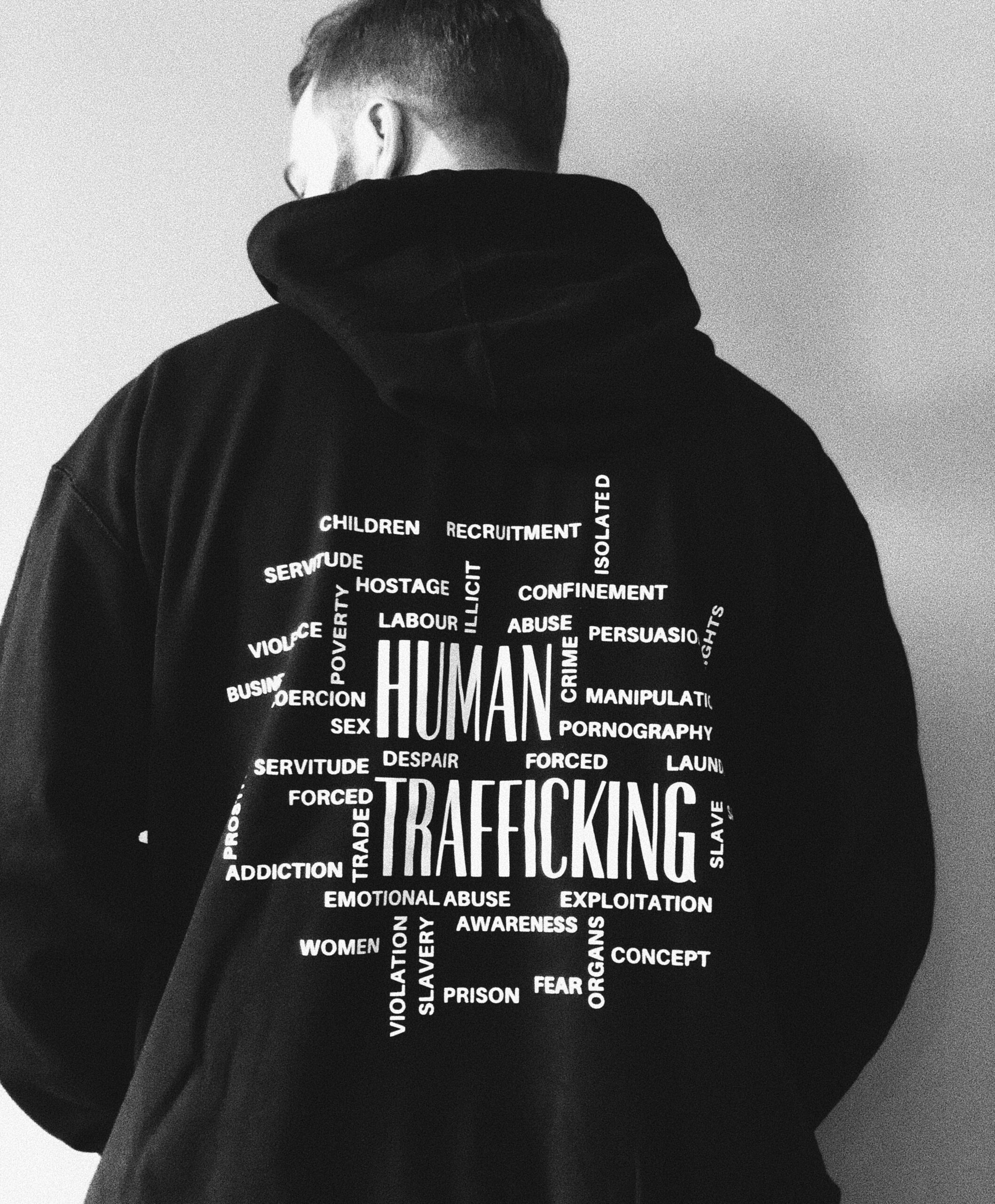
Human rights are now more than even challenged where one has to ask, how to keep the human factor. As has been pointed out before, the study of AI and its impact on several security and human rights issues is very much interdisciplinary combining fields such as international relations, sociology, psychology, social work and criminology. Room is left to consider the micro level of human rights such as human (sex) trafficking in relation to cyber and AI factors. This blog article aims to further open up the debate on applying international relations theories and taking an interdisciplinary approach on analysing AI in relation to human (sex) trafficking. For the sake of argument, several human rights issues such as human trafficking, sex trafficking and child pornography will be considered together. Questions can be on a societal and possibly an existential level on how we react with AI in relation to human (sex) trafficking. It becomes clear that the human factor remains essential and that one needs to find a common strand to analyse several theories.
Cyber human (sex) trafficking in 2026 and beyond
Both human (sex) trafficking and child pornography are being influenced by AI and prove to become increasingly a challenge to human rights. 2025 a major online child pornography darknet page was taken down named “Kidflix”. German authorities in cooperation with Europol managed to make dozen arrests (79 arrests and 1400 identifications) dismantling this criminal network that was sharing and distributing child sexual abuse material (CSAM) using advanced crypto-tracing and automated reporting tools. “AI is now being used throughout the cycle of child sexual exploitation. Offenders can create fake identities and even automate the grooming of victims, allowing them to scale up exploitation across languages and platforms.” Furthermore, open-source AI models pose the challenge that criminal networks can alter and de-age normal photographsand turn them into CSAM, without having much training or the need for expertise.
One could think, ‘So what? Crime networks are always there, and technology will always evolve’. What this brings to mind is that these perpetrators can and will move very swift, adjust their tactics and create harmful content at an alarming speed challenging law enforcement and scholars.
The United Nations on Drug Office and Crime and the EU warn of more human trafficking being committed in order for the victims to commit cyber-crime in certain scam centres. Crime networks use AI to deceive victims into false job advertisement and deceive them into scams whilst evading trace and detection. The European Commission strives for a new EU Strategy on combating Trafficking in Human Beings.
This shows how the issues have become complex, and the development of new or adapted criminal networks prove to be a challenge which means, sorting through theories that analyse these issues are also a task.
This leaves room for analysing theories and methodologies, tackle them with an interdisciplinary approach and eventually come up with possible ways forward. It also makes all the clearer, that keeping the humans in the loop remains a vital part in tackling these issues. Additionally, there already seems to be a co-dependence developing that namely law enforcement is applying AI in battling online human trafficking which will be explored in the following paragraph.
Theories on AI and human (sex) trafficking and the way forward?
If we consider an interdisciplinary approach, then it is all the more important to find a common ground and a strategy that one can keep adapting when wanting to apply AI to ‘combat’ human sex trafficking and preserve human rights. The many issues seem to be connected with each other which makes a separate approach challenging. There seems to be room for empirical research and developing methodologies when wanting to assess how criminals use the cyber domain to recruit people for sex trafficking. Gezinski and Pons for instance (2024) point out: “Despite undertaking this systematic review, the prevalence of online- facilitated sex trafficking is still unknown, and large-scale representative studies are needed. (…) Overall, very few empirical studies have been conducted on the relationship between sex trafficking and technology.”[1] Garkish et al (2025) for instance concludes that an interdisciplinary approach should be focused on when wanting to find a unified way of applying AI in social work and other disciplines whilst also considering the ethics behind of using AI. This should also ensure that ethical work is ensured.[2] Garkish also points out that social-work needs to remain “face-to-“face”. This is very similar to the debate in international relations (IR) to ‘keeping the humans in the loop’. Kjellgren (2022) also calls for a closer look at the sex trafficking schemes themselves and that one should not run the risk of being distracted by the emerging technologies in the first place.[3]
Do we take out the humans to make decisions faster when it comes to safety or is the risk still too great to make fatal decisions? What if AI search engines can detect underage faces but those faces have been altered deepfake technology? What if sex trafficking rings recruit minors but later the videos and images to click are just barely coming of age faces. Xi Wang and Noelle E. Fearn have summarised models of AI to combat human trafficking which seem to be now about 48.[4] Models exists to detect emojis, clothing, operating hours from businesses, language etc but major setbacks exist: “Their implementation in practice calls for interdisciplinary collaboration among technologists, law enforcement, and civil society to ensure usability and fairness.”[5]
It becomes clear that social media companies must monitor together with governmental authorities the online presence of possible perpetrators. The question also needs to be asked: can social media platforms continue to stay truly ‘civilian’ or ‘private’ or must one accept that they will be monitored by states more strongly? What about the recent development of banning social media for under 16 year olds and states that have raised allegations against Meta due to the platform’s ‘addictive’ features? Will this perhaps have an influence and help keep young people safe in the cyber domain?
At the moment it seems that the various fields involved in researching this topic (e.g. international relations, criminology, sociology, lawyers, social workers to name a few) should try to structure several clear (research) questions to tackle this vast developing complex issue. It becomes therefore all the more vital to try to combine these theories into few strands in order to not lose focus which will be looked at more in detail in the following paragraph whilst also having the focus on the human factor.
Challenging the human rights questions on AI and human (sex) trafficking
Do we have to keep coming up with new theories or methodologies? When one searches in the web an article or a peer reviewed essay on a certain topic, the certainty that one finds something is by now very high. What if one runs the risk of losing track of the many theories and questions that need to be answered when thinking about AI and human (sex) trafficking. The next challenge would be: to find a way through a dense amount of material and ideas and streamlining it into few focused ‘strands’. As the conflicts become increasingly interwoven due to e.g hybrid warfare and the cyber domain being almost inseparable from the real world, so one needs to even more strongly find a way forward.
When looking more on the sociological and dare one says, philosophical level, by taking several steps back, one can try to look at this issue in a broader sense. One has the cyber domain, that is here to stay for sure. Then comes the issue of cyber criminals for instance in this case sex trafficking. At the moment individuals seem to be in a dilemma. Several individuals (especially younger people) navigate towards the trend of using analogue technology, not wanting to be dependent on streaming services and be possibly addicted to social media services. Speak, just now Meta has agreed to pay 17.1 bn dollars for creating addictive search algorithms and promises to alter the issue of creating a safe space for children and young people.
Looking at other articles, interesting aspects arise that we can no longer close the ‘door’ when switching off the internet. When looking back, one was able to leave the cyber domain when one was finished with their work but now, one is almost forced to stay online. Individuals have a second identity in the cyber domain as well as the security sector. One could say, a certain type of cyber conflict in relation to human rights and child pornography is taking place in the cyber domain that one cannot ‘switch off’ so easily anymore. So like Platonwho said there is not only the physical world but also something beyond (theory of forms), must we accept now that we truly need to exist both in the real and cyber world? Hypothetically, what would happen if a collective mass ‘hysteric’ or after chaos theory, everyone were to do the same and delete all their social media accounts for instance? Would this truly happen? Would this be beneficial for human rights? Or is the interdependence and co-dependence too strong already?
Marcus Aurelius also wrote in his meditations[6], that one should not fight reality and just follow the world order however, the cyber domain is purely manmade, so how much can we accept that it is the flow of our time or the development of a greater world order?
Researchers such as Valeriano, Jensen and Maness (Cyber Strategy, 2018, Oxford University Press) agree that sanctions are still very useful when wanting to alter an ‘enemy’s’ attitude in the cyber domain, in other words the typical ‘tit-for-tat’ strategy. Within the human sex trafficking scene, one does not only want to alter the perpetrators behaviour, one wants to identify the rings and stop trafficking. Europol calls the criminals network in it’s report a “A FLUID CRIMINAL ECOSYSTEM : Why do criminal networks continue to resist and emerge?”[7] so therefore one should also consider a strategy in the age of AI also fluid when wanting to tackle the many issues at hand.
It might be a challenge to combine different disciplines and methodologies to continue researching and combating said conflicts however, it seems to be a necessary step in the long-term run. What about applying feminist theories into this debate? Feminist theories discussed by scholars (e.g. Sjolberg, Cockburn) agree that one cannot understand the causes of war without looking or considering the gender[8]. While it is debatable but one could consider issues such as cyber (sex) trafficking part of a certain cyber war. Sjolberg discusses that feminist theories take more different types of sources into account which could contribute to researching cyber violence. [9]This can in turn be useful when wanting to understand how criminals exploit AI and the cyber domain to conduct cyber (sex) trafficking and establish networks of child pornography.
Conclusion
Many human rights questions remain. Will humans be living a double life in the cyber domain? Will the stricter social media laws for young people under the age of 16 help in combating possible online grooming and recruitment? The problems are interwoven and connected which challenges several disciplines in analysing said issues.
One thing that one should not forget in this equation: communicating. With digitalisation individuals are able to communicate faster yet there have also been setbacks. That is why it is all the more important to strengthen word to word communication between young people, elders, parents but also on a security level. This could possibly contribute to a safer exchange of ideas and taking precautions. One should also consider the impact of AI centres on other areas of human and possible environmental rights which leaves rooms for further discussion in another article. There is already a lot of emerging literature, but it seems there is for now a need to organise the new articles and ideas into several strands in order to not lose focus when analysing human rights issues.
[1] Lindsay B. Gezinski & Kwynn M. Gonzalez-Pons (2024) Sex Trafficking and Technology: A Systematic Review of Recruitment and Exploitation, Journal of Human Trafficking, 10:3, 497-511, DOI: 10.1080/23322705.2022.2034378
[2] Garkisch, M., Goldkind, L. Considering a Unified Model of Artificial Intelligence Enhanced Social Work: A Systematic Review. J. Hum. Rights Soc. Work 10, 23–42 (2025). https://doi.org/10.1007/s41134-024-00326-y: 34.
[3] Kjellgren R (2022) Good tech, bad tech: Policing sex trafficking with big data. International Journal for Crime, Justice and Social Democracy 11(1): 149-166. https://doi.org/10.5204/ijcjsd.2139
[4] Xi Wang and Noelle E. Fearn pg 308-315 in Ruopeng An, Michael A. Lindsey, “Artificial Intelligence in Social Work: Bridging Technology and Humanity,” GCTU Repository, accessed August 26, 2026, https://repository.gctu.edu.gh/items/show/3228.
[5] Ruopeng An, Michael A. Lindsey, “Artificial Intelligence in Social Work: Bridging Technology and Humanity,” GCTU Repository, accessed August 12, 2026, https://repository.gctu.edu.gh/items/show/3228.: Pg: 322
[6] Aurelius, Marcus. 2014. Meditations. Translated by Martin Hammond. Penguin Pocket Hardbacks. London, England: Penguin Classics.
[7] https://www.europol.europa.eu/cms/sites/default/files/documents/Blueprint-of-criminal-opportunism.pdf : pg 30
[8] Laura Sjoberg (2024) Feminist Theories and Thinking Security Otherwise, Security Studies, 33:5, 860-884, DOI: 10.1080/09636412.2024.2449334
[9] Ibid. 874
References:
Agovic, A., Wagner, D.L. and Fisher, M. (2026) Abuse at scale: Artificial intelligence is reshaping child sexual exploitation. Global Initiative Against Transnational Organized Crime. Available at: https://globalinitiative.net/analysis/abuse-at-scale-artificial-intelligence-is-reshaping-child-sexual-exploitation/ (Accessed: 29 August 2026).
An, R. and Lindsey, M.A. (2026) Artificial Intelligence in Social Work: Bridging Technology and Humanity. GCTU Repository. Available at: https://repository.gctu.edu.gh/items/show/3228 (Accessed: 26 August 2026).
Aurelius, M. (2014) Meditations. Translated by Martin Hammond. London: Penguin Classics.
Digital Strategy – European Commission (n.d.) European approach to artificial intelligence. Available at: https://digital-strategy.ec.europa.eu/en/policies/european-approach-artificial-intelligence (Accessed: 29 August 2026).
Europol (2025) Europe’s most innovative law enforcement projects honoured at Europol’s 2025 Excellence Awards. Available at: https://www.europol.europa.eu/media-press/newsroom/news/europe%E2%80%99s-most-innovative-law-enforcement-projects-honoured-europol%E2%80%99s-2025-excellence-awards (Accessed: 29 August 2026).
Europol (2026) Blueprint of criminal opportunism. Available at: https://www.europol.europa.eu/cms/sites/default/files/documents/Blueprint-of-criminal-opportunism.pdf (Accessed: 29 August 2026).
Garkisch, M. and Goldkind, L. (2025) ‘Considering a unified model of artificial intelligence enhanced social work: a systematic review’, Journal of Human Rights and Social Work, 10, pp. 23–42. https://doi.org/10.1007/s41134-024-00326-y.
Gezinski, L.B. and Gonzalez-Pons, K.M. (2024) ‘Sex trafficking and technology: a systematic review of recruitment and exploitation’, Journal of Human Trafficking, 10(3), pp. 497–511. https://doi.org/10.1080/23322705.2022.2034378.
ITSS Verona (2025) ‘The growing issues of violence against women in the cyber domain’. Available at: https://www.itssverona.it/the-growing-issues-of-violence-against-women-in-the-cyber-domain (Accessed: 29 August 2026).
ITSS Verona (2026) ‘AI, ICT infrastructures, and social media in today’s conflicts’. Available at: https://www.itssverona.it/ai-ict-infrastructures-and-social-media-in-todays-conflicts (Accessed: 29 August 2026).
Kjellgren, R. (2022) ‘Good tech, bad tech: policing sex trafficking with big data’, International Journal for Crime, Justice and Social Democracy, 11(1), pp. 149–166. https://doi.org/10.5204/ijcjsd.2139.
Reichart, J. (2025) ‘So gelang bayerischen Ermittlern der Schlag gegen Kidflix’, BR24, 4 April. Available at: https://www.br.de/nachrichten/bayern/so-gelang-bayerischen-ermittlern-der-schlag-gegen-kidflix,UgLaM9T (Accessed: 29 August 2026).
ScienceDirect Topics (n.d.) Chaos theory. Available at: https://www.sciencedirect.com/topics/earth-and-planetary-sciences/chaos-theory (Accessed: 29 August 2026).
Sjoberg, L. (2024) ‘Feminist theories and thinking security otherwise’, Security Studies, 33(5), pp. 860–884. https://doi.org/10.1080/09636412.2024.2449334.
Vogue Adria (n.d.) Offline analog trend. Available at: https://vogueadria.com/offline-analog-trend/ (Accessed: 29 August 2026).
Wang, X. and Fearn, N.E. (2026) ‘Artificial Intelligence in Social Work: Bridging Technology and Humanity’, in An, R. and Lindsey, M.A., Artificial Intelligence in Social Work: Bridging Technology and Humanity. GCTU Repository, pp. 308–315. Available at: https://repository.gctu.edu.gh/items/show/3228 (Accessed: 26 August 2026).
BBC, “US states call for big changes to Instagram and Facebook as Meta child privacy trial begins”, https://www.bbc.com/news/articles/clyqpx6xk69o , Date accessed: 18 August 2026
BBC, “Meta to pay up to $18bn to settle claims its platforms harm children,” https://www.bbc.com/news/articles/cd68q3wynnqo#google_vignette , Date accessed: 26 August 2026
Medium – “We Used to Log Off” , https://uxdesign.cc/we-used-to-log-off-36771c18926b , Date accessed: 15 July 2026
Daily Philosophy – “Plato’s Theory of Forms - Stepping out of the shadows and into the light,” Matthias, Andreas, https://daily-philosophy.com/platos-theory-of-forms/
Political Science Institute – “Feminist Perspectives in International Relations”, https://polsci.institute/international-relations-world-history/feminist-perspectives-in-international-relations/?utm_source=chatgpt.com , Date accessed: 10 Jult 2026