By Federico Sergio - USA Team
When foreign policy becomes domestic politics
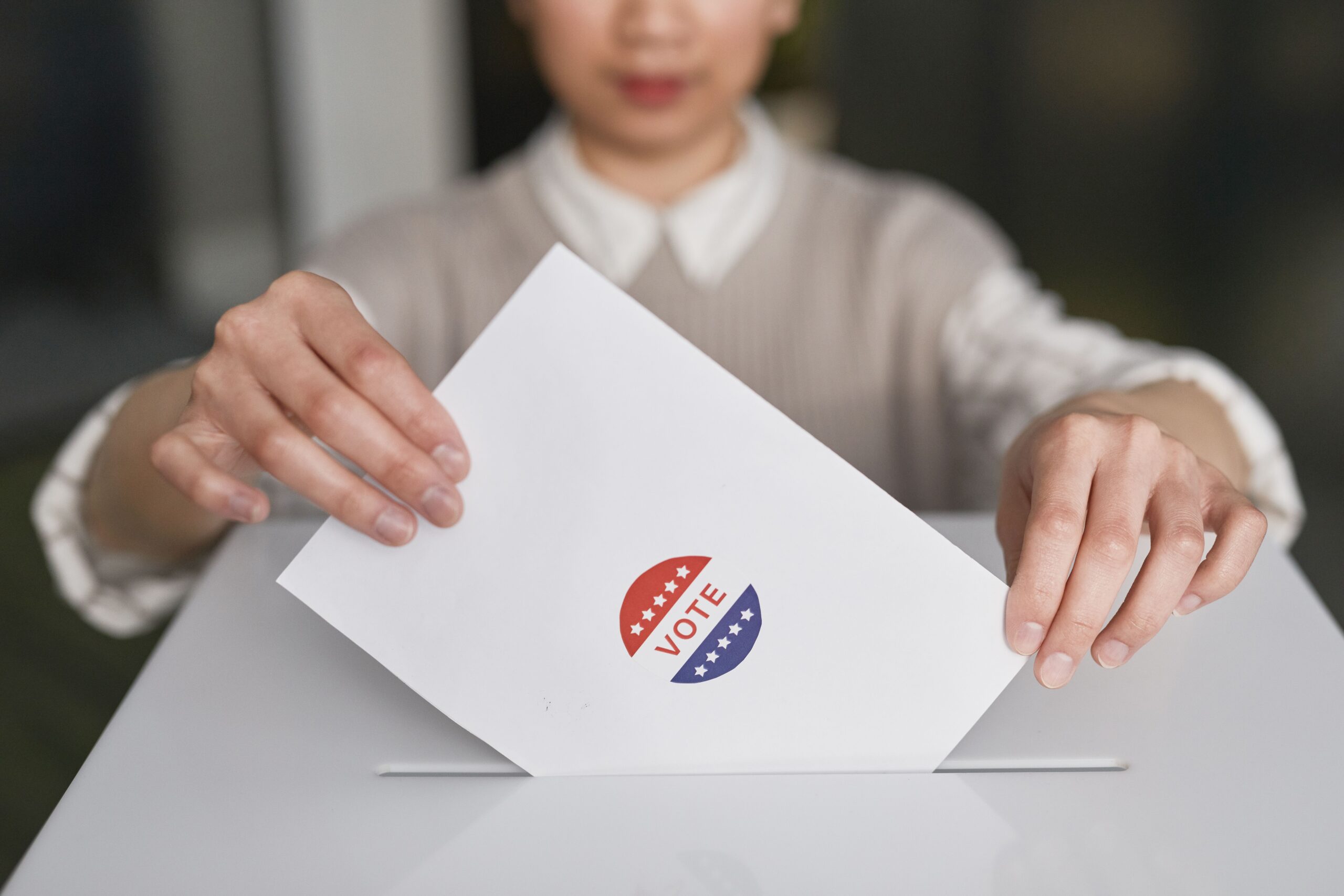
On 3 November, Americans vote in midterm elections that rarely turn on foreign affairs. This year may be an exemption. Given the US and Israel attack on Iran on 28 February, and President Trump’s statement about the end of the war ending “immediately after” the elections a question araises: has the conflict become a political liability, and can an election change how Washington fights it? The answer is subtler than “voters punish war”. The midterms will probably not decide whether the US keeps confronting Tehran but they could, however, change the political and institutional constraints under which the administration acts, a relationship Chatham House analysts have highlighted.
The strategic costs of the conflict
US, and consequently worldwide, costs are mainly military, economic and diplomatic. From a military perspective, the Pentagon estimated in September that the war had cost $43.6 billion so far, and Defense Secretary Hegseth is seeking roughly $80 billion more to replenish depleted stockpiles. Trump has also announced 9,000 additional troops for the region.
Coming to economic costs, energy is the central channel. About a fifth of the world’s oil normally passes through Hormuz, but September flows ran at roughly half the normal volume, and Brent futures are around $107 a barrel in mid-October. Tehran may view uncertainty surrounding the Strait's status as an important source of leverage. From this perspective, Iran could consider its survival and the securing of guarantees against future attacks as significant strategic achievements.
Moreover, a survey by the Chicago Council on Global Affairs found that 86 per cent of Americans believed the war with Iran had negatively affected the cost of living, while 68 per cent considered the conflict not worth the costs. Moreover, 72 per cent of Americans believe the war has damaged relations with allies.
The electoral dimension
Voters’ views of the war and their economic grievances are related but distinct. Only 2 per cent name Iran as the most important issue, possibly because US casualties have been relatively low. Yet, the aforementioned percentages show a clear stance on how the war is perceived with regard to the cost of living. Gasoline averaged about $4.33 a gallon in mid-October, against $2.98 before the war. Payne’s comment on this is neat: “the economy is foreign policy”.
Academic research points the same way. Studies of the Iraq War found that electoral damage tracked casualties and perceived success, while midterms outcomes have long followed presidential approval and economic conditions. With US casualties comparatively low, the economic channel is the more plausible route for Iran to matter at the ballot box. For Republicans, the pressure is real but not uniform. Democrats’ generic-ballot lead is trending towards double digits, and Republicans have privately conceded that the House is all but lost. Yet, the GOP’s mid-decade redistricting has left the median House district about 3.5 points redder than the county, and Speaker Mike Johnson insists Republicans can “absolutely” win even if the war continues.
There is also a limit on how much the White House can gain from de-escalation given majorities saying they would not view Trump’s party more favourably even if he ended the war before the vote. Voters, in other words, may already have priced in the damage.
What could a change in Congress mean?
A Democratic majority in either chamber would probably increase friction with the White House over Iran. The tools are oversight hearings, subpoenas, appropriations and legislations. The scholarship suggests Congress’s influence over war often works less through binding law than through hearings, public criticism and the political costs they impose on a president.
Some constraint already exists. Congress has already demonstrated its willingness to challenge the administration's approach to Iran. A war powers resolution passed both chambers, with the Senate approving it by 50 votes to 48. However, its legal implications and enforceability remain disputed, highlighting the limitations of congressional efforts to constrain presidential military action. Historically, such resolutions have been vetoed or ignored by presidents of both parties, including Trump in 2019 and 2020, producing a veto-proof majority unlikely.
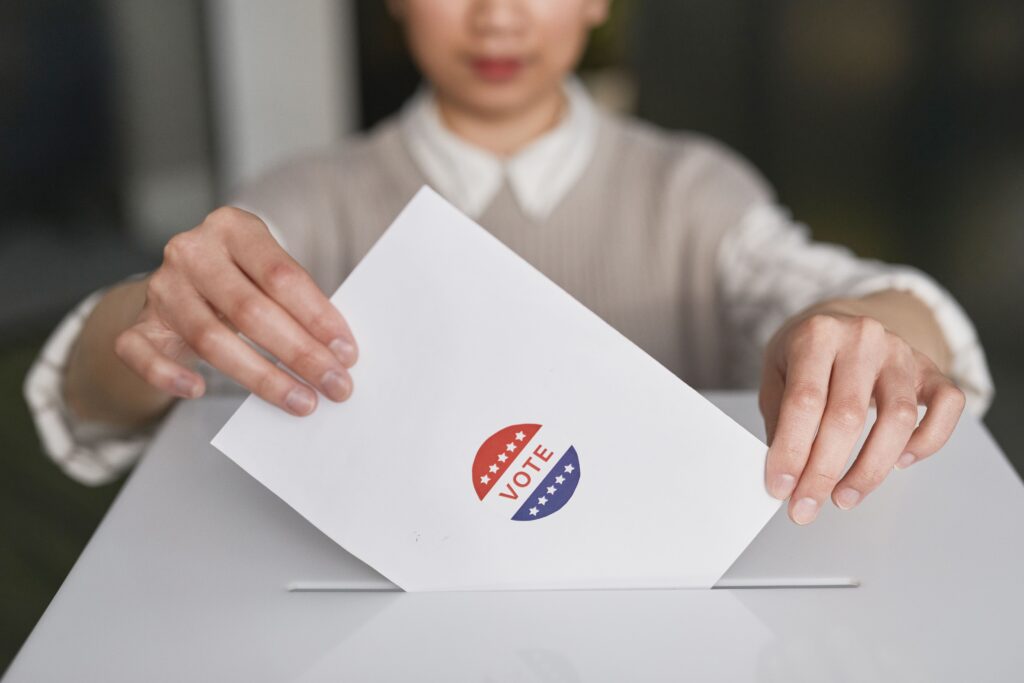
In this situation, money is the more potent lever, as for example, the slow or conditioned of the $80 billion supplemental and wider defence budget by a Democratic House. But Democrats are not united. Some senators fear a supplemental vote would act as a “backdoor” authorisation, while the others, such as John Fetterman, support more spending. Because a supplemental needs 60 Senate votes, that split matters.
Sanctions and any eventual settlement add a further wrinkle. Constraint could come from both directions, with Republicans criticising a proposed $300 billion fund to rebuild Iran, warning that a poor deal could give congressional Republicans an opening to hit the president after a rout. So a Democratic victory could constrain the administration without automatically reversing its policy. Hearings can raise the political price of escalation, and funding fights can slow it meaning none of these force a withdrawal, cautioning that the factors that have blocked a deal remain in place after 3 November.
Conclusion
The sharper question is not whether the midterms end the war but how they change Washington’s room for manoeuvre. A weakened president faces more scrutiny, tighter budgets and less credibility when he threatens force or promises a deal. Allies and adversaries will read the results closely, and Tehran, which faces no comparable electoral test until 2028, may conclude that patience is a strategy.
Voters are unlikely to deliver a verdict on Iran itself, but they will deliver one on what the war costs them at the pump and at the checkouts. Whether that verdict reshapes US policy depends on what a new Congress chooses to do with it, and on whether a president who has said he doesn’t care about the midterms chooses to listen.
Sources
Al Jazeera (2026) ‘Trump’s Iran war now has a midterm election problem’, 10 September. Available at: https://www.aljazeera.com/news/2026/9/10/trumps-iran-war-now-has-a-midterm-election-problem
Payne, A. (2026) ‘Why the US midterms are a rare foreign policy election’, Chatham House, October. Available at: https://www.chathamhouse.org/2026/10/why-us-midterms-are-rare-foreign-policy-election.
Hurlburt, H. (2026) ‘US voters are angry. But on tariffs and war, the midterms won’t bring quick change’, Chatham House, 22 October. Available at: https://www.chathamhouse.org/2026/10/us-voters-are-angry-tariffs-and-war-midterms-wont-bring-quick-change
Associated Press (2026) ‘Senate for first time approves a war powers resolution in a rebuke to Trump over Iran conflict’, 23 June. Available at: https://lasvegassun.com/news/2026/jun/23/senate-for-first-time-approves-a-war-powers-resolu/
Political.org (2026) ‘Gas prices explained: the Iran war, the Strait of Hormuz and what you pay at the pump’. Available at: https://political.org/explained/gas-prices-iran-oil/
The National (2026) ‘US midterms: Iran war and cost of living put Trump’s foreign policy under pressure’, 20 October. Available at: https://www.thenationalnews.com/news/us/2026/10/20/us-midterms-iran-foreign-policy/
UNN (2026) ‘U.S. officials warn of rising oil and gasoline prices due to the closure of the Strait of Hormuz’. Available at: https://unn.ua/en/news/us-officials-warn-of-rising-oil-and-gasoline-prices-due-to-the-closure-of-the-strait-of-hormuz.
Gelpi, C., Feaver, P.D. and Reifler, J. (2005/06) ‘Success matters: casualty sensitivity and the war in Iraq’, International Security, 30(3), pp. 7–46.
Karol, D. and Miguel, E. (2007) ‘The electoral cost of war: Iraq casualties and the 2004 U.S. presidential election’, The Journal of Politics, 69(3), pp. 633–648.
Kriner, D.L. and Shen, F.X. (2007) ‘Iraq casualties and the 2006 Senate elections’, Legislative Studies Quarterly, 32(4), pp. 507–530.
Tufte, E.R. (1975) ‘Determinants of the outcomes of midterm congressional elections’, American Political Science Review, 69(3), pp. 812–826. Available at: https://www.cambridge.org/core/article/determinants-of-the-outcomes-of-midterm-congressional-elections/2D3701D5F63001FAAD7BF14394DCCAB8
Egypt Independent (2026) ‘Republicans are panicking about 2026’. Available at: https://www.egyptindependent.com/?p=2834988
Associated Press (2026) ‘Trump’s Iran war leaves Republicans adrift ahead of midterms’, via WTOP, April. Available at: https://wtop.com/national/2026/04/trump-offers-murky-path-forward-for-republicans-as-iran-war-clouds-midterm-elections/
Al Jazeera (2026) ‘Iran war: Top US lawmaker says Republicans can “absolutely” win midterms’, 23 August. Available at: https://www.aljazeera.com/news/2026/8/23/iran-war-top-us-lawmaker-says-republicans-can-absolutely-win-midterms
Howell, W.G. and Pevehouse, J.C. (2007) While Dangers Gather: Congressional Checks on Presidential War Powers. Princeton: Princeton University Press.
Kriner, D.L. (2010) After the Rubicon: Congress, Presidents, and the Politics of Waging War. Chicago: University of Chicago Press.
Scripps News (2026) ‘Senate passes war powers resolution to curb future US military action against Iran’. Available at: https://mynews4.com/news/nation-world/senate-passes-iran-war-powers-resolution-challenging-trump-military-actions
NOTUS (2026) ‘Senate Democrats are split over supplemental funding for the war in Iran’. Available at: https://www.notus.org/senate/senate-democrats-supplemental-funding-iran-war
Chatham House (2026) ‘Trump has an incentive to strike a deal with Iran, as midterms approach. But at what cost?’, 10 April. Available at: https://www.chathamhouse.org/2026/04/trump-has-incentive-strike-deal-iran-midterms-approach-what-cost
No comments.