Authors: Dan Ziebarth, Ingrid Heggstad, Miguel Jiménez Admetlla, Michele Mignogna - Political Economy, development & Energy Security Team
Introduction
The need for critical minerals to achieve the energy transition cannot be stressed enough. According to the International Energy Agency, demand for these minerals will increase by a factor of four to sixfold. Just as with many other trends that begin to unfold, Africa holds the key since it sits on a vast supply of these resources. Yet, the way the continent approaches this matter could determine whether its history is rewritten or if there is a perpetuation of an uneven distribution of resource gains.
Several key indicators highlight Africa's importance in this context. More than half of African countries possess green minerals essential for the energy transition. Notably, the Democratic Republic of Congo boasts half of the world's cobalt reserves, crucial for batteries and electric vehicles. To fully leverage these resources, Africa must integrate its supply chain processes, capitalizing on value addition at every stage, from extraction to transportation.
Balancing a Just Transition for Africa: Challenges and Imperatives
Mineral supply chains typically involve four stages, which can broadly be divided into extraction, refining, production, and recycling. Currently, the vast majority of African countries export critical minerals in their primary form, trapping the continent in a cycle known as the primary commodity trap.
Accordingly, Africa perceives a tiny percentage of the overall benefits, with forecasts suggesting that this situation is unlikely to improve shortly. Out of the projected $8.8 trillion market value of global batteries and the supply chain of EVs, only $55 billion is expected to flow to Africa. Thus, there is an urgent need for substantial reforms. However, this goal conflicts with the interests of countries aspiring to lead in renewable energy transitions. Indeed, to maintain sustainable growth without compromising inputs, these nations are eyeing the continent’s supply of rare earths.
While ensuring that necessary minerals reach global markets is crucial for meeting climate agreements, the pioneers in energy transition such as the EU, the US and China ought to design climate policies which hold high standards. At the same time, even though some sort of protectionism has been put in place in the continent, this may be rather ineffective if ownership along the supply chain remains foreign. If the opposite occurs, it could turn out to be a Berlin Conference of the 21st century.
Co-opetition for Resources in Africa: The EU & China
Thus far, the EU has adopted the Critical Raw Materials Act (CRM Act) which sets ambitious targets for mineral processing, emphasizing reduced reliance on third countries. Precisely, it establishes targets for critical raw materials of meeting 10% of annual needs mined materials, 15% recycled materials, and 40% of materials processed in Europe by 2030 for minerals, while simultaneously not relying on a single third country for more than 65% for any material. Remarkably, two major roadblocks should be noted for the EU to achieve these targets.
The first involves intensifying global competition for resources in Africa, particularly about China. As the green transition progresses, states are increasingly reliant on critical minerals from Africa, fueling competition for influence over these strategic resources. Aware of the risks associated with overreliance on a single supply chain, African countries have strategically prioritised diversifying their mineral partnerships. This strategic recalibration has added another layer of complexity to the geopolitical landscape, as access to the supply chains of critical minerals becomes yet another arena for the intricate dynamics of great power rivalry to unfold.
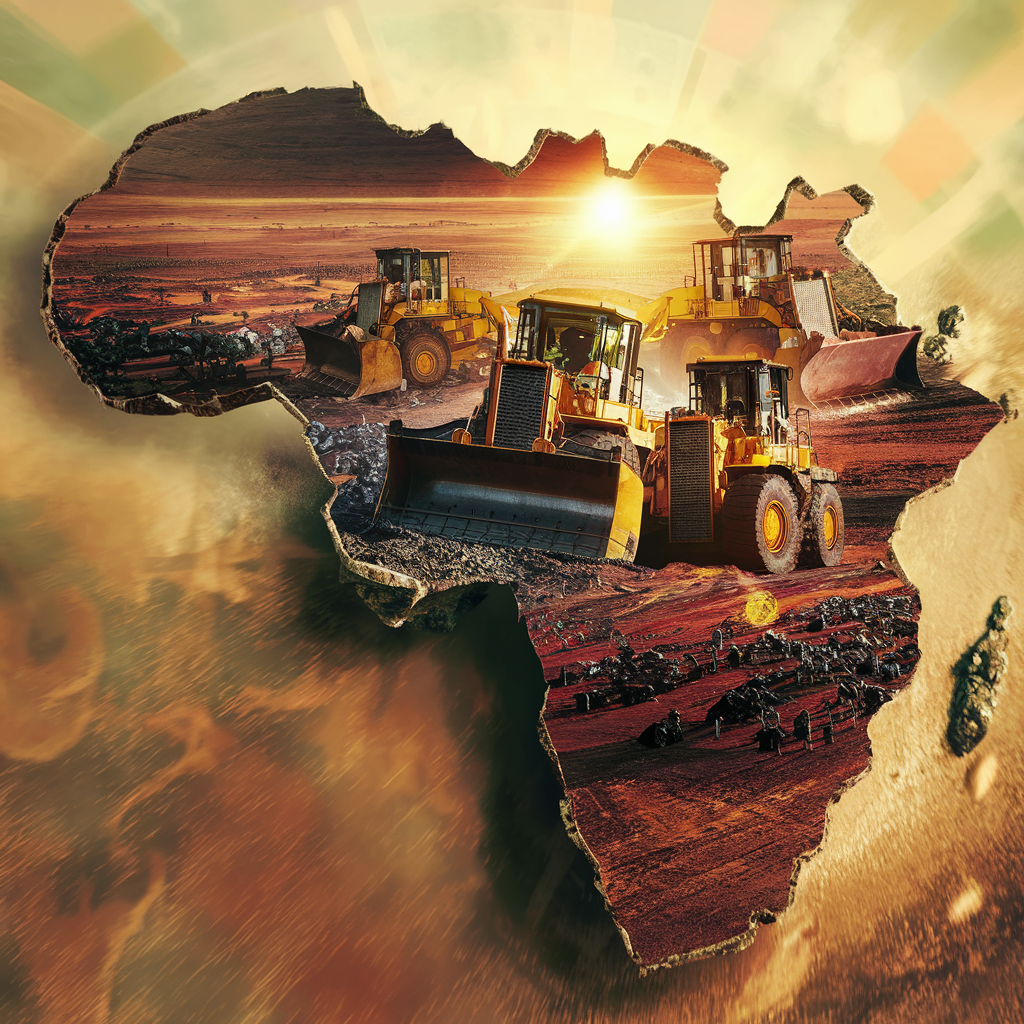
International competition for access to critical minerals navigates through alliances and rivalry alike. Geopolitical manoeuvring by influential players such as the US, China, and the EU is intricately tied to securing and managing critical minerals' supply chains. China possesses a dominant position in producing and refining African critical minerals, giving it significant influence over supply chain dynamics and sparking concern among other key stakeholders such as the EU and the US. This influence is evident in regions like the Horn of Africa, where the evolving engagement of China and the EU reveals intersecting interests and potential for both competition and collaboration.
While China's growing economic presence in the region, driven by access to critical minerals and infrastructural projects, contrasts with the EU's emphasis on security initiatives and governance reforms, Chinese involvement has nonetheless produced benefits for infrastructural and economic development. Additionally, their security operations, including peacekeeping and anti-piracy efforts, have contributed to increased regional stability. These positive outcomes challenge prevalent negative narratives in the West regarding China's involvement in the region, offering the potential for cooperative influence and increased opportunity for strengthened stability in the region. Although it would require thorough preparation and collaborative endeavours, Chinese and European involvement in the Horn of Africa holds the potential for a mutually beneficial outcome.
Additionally, a second major consideration regarding the CRM Act is ensuring that local communities in Africa are safeguarded, while also supplying enough critical minerals to achieve targets. A common concern locally is that extractive industries, such as mining, will place several negative consequences on the environmental and social conditions in mining communities in Africa. To ensure a just transition, the mineral supply chain process must provide sufficient protection for mining communities in Africa to not harm or exploit them over the long term. Within this geopolitical context, African countries emerge not solely as suppliers of the critical minerals for the green transition but also as significant influencers in shaping global power dynamics.
As these countries strive to break free from the primary commodity trap, their choices concerning trade agreements, alliances, policies for resource extraction, and infrastructure expansion resonate throughout the entire supply chain. African countries’ involvement introduces a new dimension to international competition, where countries and blocs vie not only for access to critical minerals but also for influence over their strategic decisions.
Africa's mineral wealth forms an essential bedrock for industries worldwide, as the supply chain of strategic minerals extends across multiple facets in the development towards sustainable solutions. Therefore, countries depend on a consistent and unbroken supply of these minerals, wherein the evolution and dynamics of this supply chain can send shockwaves throughout the global economy and geopolitical landscape.
Conclusion
In conclusion, the continent, and the whole world, stands at a crossroads. The approach to African resource management will determine whether it can break free from historical patterns of exploitation. The goal, as stated in the African Green Minerals Development Strategy Approach Paper, is to guide Africa to strategically exploit the continent’s green mineral resources for industrialisation and to assert control over its destiny to create an African presence in emerging green technologies. A shift towards integrated supply chain management, sustainable extraction practices, and prioritisation of local community welfare is imperative to harness the full benefits of Africa's mineral wealth while mitigating adverse consequences.
In this context, international cooperation and strategic partnerships are essential to navigate the complexities of the evolving geopolitical landscape surrounding critical minerals and to ensure that the global shift to clean technologies does not come to the detriment of African communities.
Long story short, Africa's pivotal role in the global supply chain of critical minerals underscores the continent's potential to shape the trajectory of the energy transition and influence global power dynamics. By making informed choices and fostering cooperation, African countries can not only unlock economic opportunities but also play a significant role in shaping a more equitable and sustainable global future.
However, this potential comes with significant challenges and considerations.