June 2, 2026No Comments

KFOR MSU Securing the Ibar Bridgeย 

By Geraldina Botter - Italy Team

Since 2012, Italian Carabinieri of the KFOR Multinational Specialised Unit (MSU) have patrolled the Austerlitz Bridge in Mitrovica, twenty-four hours a day. Twenty-seven years after the Kosovo War and nearly two decades into Kosovo's declaration of independence, the bridge remains the sharpest measure of how far EU-facilitated dialogue has come, and how far it still has to go[1]

ย The Austerlitz Bridge as a measure of impasse

Officially known as the New Bridge, a hundred-meter steel structure crossing the Ibar River was originally conceived to connect the two sides of Mitrovica. Following the conflict, French KFOR forces invested nearly โ‚ฌ1.5 million in its reconstruction as part of post-war stabilisation efforts. "Austerlitz", recalling Napoleon's decisive victory over Austro-Russian forces, proved an evocative designation: far from being an infrastructure, the bridge became a geopolitical boundary, embodying the unresolved disputes over sovereignty, governance, and identity that continue to define Kosovo's post-conflict impasse.

The Mitrovica partition runs deeper than the water. Formalized into two distinct municipalities in 2013 under the Brussels Agreement, Ethnic Serbs populate the northern bank, while ethnic Albanians the southern. While the bridge remains open only to pedestrian crossings, many residents have not crossed it for more than 15 years[2]. Now viewed as a symbol of division, since 2012 it has been patrolled 24/7 by Italian Carabinieri from KFOR-MSU to maintain peace and stability in the area and to deter illegal activities.

In the immediate aftermath of the conflict, French KFOR troops established a military checkpoint on the bridge; recurring outbreaks of violence, spanning from the 2000 attacks and the 2004 riots to the 2011 barricade crisis and the 2017 wall demolition, consolidated its status as a recurrent flashpoint for interethnic confrontation. Over the years, it has repeatedly been barricaded, reopened, and politically contested through EU-mediated dialogue, calling for its "revitalisation". Yet, political stakes have sharpened with Pristinaโ€™s efforts to consolidate control in the north, deepening the community's sense of alienation and marginalisation. While the struggle continues, it stands as a symbol of the impasse, entrenching ethnic divisionsย beyond the spatial dimension, thereby underscoring the stagnation of the EU-facilitated dialogue between Belgrade and Pristina to this day.

Carabinieri hybrid model of Stability Policing

Spanning twenty-seven years of NATO's continuous presence, the Italian-led Multinational Specialised Unit has remained central within the mission's security architecture. Based in Pristina under the direct authority of the KFOR Commander (and currently led by Colonel Di Fiore), it is a highly specialized multinational unit of Italian Carabinieri, working alongside Czech Military Police and Moldovan soldiers. In accordance with UNSC 1244, its mandate is oriented towards guaranteeing a safe and secure environment (SASE) and freedom of movement (FOM) for all communities across Kosovo. Operating as a third responder alongside KFOR forces, MSU acts as a gendarmerie unit that blends military capabilities with a policing background. 

Defined as Stability Policing, the concept emerged from the Alliance's experience in Bosnia-Herzegovina in the late 1990s to fill the "security gap[3]" when local police forces are either absent, insufficient, or unable to perform their functions, while conventional military units remain ill-suited for public order and community-oriented tasks. In this sense, MSU was designed to fill that gap, combining deterrence capabilities with policing functions, institutional legitimacy with operational flexibility, and community proximity with response readiness.

Translated into 24/7 presence on both sides under Operation "Austerlitz", MSU aims to preserve stability through situational awareness activities, criminal intelligence gathering, and crowd and riot control.

Beyond the bridge itself, mirroring the mandate of SFOR, the unit conducts patrols throughout northern Kosovo, supports KFOR Tactical Reserve operations, performs military police functions, coordinates with EULEX, and contributes to the ongoing assessment of Kosovo Police self-sufficiency. Through training in CRC, CQB, and tactical reserve procedures, combined with joint exercises, Carabinieri exemplifies the broader evolution of Stability Policing at the intersection of deterrence, public order management, and institutional support.

Drawing on its long-standing tradition of territorial policing, public order management, and proximity-based security practices, the Carabinieri has gained a considerable degree of legitimacy in Kosovoโ€™s polarized environment, being perceived as impartial by both Kosovo Albanian and Kosovo Serb communities. In sharp contrast to other external security actors, this local trust holds a strategic value extending beyond tactical duties, proving that the management of interethnic tensions depends as much on legitimacy and local trust as on deterrence.

Image by oltreme from Pixabay

Conclusion 

From the Western Balkans to the Middle East, MSUโ€™s hybrid model has proven not only durable but exportable, filling a vacuum that conventional military deployments cannot provide and purely civilian missions cannot sustain. As a police force operating in post-conflict zones thousands of miles from home, their unusual blend of law-enforcement expertise and military capability provides a far more tailored response to todayโ€™s โ€œnot-quite-warsโ€.

Far from being an urban infrastructure, Austerlitz Bridge is a barometer of a political process still in motion, where Carabinieri presence remains one of the indicators of where normalisation actually stands. With Pristina's administrative consolidation, Belgrade's influence over Kosovo's Serb communities, and Trump's territorial solutions, northern Kosovo remains caught between competing pressures that military presence alone cannot resolve. Today, the โ€œbridge issueโ€ is in no way a matter of logistics; it is a struggle of competing symbols and perceptions that goes beyond spatial dimensions, where MSU holds that space open. 

Yet, deeper questions remain unaddressed. While the EU-facilitated dialogue advances slowly and intermittently, Russia's war in Ukraine redirects Alliance attention, reactivating anxieties about the vulnerability of Europe's periphery.  With the Ankara NATO Summit scheduled on 7โ€“8 July 2026, the question of the Alliance's long-term commitment to the Western Balkans demands a substantive answer. In the geopolitical vacuum of enlargement fatigue[4] and an eastward-shifted Alliance, Italy's enduring presence stands as a security provider for a community that is still shaping its own future.


[1] Baccini, F. (2025); Tra Pristina, Belgrado, UE e Trump. Nubi scure su Mitrovica. Osservatorio Balcani e Caucaso Transeuropa. Available at: https://www.balcanicaucaso.org/cp_article/tra-pristina-belgrado-ue-e-trump-nubi-scure-su-mitrovica/

[2] Elfversson, E., Gusic, I. and Meye, M-T., (2023); The bridge to violence: Mapping and understanding conflict-related violence in postwar Mitrovica. Journal of Peace Research, 61(4), pp.576โ€“594. doi:10.1177/00223433221147942. Available at: https://journals.sagepub.com/doi/full/10.1177/00223433221147942

[3] Tancon Lutteri, F. (2020). EUROGENDFOR: The Origins. European gendarmeries, from their origins to the European Gendarmerie Force. The CoESPU Magazine, (4), 14. https://www.coespu.org/index.php/articles/eurogendfor-origins

[4] Othonos, A. (2010). Why Has the European Union Not Been Able to Counter 'Enlargement Fatigue'?. Journal of Contemporary European Research6(1). https://www.jcer.net/index.php/jcer/article/view/124/192

April 13, 2026No Comments

Are Russian-Serbian relations more vulnerable now than ever?

By Sorin Dojan - Russia Team

Take a stroll through the streets of Pristina, Kosovo, and at one point you will come across the statue of a smiling Bill Clinton, a stoneโ€™s throw away from a chic boutique named Hillary. 

To many wondering how a presidential couple became the unlikely heroes in a partially recognised country like Kosovo, 1999 might offer a clue. Between March and June that year, a NATO coalition bombed Yugoslavia in response to Yugoslav President Slobodan Milosevicโ€™s ethnic cleansing campaign in Kosovo. 

To Russians, this marked the beginning of a tumultuous relationship with the West. To Serbs, it reminded them of how vulnerable their country was when, after the 1990s Yugoslav wars, they found themselves surrounded by NATO and the European Union (EU), as the two expanded eastwards. Yet both Russia and Serbia found an ally in each other.

Ever since Kosovoโ€™s declaration of independence in 2008, Russia has been Serbiaโ€™s main backer of sovereignty claims over Kosovo. This has proven particularly handy amid rising EU pressure on Belgrade to normalise ties with Pristina as a precondition for accession[1]. And while the Serbian Government remains on track to join the EU[2], this has not stopped the ruling Serbian Progressive Party (SNS) from securing another three months of Russian gas imports at the end of March 2026.

Call it โ€˜hedgingโ€™ or the practice of foreign policy balancing between competing forces[3]. Serbia has done so since 2009, when it announced its โ€˜Four Pillarsโ€™ strategy to balance between the West, Russia and China[4] at a time of EU โ€˜enlargement fatigueโ€™[5].

Yet rising tensions nowadays between Serbia, the EU and the US, as well as the formerโ€™s foreign policy inconsistencies, could dash Moscowโ€™s hopes for a sustainable relationship, as Belgrade sticks to its strategic ambitions to join the EU.

Serbia, Russia and the wider geopolitical nexus

Russiaโ€™s invasion of Ukraine in 2022 has turned Serbiaโ€™s multi-vector foreign policy into a much more challenging tool to navigate. For once, it led to more criticism from the EU Commission, among other things, over Belgradeโ€™s choice not to impose sanctions on Moscow following the full-scale attack. If, in 2021, the Commission had only 12 references to Russia in its Serbia report, that number rose to 57 in 2022 and 2023, and remained high thereafter[6]

Yet a much stronger reply came from Washington. In November 2023, the US State Department targeted multiple individuals and entities over their alleged connection to what it described as Russian influence in the Western Balkans. As recently as September 2025, US officials sanctioned Serbiaโ€™s oil company NIS over its ties to the Kremlinโ€™s energy sector. 

For a small state like Serbia, sanctions translate into significant economic hardship. Belgrade could seek to buy more time by obtaining sanctions waivers from the US (it secured one at the end of March due to the US-Iran war) or by securing contract extensions with the Kremlin, but this would not make its multi-vector policy more sustainable. 

Image generated using AI (DALLยทE)

The EU remains Serbiaโ€™s largest trading partner, accounting for little over 58% of the countryโ€™s total trade in 2024. Yet European patience could be running thin: during a visit to Belgrade, EUโ€™s High Representative for Foreign Affairs and Security Policy, Kaja Kallas, urged the Serbian government to deliver on the reforms critical to accession prospects, adding that there are no โ€˜shortcuts for [EU] membershipโ€™. This includes aligning its foreign policies with the bloc, including those on Russia, with Brussels arguing in its 2022 report that Serbiaโ€™s close ties to Moscow raise questions about its strategic direction.

This is enough of a signal for the Kremlin to understand that Serbiaโ€™s hedging policy is under severe pressure at the moment. Relations between the two countries were already fraught after โ‚ฌ800m of Serbian ammunition ended up in Ukraine through Belgradeโ€™s trading partners between 2022 and 2024, prompting criticism from the Russian foreign intelligence service, the SVR. And overall trade, energy, and defence ties between Moscow and Belgrade have declined in recent years, despite the two continuing to tout their โ€œSlavic brotherhoodโ€ as the underpinning of their relations. China, which is Serbiaโ€™s other significant non-Western partner, was the countryโ€™s second-largest source of foreign direct investment in 2024[7].

If anything, Moscowโ€™s leverage over Belgrade remains mostly in the energy sector and through its membership of the United Nations Security Council, where it can still oppose any Western-led move on Kosovo (although that did not prevent the US and its allies from bombing Yugoslavia in 1999). This will reassure the Kremlin in its relations with Serbia, particularly as Serbian President Aleksandar Vucic clings to power following a year marked by severe student-led anti-corruption protests. For now, the relationship still holds.


[1] Vuk Vuksanovic, Serbiaโ€™s Balancing Act: Between Russia and the West (London: Bloomsbury Publishing, 2025), 73.

[2] Republic of Serbia, โ€œEuropean Union Remains Serbiaโ€™s Strategic Development Framework,โ€ srbija.gov.rs, January 19, 2026, https://www.srbija.gov.rs/vest/en/267475/european-union-remains-serbias-strategic-development-framework.php.

[3] Evelyn Goh, โ€œUnderstanding โ€˜Hedgingโ€™ in Asia-Pacific Security,โ€ PacNet 43 (Pacific Forum CSIS, August 31, 2006), https://csis-website-prod.s3.amazonaws.com/s3fs-public/legacy_files/files/media/csis/pubs/pac0643.pdf.

[4] Vuksanovic, Serbiaโ€™s Balancing Act: Between Russia and the West.

[5] Anna Szolucha, โ€œThe EU and Enlargement Fatigue: Why has the European Union not been able to counter enlargement fatigue?โ€, Journal of Contemporary European Research 6, no 1.

[6] European Commission, Serbia 2022 Report (Brussels: European Commission, October 12, 2022); European Commission, Serbia 2023 Report(Brussels: European Commission, 11 November 2023); European Commission, Serbia 2024 Report (Brussels: European Commission, 30 October 2024); European Commission, Serbia 2025 Report (Brussels: European Commission, 4 November 2025).

[7] Filipoviฤ‡, Slobodan, and Katarina Zakiฤ‡, โ€œEconomic Implications of Serbiaโ€™s Multi-Vector Foreign Policy,โ€ The Review of International Affairs 76, no. 1195 (2025): 503โ€“28, https://doi.org/10.18485/iipe_ria.2025.76.1195.6.

January 31, 2022No Comments

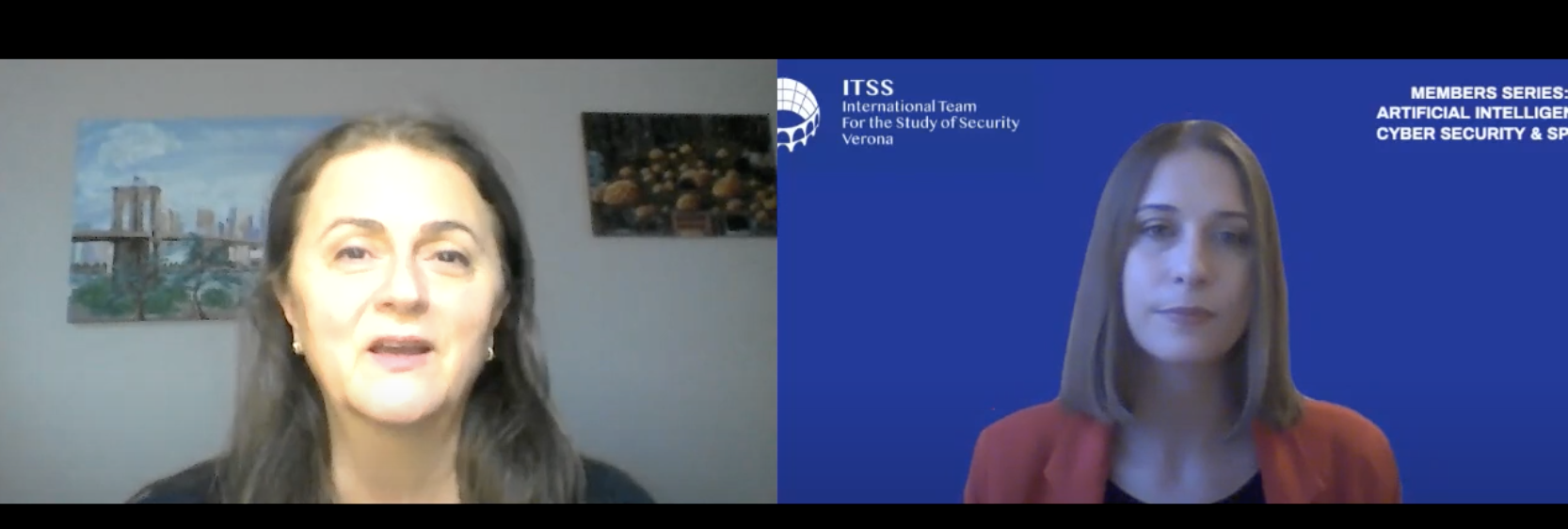
Teuta Sahatqija on Cybersecurity and Kosovo

Teuta Sahatqija talks about development of cybersecurity capacity in Kosovo since 1999, gender equality in the technology industry, cybersecurity, cybercriminal and cyberviolence occurrences, and the importance of technological development. Teuta Sahatqija is a Women in Tech Ambassador for Kosovo Chapter and an Advisor to the Mayor of Pristina for Digital Transformation and Smart City.

Interviewer: Zrinka Boric