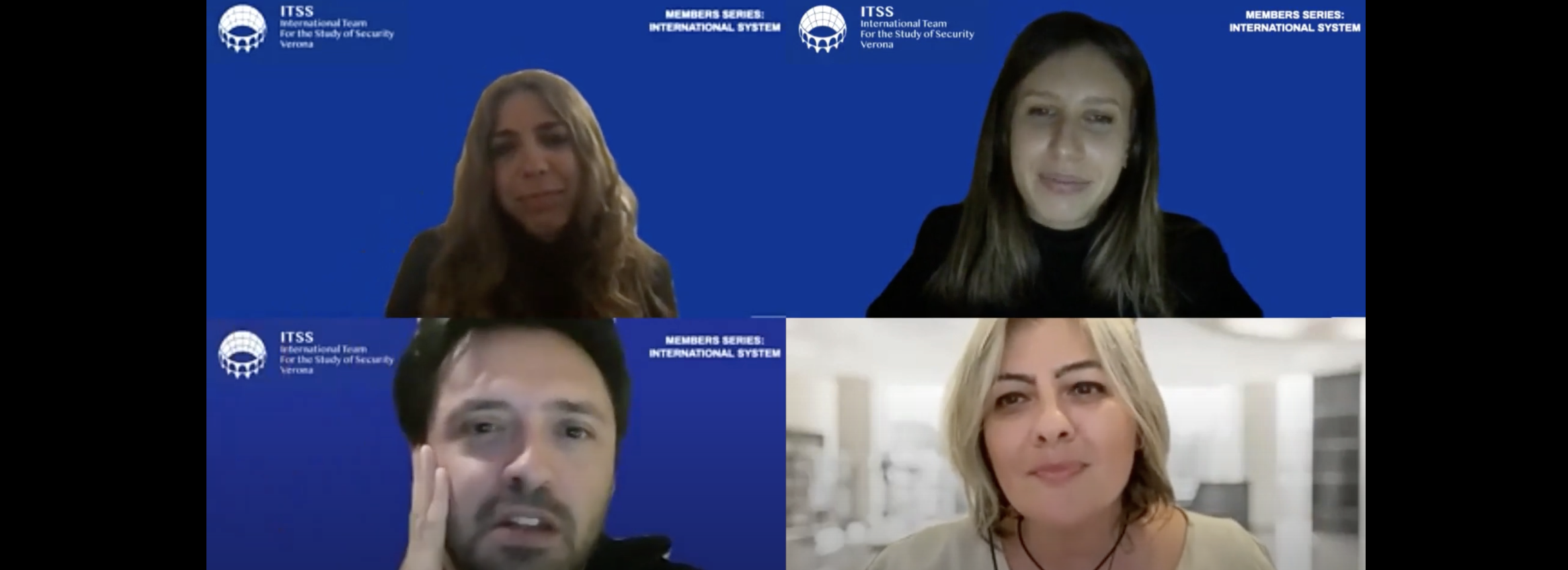
In this session, Dr. Ellis discusses the main forms Chinese organised crime takes in the region, from money laundering to illegal mining, timber, and fishing. He explains how to distinguish purely criminal networks from activity connected to the Chinese state, and how the phenomenon is becoming a growing strategic concern for the region.
Dr. R. Evan Ellis speaks about the growth of Chinese organised crime in Latin America. He is a Research Professor of Latin American Studies at the U.S. Army War College Strategic Studies Institute, where his work focuses on the region's engagement with China, transnational organised crime, and populism.
Interviewer: Sarah Toubman and Rabiah Ryklief - Central & Latin America Team
By Elisabetta Semeraro and Anna Hasani - Crime, Extremism and Terrorism Team
Narcotrafficking represents a persistent transnational threat for security worldwide and affects Latin American countries greatly. Despite decades of anti-drug policies and the proliferation of control instruments, ranging from law enforcement and militarisation to border control and international cooperation, the region continues to experience high levels of trafficking, violence, and criminal diversification. This paradox raises a central analytical problem. States have invested heavily in anti-drug policies, yet their effectiveness remains highly contested. This is especially true given the growing development of hybrid narco-trafficking. This article aims to analyse primarily the anti-drug control measures at regional level in Latin America and their lack of effectiveness. In this analysis, effectiveness refers to the capacity of anti-drug instruments to reduce trafficking flows. It also includes their ability to disrupt criminal networks and limit the systemic violence associated with drug economies. This definition deliberately moves beyond a narrow focus on drug seizures or arrests, metrics that often reflect enforcement activity rather than structural impact, and encompasses the broader question of whether existing policies are adequate to address the evolving nature of the threat.
Anti-drug instruments
The World Drug Report 2025 from the United Nations Office on Drugs and Crime, referred to data from 2023, shows a sustained increase in cocaine production and trafficking in South America, consolidating long-established routes from the Andean region towards North America and Europe. The data shows geographic diversification and route adaptation. This is particularly visible across the Caribbean region and key maritime corridors.
The report also highlights a connection between trafficking routes and rising levels of violence, especially in strategic transit countries where organised criminal groups compete over territorial control over export routes. The expansion of cocaine markets has increased competition between criminal groups. In some areas, this has led to higher homicide rates. It has also strengthened the role of criminal networks within political and administrative structures.
In parallel to the global drug control architecture led by the United Nations Office on Drugs and Crime, Latin America has developed a regional framework aimed at coordinating anti-drug policies. The central institutional actor in this framework is the Organisation of American States (OAS), within which the Inter-American Drug Abuse Control Commission (CICAD) operates as the principal technical and policy body on drug-related issues. Established in 1986, CICAD was designed to promote hemispheric cooperation, policy harmonisation, and capacity-building among Member States. It operates through specialised units addressing both demand reduction (through prevention and rehabilitation programmes) and supply reduction, including capacity building for law enforcement across maritime, aerial and emerging threat areas.
At the regional level, Latin America is not lacking institutional instruments. On the contrary, it has a dense network of cooperative mechanisms. These include technical assistance, training programs, maritime interdiction coordination, and intelligence exchange. The persistence of trafficking flows documented by the UNODC data does not stem from a vacuum of governance, but rather from the complex interaction between institutional capacity, political prioritisation, and criminal adaptability with the concerning emergence of new trends in drug trafficking. The MEM, for instance, operates as a peer-review mechanism without binding sanctions or enforcement powers: compliance depends entirely on the political will of individual member States rather than on external obligation. As a result, implementation is highly uneven across the region. Countries with stronger institutions and more stable governance structures tend to engage more substantively with CICAD's recommendations, while States characterised by weaker rule of law, limited institutional capacity, or high levels of corruption within law enforcement agencies apply these instruments selectively or superficially. In contexts where criminal networks have penetrated political and administrative structures, anti-drug policies may be formally adopted but systematically undermined in practice.
Additionally, traditional law enforcement mechanisms, built on the logic of territorial control, physical interdiction, and centralised criminal structures, are meeting their structural limits. Crucially, this is not merely a matter of insufficient resources or political will: it is a question of conceptual design. The existing anti-drug architecture was constructed to address a problem defined by geography: ports, borders, production zones, transit corridors. As criminal organisations have recognized this enforcement gap, they have not simply adapted their routes; they have begun to migrate toward an entirely different operational dimension, one for which current frameworks offer no adequate response. It is precisely this failure of territorially-bound policies that has created the conditions enabling the digital transformation of drug trafficking.
Building on this structural shift, one of the most significant developments for the future of drug trafficking is the growing role of digital technologies in the distribution and commercialisation of illicit substances. Historically, Latin American criminal organisations relied on territorial control and physical routes; contemporary markets increasingly integrate clearnet online platforms, forums, encrypted messaging applications, and digital payment systems (such as Bitcoin and Monero). This evolution completely reconfigures the territorial dimension: production, payment, and distribution are connected by a digital thread.
An analysis conducted by UNODC e Web-IQ on shipping advertisements for synthetic drugs on darknet marketplaces shows that, in the observed sample (June-July 2021), Mexicoappears as the main declared shipping origin (45.51%), followed by Colombia (14.74%) and Brazil (13.46%). These data make clear that the phenomenon is particularly widespread in the geographic area under examination.
What may be even more surprising is the ease with which online trafficking can be accessed. The dark web is no longer the primary trend. Social media platforms, open forums (Reddit and Dread), dating applications (Grindr and Tinder), and Telegram channels are now far more accessible, require minimal technical skills, and involve lower exposure to risk. The use of hashtags and emojis takes on an entirely different function from the one we are accustomed to: they convey messages related to the sale and/or purchase of illicit substances. In this context, images, icons, or symbols that visually reference the product replace conventional textual language, reducing the risk of content removal by platforms.
From an investigative standpoint, this model introduces structural challenges: access to platforms, such as Telegram, can occur through SIM-hosting services, and users can select a country different from their residence, further complicating geolocation. Even a State with strong control over ports and borders may face a transactional chain that separates communication, payment and delivery.
While online platforms have modified how sellers and buyers establish contact, cryptocurrencies have redefined the financial foundations of contemporary narcotrafficking. Recent literature highlights how transnational criminal organisations exploit the pseudonymous and decentralised nature of blockchain systems to transfer money rapidly, but mostly, opaquely.
Traditionally, laundering the proceeds of drug trafficking followed the three classic stages of placement, layering, and integration: introducing money into the financial system, stratifying it through complex transactions, and reintegrating it into the legal economy. In the digital context, these stages do not disappear but rather hybridise and compress over time. Proceeds derived from drug sales can be converted almost immediately into Bitcoin, Ethereum, or stablecoins, transferred across multiple wallets, fragmented through mixing services or tumblers, and subsequently sent to exchanges located in jurisdictions with weaker controls.
The relevance of this phenomenon in Latin America also emerges clearly from empirical data. Between July 2019 and June 2020 the region received significant volumes of cryptocurrencies, with Brazil exceeding 8 billion dollars, followed by Venezuela, Argentina, Mexico, and Colombia, all with flows in the order of billions. In Latin America, this transformation has assumed even greater significance. Mexican cartels, Colombian organisations, and criminal networks active in Brazil or the Andean countries have historically built their power on cash management, networks of front men, and strong territorial entrenchment. With the integration of cryptocurrencies, value is no longer necessarily stored in physical deposits, real estate, or cover businesses, but in cryptographic keys accessible from anywhere. However, the effectiveness of investigative tools depends heavily on the level of cooperation, regulatory harmonisation, and the technical capacity of national authorities. In Latin American contexts where investigative resources are limited or where judicial assistance requests take significant time, the temporal window between transaction and possible State intervention narrows dramatically.
Ultimately, digital finance represents the new field of competition between States and criminal organisations. It is not merely a matter of repressing individual transactions, but of understanding and dismantling a financial ecosystem that enables criminal groups to operate on a transnational scale. The financial dimension is therefore not an accessory element of online trafficking, but its strategic foundation: it is there that the economic sustainability of criminal networks - and consequently the effectiveness of countermeasures - is determined.
Conclusions
The analysis developed in this article points to a structural tension at the heart of contemporary anti-drug policy in Latin America. On one side, a dense institutional architecture, built around the UN drug control system, CICAD's technical instruments, and bilateral cooperation agreements, provides a formal framework for regional coordination. On the other hand, the persistence and growth of trafficking flows documented by the UNODC's most recent data reveals the limits of this architecture when confronted with criminal organisations that are adaptive, transnational, and increasingly operating beyond territorial logic.
The core weakness, as argued throughout, is not merely one of resources or political commitment, though both remain critical variables. It is fundamentally a problem of design: the existing instruments were built to address a territorially-defined threat, relying on physical interdiction, border control, and supply-side enforcement. Criminal networks have exposed this limitation by shifting to digital infrastructure. They now rely on encrypted platforms, automated distribution systems, and cryptocurrency-based financial flows. These developments dissolve the spatial anchors on which traditional enforcement depends.
This evolution demands a corresponding shift in policy thinking. Effective responses will require not only updated technical capabilities in digital investigation and blockchain analysis, but deeper structural reforms: greater binding commitment among States, reduced tolerance for institutional corruption, and a recognition that anti-drug policy cannot be separated from broader matters of governance, inequality, and State legitimacy. As long as enforcement frameworks remain anchored to a model of territorial control while criminal economies operate across digital and physical dimensions simultaneously, the gap between institutional effort and actual impact will persist, and likely widen.
By Giovanni Giacalone - Central and Latin America Desk
On April 5, 2025, the Italian biologist Alessandro Coatti disappeared from the center of the Colombian city of Santa Marta, where he had arrived the previous day. He was last seen on the evening of April 5, after leaving the hotel in a taxi.
A hostel worker said that Coatti had "repeatedly asked for information on the routes to reach Minca," a location in the Sierra Nevada massif, "and if there was the possibility of studying the species in the area."
Santa Marta Metropolitan Police Commander Jaime Ríos Puerto immediately pointed out that Coatti had no criminal record and, as far as authorities knew, had not received any threats. "He was a tourist, a scientist; he had no suspicious connections."
The 38-year-old molecular biologist, a Pisa Normale graduate specialised at the Max Planck Institute, had been an employee of the Royal Society of Biology in London until the end of 2024, before resigning to undertake a trip aimed at tourism, volunteering and naturalistic studies in the northern area of Colombia. The researcher was interested in visiting the Tayrona Natural Park.
First Developments
According to Colombian sources, on Sunday, April 6, the first remains of Coatti (head and hands) were found in a suitcase abandoned in the vegetation near the Sierra Nevada stadium. The following day, other remains were found in a trolley under La Platina bridge and a third discovery with different body parts was found in a bag near the Villa Betel neighborhood, not far from the aforementioned stadium.
A gruesome narco-style murder, which does not fit well with the profile of the victim, who had no criminal record, had not received any threats, and was involved in naturalistic research. The initial hypothesis of a possible responsibility on behalf of the local paramilitary groups such as the Gulf Cartel and the Autodefensas Conquistadores de la Sierra was soon left aside and the investigations quickly led to a gang of criminals dedicated to robberies who allegedly lured him on Grindr, a dating app widely used by the LGBT community. Coatti was most likely contacted through a fake profile, and left his hotel believing he was heading to meet a person, but instead found himself facing his attackers who drugged him, robbed and killed him, scattering the dismembered body parts in various areas of the city to complicate the investigation.
The mystery remains as to why Coatti was killed, given that in most cases, the victims are simply abandoned in some remote place. In this case, the situation may have escalated in some way; Coatti may have reacted to the attempted theft or may have seen something he shouldn’t have. According to reports, the 38-year-old was first killed with a series of blows and, only later, cut into pieces.
The Colombian authorities have so far identified four individuals (three males and one female) who are currently at large, while a building in the San José del Pando neighborhood has been seized and traces of the researcher's DNA, and objects belonging to him have been found there.
A major breakthrough in the case came after reconstructing Coatti's movements in the Santa Marta area. It was, in fact, strange for him to leave the central part of the city, where his hotel was located, and head towards the San José del Pando neighborhood. The scientist’s body parts were retrieved in locations around that specific barrio.
The Italian ambassador in Bogotá, Giancarlo Maria Curcio, had already reported the presence in the country of the so-called "scopolamine gangs": criminal groups that use this powerful drug to stun their victims, empty their bank accounts or rob them without leaving a trace in their memory.
Scopolamine's Shadow
Scopolamine, also known as Burandanga and Devil’s Breath (because it “steals the victim’s soul”), is a tropical alkaloid produced by species of plants such as Hyoscyamus Albus and Datura Stramonium. The substance is most commonly used to prevent motion sickness and alleviate post-surgery nausea and vomiting; however, it can also be used for criminal purposes. For instance, it has become common practice among some gangs operating in Latin American countries such as Peru, Ecuador, Colombia, and Venezuela. Scopolamine induces a disoriented state and leaves victims incapacitated and vulnerable to robbery, sexual assault, and other crimes.
A 2024 investigation by Guillermo Galdos for Channel 4 revealed that between 2020 and 2024, over 80 foreigners have died, only in the city of Medellin, under such circumstances; however, according to local sources, the number could be much higher. The victims are nearly all men, and often were last seen leaving their hotels to meet women on dates after hooking up on apps such as Tinder. Some of the victims end up dying after being drugged, since it can lead to respiratory issues and be fatal.
In 2012, the U.S. Overseas Security Advisory Council (OSAC) issued a travel advisory warning travelers to Latin America about the risk of being assaulted and robbed by gangs utilising scopolamine:
“One common and particularly dangerous method that criminals use to rob a victim is through the use of drugs. Scopolamine is most often administered in liquid or powder form in foods and beverages. The majority of these incidents occur in nightclubs and bars, and usually, men, perceived to be wealthy, are targeted by young, attractive women…”
In 2012, a Vice documentary exposed the use of scopolamine made by Colombian gangs to rob foreign tourists. Among other things, this substance leaves victims unable to recall many details of what happened to them, making it impossible for the police to identify suspects.
In the case of Alessandro Coatti, the reasons for his murder and mutilation remain unclear. For all we now know, it is only possible to speculate while waiting for the fugitives to be arrested.
On the 15th of November 2024, Colombian officials announced the capture of Jeison Alexander Lorca Salazar, the second-in-command of the Venezuelan criminal organisation Tren de Aragua.
Long considered the most pre-eminent and prolific Venezuelan criminal enterprise, Lorca Salazar’s arrest is representative of the increasing transnationalisation of Tren de Aragua, and crime in Latin America more broadly.
Although the organisation began to grow its cross-border network in 2018, it has been internationalising at an increasingly rapid pace in recent years.
In October 2023, early reports from the Cook County Sheriff's Office indicated members of Tren de Aragua were present in Chicago, Illinois. Further activity from the organisation in the US in the following months prompted the US Department of the Treasury to designate Tren de Aragua a “Significant Transnational Criminal Organization,” and the US Department of State to officially call for members’ arrests.
Rise of Tren de Aragua in Chile
This year, reports of the group’s presence in Chile have been growing in particular, with Venezuela’s political and economic turmoil pinpointed as a driver of this trend. Instability in Venezuela has not only created a humanitarian crisis but also created an opening for organisations like Tren de Aragua to engage in human trafficking in and around Chile.
The kidnap and murder of Venezuelan political dissident Ronald Ojeda in Santiago by Tren de Aragua in February 2024 was one of the most prominent incidents over the course of the past year, and a clear signifier of the organisation’s increased criminal activities in the country.
In a May 2024 BBC article, Venezuelan investigative journalist Ronna Rísquez named the rise of Tren de Aragua in Chile as the first instance of a transnational organised crime group operating in the country.
“It was easy for them to take over territories. They took over nearly unpopulated areas to establish their dealings, [and] began to offer services, such as getting migrants across one border to another, providing security to businesses or falsifying identity documents,” he said.
One such example of Tren de Aragua exploiting a less populated region of Chile includes the installation of Los Gallegos—a local Tren de Aragua cell—in Arica, a coastal region in the north of the country bordering Peru.
Some experts see the increasing internationalisation of organised crime across Latin America as a paradigm shift in the field, with Will Freeman, a fellow for Latin American studies at the Council on Foreign, dubbing the change the rise of “reorganised crime.”
While the exportation of Tren de Aragua abroad is only one of several significant security ramifications of Venezuelan political instability, increasing levels of transnational crime in Latin America will be crucial to monitor moving forward. With the shape of organised crime in Latin America changing more and more by the day, it is yet to be seen whether authorities can tackle the growing challenges of “reorganised crime,” or whether it will be here to stay.
Author: Rabiah Ryklief - Central & South America Team
Latin America's rich biodiversity and vast natural resources have unfortunately attracted a destructive force: Eco-Mafias. These highly organised transnational criminal groups engage in the illegal extraction and exploitation of natural resources for illicit profit. Their activities cause widespread ecological degradation, posing a significant threat to the region's environmental security and, consequently, global climate security.
The Rise of Eco-Mafias
Latin America’s environmental security is deeply intertwined with the exploitation of its natural resources. From the colonial plunder of precious hardwoods like mahogany to the 20th century's surge in deforestation for government-backed infrastructure and cattle ranching, exploitation has driven significant habitat loss and disrupted vital ecological processes. This ongoing struggle has entered a particularly dangerous phase with the rise of Eco-Mafias.
Fueled by the confluence of the war on drugs, insatiable global demand for resources, and environmental crime's lucrative ranking as the third most profitable illegal activity, these transnational organised criminal groups pose a grave threat. While some countries have implemented environmental legislation and protected areas, the allure of the Amazon's vast resources has proven difficult to resist.
The remote nature of the Amazon rainforest, coupled with limited enforcement and vulnerabilities to corruption within government agencies, creates fertile grounds for these illicit networks to flourish. Unlike traditionally trafficked commodities - such as drugs, arms, or humans - timber and minerals can be laundered with relative ease, entering the legal commercial market to provide a cloak of legitimacy. Further obfuscation is achieved by placing funds in jurisdictions far removed from the original crime, hindering prosecution and facilitating tax evasion. This minimises risk while maximising profits, making environmental crimes more attractive.
In this context, the establishment of Eco-Mafias in Latin America signifies an escalation in the struggle against environmental insecurity. Their focus on high-value resources like timber, gold, and minerals presents a significant threat to ecosystems in hotspots like Brazil, Colombia, Peru, and Central America.
The Devastating Impact
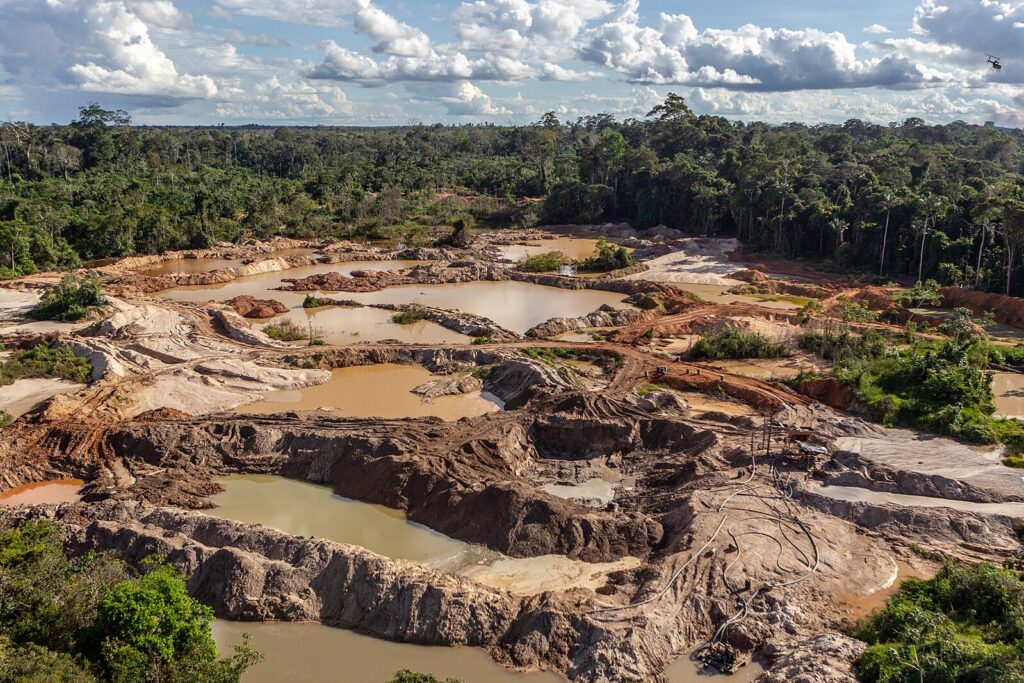
Eco-mafia activity in Latin America inflicts a devastating and multifaceted assault on the region's environment. The environmental crimes associated with these activities include legal transgressions, operating within protected areas and indigenous territories, unauthorised dredging, and altering natural river flows. These actions cause direct physical destruction of ecosystems and diminish the availability of vital natural resources.
Illegal logging caters to a booming international market for valuable hardwoods.Estimatessuggest that up to 80% of logging activities in Brazil and 60% in Peru are illegal. This rampant exploitation translates to land grabs, deforestation, and the decimation of vital habitats - key drivers of biodiversity loss. While Latin America is home to 40% of the world's biodiversity, populations have declined rapidly by 89% since 1970.
Illegal mining operations leave a trail of toxic waste and polluted waterways in their wake. Illegal gold mining is a major concern, accounting for 86% in Venezuela, 80% in Colombia, and 70% in Ecuador. Small-scale, illegal gold mining is the second-largest source of global mercury pollution, releasing tons of mercury into Amazonian rivers and lakes each year. This contamination reaches levels up to 34 times above safe limits, posing a severe threat to aquatic ecosystems and ultimately reaching human populations through the food chain.
Deforestation and forest degradation driven by Eco-Mafia activities surged by 25% in the first half of 2020, significantly contributing to climate change emissions. The continuing loss of vital carbon sinks like the Amazon rainforest weakens the globe’s ability to mitigate climate change impacts, exacerbating extreme weather events.
Source: Vinícius Mendonça/Ibama - Wikimedia
The Environmental Security Landscape
Latin America faces a complex challenge in securing its environment. Peace, development, and security – the cornerstones of any nation – are under threat from the illicit activities of Eco-Mafias. Transnational organised crime thrives on diversification, and Eco-Mafias have capitalised on this trend, exploiting weaknesses in governance, particularly during local conflicts.
Latin America's political volatility and history of conflict create fertile ground for Eco-Mafia activities. Weak governance and instability provide a haven for these criminal groups to exploit natural resources with impunity. This highlights the critical role that combatting environmental crimes plays in preventing and resolving conflicts. Conflict zones, often riddled with corruption and influenced by powerful political and military figures, offer the most lucrative opportunities for Eco-Mafias.
The environmental crimes committed by Eco-Mafias carry a heavy price tag for peace, sustainable development, and security. When these groups operate in fragile regions marked by violence and instability, it presents a critical development challenge. The destruction of ecosystems and depletion of natural resources directly undermines efforts to alleviate poverty - a key socio-political issue across much of Latin America. The cycle becomes self-perpetuating; continued or renewed conflict fuels environmental crimes, further undermining development prospects.
Illegal mining also attracts a constellation of other criminal activities. Slave labour, forced prostitution, and human trafficking become entangled with environmental crimes creating opportunities for violent clashes with local communities who resist. The overall result is a devastating erosion of peace and human security in rural areas with limited governance.
The illicit revenue generated from the exploitation of natural resources is staggering, accounting for nearly 40% of conflict and terrorism financing globally. Even more alarming is the fact that environmental crimes contribute 64% of illicit and organised crime finances. In essence, Eco-Mafias not only promote environmental insecurity, but also pave the way for the emergence of other security threats, such as non-state armed groups and terrorist organisations that exploit environmental crimes for their own nefarious ends.
Conclusion
Latin America's fight for environmental security hinges on dismantling the complex web of Eco-Mafias. Their presence exacerbates existing vulnerabilities, jeopardising the region's pursuit of durable peace, sustainable development, and long-term security. A multi-pronged approach is essential, tackling not just the environmental damage they inflict, but also the underlying social, political, and economic drivers that fuel their activities.
International cooperation, strengthened environmental law enforcement, and investment in sustainable development initiatives offer a path forward. By breaking this destructive cycle, Latin America can achieve environmental security and safeguard its irreplaceable ecosystems for generations to come.
We bring you an interview with Maria Zuppello a Latin America researcher and analyst based in Brazil.
In this interview conducted by Giovanni Giacalone, Dr. Rabiah Ryklief, and Sarah Toubman, Maria Zuppello unpacks the current situation on the ground in Ecuador, as well as the underlying drivers which have contributed to conflict there. Maria looks at the role of Albanian and Mexican gangs in Ecuador, explaining the role these groups have historically and continue to have in the country.
Interviewers: Giovanni Giacalone, Dr. Rabiah Ryklief, and Sarah Toubman - Central & South America Team
Paolo Grassi is an Assistant professor at the University of Milano Bicocca (Department of Human Sciences for Education “R.Massa”).
He has carried out ethnographic research in the Dominican Republic, Guatemala and Italy in the field of urban anthropology, focusing on the relationship between urban space and violence, gangs, youth cultures, and dynamics of socio-economic marginalization.
He was a research fellow at the Politecnico di Milano (2019-2022) and the University of Padua (2017-2019), visiting fellow at the Universidad del Valle de Guatemala (2019), the University of Utrecht (2018) and the Laboratoire Architecture Anthropologie (LAA) de l'École Nationale Supérieure d'Architecture de Paris La Villette (2017).
He has collaborated with the European projects "TRANSGANG: Transnational gangs as agents of mediation", coordinated by the Universitat Pompeu Fabra in Barcelona and "Gangs, Gangsters, and Ganglands: Towards a Global Comparative Ethnography” coordinated by the Graduate Institute of International and Development Studies in Geneva.
He is the author of articles published in national and international journals and four monographs (including “Terreur à Guatemala-ville: Conflits territoriaux, violence et gangs”, L’Harmattan 2018).
Interviewer: Giovanni Giacalone - South America Team
Maria Zuppello talks about Jihad in Central and Latin America, with a particular focus on her book “Tropical Jihad. The crime-terror nexus in Latin America”. Maria Zuppello is a freelancer video journalist who has worked with The Guardian, AFP, AP, The Economist, RSI.
In this session, Maria Zuppello shows the results of her research on tropical jihadism and presents the main arguments of her book “Tropical Jihad. The crime-terror nexus in Latin America”, foreword by Emanuele Ottolenghi. She investigates on the links between jihadist groups and narcotraffickers, as well as on the presence of al-Qaeda and Isis at the Triple Frontier shared by Brazil, Paraguay and Argentina.
Interviewers: Giovanni Giacalone, Marta Pace, Beatrice Tommasi
This is ITSS Verona Member Series Video Podcast by the Central and South America Team.
ITSS Verona - The International Team for the Study of Security Verona is a not-for-profit, apolitical, international cultural association dedicated to the study of international security, ranging from terrorism to climate change, from artificial intelligence to pandemics, from great power competition to energy security.