July 14, 2025No Comments

The last glimmer of democracy extinguished in Mali

By Camilla Biolcati - Human Security Desk

The hope for a political transition toward civilian rule in Mali, already uncertain, now appears increasingly remote. Ranked 9th on the International Rescue Committee's 2025 Emergency Watchlist, Mali, in a national and regional context of profound insecurity and instability, now finds itself on the brink of renewed unrest.

Amid a protracted humanitarian crisis that has plagued the country for decades, recent steps towards the consolidation of military authority have sparked growing discontent among the population, triggering what observers have described as rare and unexpected mass protests. For many Malians already contending with the rising threat of terrorism, forced displacement, economic hardship, and frequent abuses by military forces, the dissolution of political parties is seen as a significant setback for democratic governance and a further postponement of the much-promised return to the ballot box.

Recent developments and the status of political governance

In a series of rapid developments, Maliโ€™s military government appears to be steering the country further away from a possible return to civilian-led governance. On 13 May, through a presidential decree broadcast on national television, General Assimi Goรฏta dissolved all political parties and prohibited meetings between political organizations. The decree also repealed the 2005 Charter of Political Parties, a fundamental document for the country's multiparty system that outlined legal guarantees for party formation, political engagement, and public financing. With its abrogation, This move has raised concerns about the future of political pluralism in Mali.

This decision followed the countryโ€™s first major anti-government demonstrations since the 2021 coup, which erupted on May 3 and 4, 2025. Just days earlier, on 29 April, a national political conference in Bamako, boycotted by all major political parties, named Goรฏta president with a renewable five-year term and called for the dissolution of political parties. Malians took to the streets in a rare act of defiance. The protests were significant, especially given that the 2020 mass mobilisations had paved the way for the first coup of that same year.

That initial takeover ousted President Ibrahim Boubacar Keรฏta, but within a year, Goรฏta had overthrown the transitional civilian leadership, an event widely referred to as a โ€œcoup within a coupโ€. Among the protest movements that had enabled the earlier transition, was the June 5 Movementโ€“Rally of Patriotic Forces (M5-RFP), whose leadership was largely excluded from the first transitional cabinet. In an effort to broaden support, Goรฏta appointed Choguel Kokalla Maรฏga, a prominent M5-RFP figure, as prime minister in June 2021. Yet this quickly proved to be a symbolic and strategic gesture, as Maรฏga had little real power and was eventually removed once his public criticism of the junta intensified.

Maรฏga's criticism focused partly on the lack of clarity around the end of the transition period. This is not the first time political activity has been suspended near the end of a transition period. The last such suspension occurred in April 2024, when the elections scheduled for the beginning of that year were cancelled with the pretext of maintaining public order. This pattern has led to observations that the military leadership may be seeking to extend its tenure by limiting political engagement. Other demonstrations, initially scheduled for Friday 9 May, were postponed after the junta issued a new decree on 7 May suspending all political activities โ€˜until further noticeโ€™.

Humanitarian conditions between conflict, climate, and governance challenges

Over the past five years of military rule, the country has not only continued to suffer from insecurity and instability, but the worsening of the humanitarian crisis has become stark and widely reported by international organisations. Contrary to the juntaโ€™s claims that blame the United Nations peacekeeping mission, MINUSMA, for failures in counterterrorism operations, data from the Armed Conflict Location & Event Data Project (ACLED) and the Global Conflict Tracker indicate that attacks by extremist armed groups have doubled since the junta seized power and international peacekeeping forces withdrew.

The 2025 Global Humanitarian Overview estimates that 6.4 million people in Mali are currently in need of humanitarian assistance. According to the latest Displacement Tracking Matrix, at least 378,000 internally displaced persons (IDPs) were recorded as of September 2024, showing an 84% increase from the previous year. Meanwhile, over 819,000 people are expected to face crisis-level food insecurity between June and August 2025, according to ACAPS. Climate change has further intensified these challenges: in 2024, unprecedented severe floods affected an estimated 370,000 people across the country.

The suppression of civic spaces

The humanitarian situation has coincided with increasing restrictions on political and civil rights. Recent actions, including the dissolution of political parties and suspension of political activity, are part of a broader trend of reduced civic space. Since seizing power, the military authorities have systematically restricted civil liberties by banning protests, there have been reports of pressure and harassement on human rights defenders, journalists, and civil society actors.

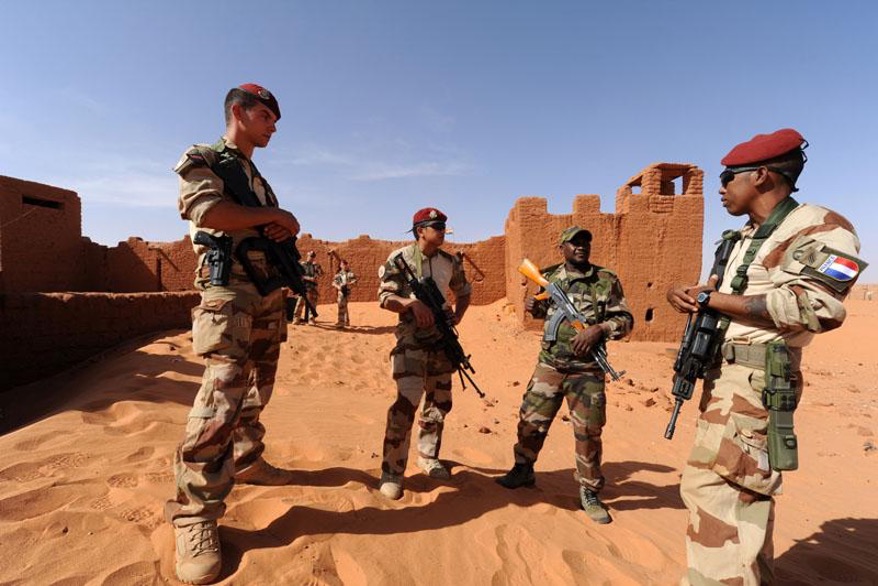
Image by Kaufdex from Pixabay

In 2023, Freedom House classified Mali as โ€œNot Freeโ€, citing serious limitations on political pluralism and civil society, especially due to the country's repeated failure to hold elections, while centralising great power in military hands. The Media Foundation for West Africa reported at least ten cases of harassment or arbitrary arrest of journalists between 2022 and 2024, while Amnesty International, in its latest Annual Report, denounced regular resort to enforced disappearances and unlawful detentions as tools to suppress opposition.

On 9 May 2025, the countryโ€™s media regulatory authority banned the French broadcaster TV5Monde, accusing it of making "defamatory remarks" in its coverage of the pro-democracy protests. This followed similar actions against other international media outlets, such as France 24 and Radio France Internationale (RFI), both of which have long been blocked. Journalists working inside the country face similar repression. Alfousseini Togo, for instance, was arrested in April 2025 after publishing a report critical of the Ministry of Justice. He was charged with defamation, disturbing public order, and โ€œundermining the credibility of the judiciary,โ€ and remained in prison until his provisional release on May 12 2025. According to Human Rights Watch, in June 2024, twelve members of the country's main opposition coalition were arrested. Similarly, in December 2024, Ibrahim Nabi Togola, the president of the opposition party New Vision for Mali, was abducted, as was Daouda Magassa in February 2025 a member of the CMSA (Coordination of Movements, Associations, and Supporters of Imam Mahmoud Dicko), which had been dissolved in March 2024.

Conclusion

The latest actions of General Goita's transitional government have raised concerns about the direction of Mali's democratic framework. In line with broader regional developments across the Sahel, the country's trajectory appears to be moving toward a more centralised form of governance, rather than progressing toward an elected civilian administration.

The political transition once promised to Malians is no longer a possibility under the current regime. As the government strengthens its control, concerns have been raised about the implications for key aspects of human security, including freedom, safety, and dignity. The population faces escalating violence, hunger, displacement and economic hardship with no meaningful democratic avenues left to voice their needs. Mali is not only battling worsening insecurity, but also undergoing a systematic erosion of rights that exacerbates the humanitarian emergency. The country's current trajectory, similar to developments in Niger, for example, reflects a regional pattern of military-led governance that presents complex challenges for addressing the needs of citizens and advancing peace and security. Without sustained engagement from regional and international stakeholders, growing public frustration may be met with additional restrictions, potentially intensifying the crisis and limiting opportunities for peaceful political progress.

January 25, 2024No Comments

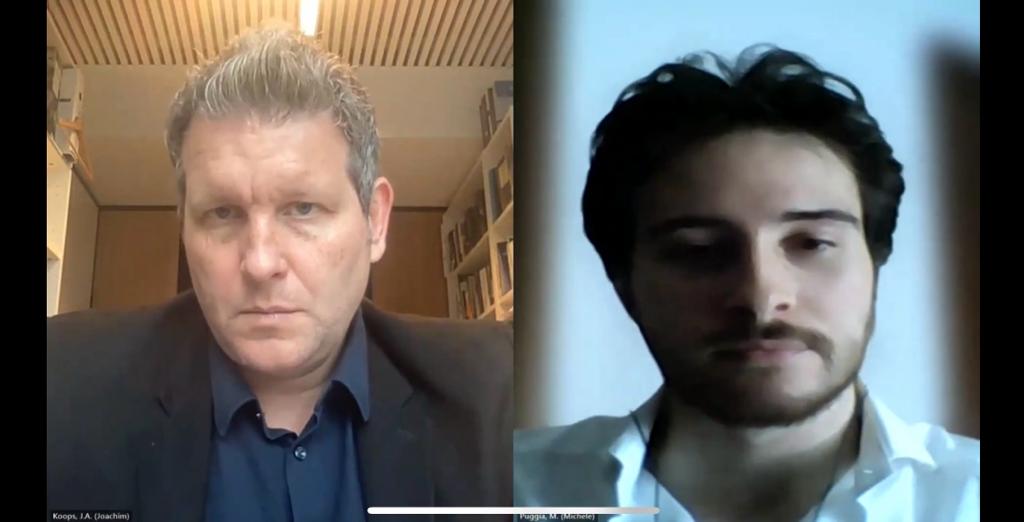
Professor Joachim Koops on the future of international interventions following MINUSMAโ€™s withdrawal

Professor Joachim Koops talks about the prospects for international military interventions in light of the new geopolitical scenario, specifically the closure of the UN mission in Mali. Professor Joachim A. Koops is Chair of Security Studies and Scientific Director of the Institute of Security and Global Affairs at Leiden Universityโ€™s campus in The Hague.

In this session, Professor Koops outlines the factors that led to Maliโ€™s shift from supporting a UN peace mission with high involvement from Western powers to entering the Russian sphere of influence. He highlights how the increased instability in West Africa can be seen through the lens of West-Russia competition and how the war in Ukraine has not particularly influenced NATOโ€™s efforts in its southern flank. He further notes that this will not likely be the end of large-scale UN multi-dimensional peace missions.

Interviewer: Michele Puggia - Military Strategy and Intelligence Team

May 29, 2023No Comments

Mali: the next stage for power competition?ย 

Counterterrorism in the wake of EUโ€™s withdrawal and Wagner Groupโ€™s operations in the country

Authors: Camilla Cormegna and Liz Morรกn - Crime, Extremism, and Terrorism Team

The Sahel: the epicenter of terrorism

The emergence of extremism in the Sahel did not take place in a vacuum. Poverty, unemployment, and weak social infrastructures have fostered local support for extremism groups, as supported by the latest UNDP report. More importantly, two events have also been cited as contributors to the Sahelโ€™s instability and insecurity: first, the disintegration of the Libyan state in 2011, which flooded the Sahel with cheap arms and attracted and stirred up violent religious extremism; and second, the Malian civil war of 2012.[1] A decade forward from these events, the Global Terrorism Index warns that the Sahel has become the epicenter of terrorism, with Mali recording its highest number of terrorist attacks and deaths since 2011. Indeed, home to the worldโ€™s fastest growing and most-deadly terrorist groups, the region now accounts for 35% terrorism-related deaths of the global total of terrorism deaths in 2021, compared with just 1% in 2007. 

Unsurprisingly, such a security challenge has caught the attention of global leaders. In May 2023, Martha Ama Akyaa Pobee, UN Assistant Secretary-General for Africa, warned, in a UNSC and G5 Sahel meeting, that the devastating effects of the persistent destabilization of the Sahel will be felt far beyond the region. Such an understanding also reigns in the minds of European leaders and policymakers, with the Sahel being framed as a security matter to the EU as irregular migration to Europe and violent extremism rose. In this vein, Josep Borrell, High Representative of the EU for Foreign Affairs and Security Policy, stated that โ€œinstability and terrorism in the Sahel directly threaten our security. It is therefore our duty of solidarity, and also in our interest, to stand by the people and countries of the Sahel.โ€ Moreover, key EU foreign policy documents (Global Strategy, 2016, i.e.) have reinforced the โ€œinternal-external security nexusโ€.

Thus far, efforts to curb extremism and terrorism have largely failed, prompting the entrance of new security actors into the region and the departure of French troops from Mali. The entrance of these new โ€œ(in)security providersโ€, however, have not been eagerly welcomed by all actors involved in the region. In such a scenario, the Sahel, and especially Mali, may become an important arena for power competition, as a result of the balancing between Europe, the United States, and Russia. 

Voices have highlighted the importance to rethink the international communityโ€™s approaches to supporting regional security mechanisms. Precisely, this article will reflect both on the EU and Wagner groupsโ€™ counterterrorism efforts, assessing their impact in the region.

A failed โ€˜patchwork of counterterrorismโ€™  

Instability in Mali has been shaped by the socio-political crisis that fed the expansion of terrorist groups. The main movements in the region are the Islamic State in Greater Sahara (ISGS), active since 2015, and Jamaโ€™at Nasr al-Islam wal Muslimin (JNIM), an al-Qaeda-affiliated umbrella group that appeared in 2017. The conflict, however, has been wrongly framed internationally: these groups are not proxies of the global jihad but have sought to exploit the weaknesses of the region and aim at solving local problems through violence. State absence, the fragility of the rule of law, poverty, poor access to justice and basic services are some of the drivers of extremism in Mali, and terrorist groups have successfully recruited from marginalized communities. 

Since 2012, Mali has been defined as a โ€˜laboratoryโ€™ for counterterrorism (CT) interventions, leading to undesired effects on the overall security of the country. The interventions were divided between UN-led peacekeeping operations and France-led military operations based on capacity-building and international and regional cooperation. However, state CT interventions were obscured by human rights abuses. The Malian army adopted Western CT concepts to address the local insurgency issue, pursuing a military-only stance overlooking the root causes of said insurgency, further fueling extremism. National forces have also carried out extra-judicial killings towards the ethnic communities that supported the terrorist groups that offered them protection, fostering grievances against the Malian government and reinforcing the support for insurgency groups.

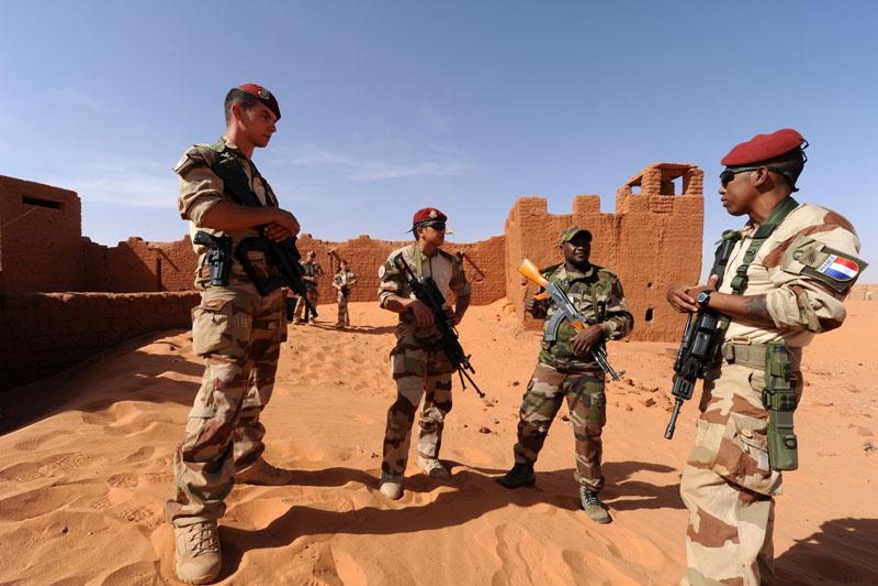
Franceโ€™s CT operations in Mali started after the 2012 coup dโ€™รฉtat. France, thus, developed Opรฉration Serval in 2013 alongside the Malian army, succeeding in ousting Islamic militants from Mali. Then, in 2014, Opรฉration Serval was transformed into Opรฉration Barkhane to permanently eliminate the jihadi threat and train Malian armies. Barkhane was successful in neutralizing several operational leaders of JNIM and ISGS, crippling their capabilities and leading to an overall reduction of large-scale attacks. Still, Barkhane has been accused of strategic ineffectiveness, as France would seem to have made several mistakes that hindered the operation. Indeed, Franceโ€™s indiscriminate attacks on groupsโ€™ leaders made the Malian community distrustful of them. French and Malian authorities overlooked the role played by economic and political factors that allowed jihadists to acquire a secure position within the region and recruit from marginalized communities. It also failed to evolve its responsiveness towards insurrectionโ€™s escalation, which turned into a turf war. The coup de grace was Franceโ€™s disagreement towards Maliโ€™s decision to negotiate with the terrorist groups. This increased the suspicion towards Franceโ€™s motives, as the Metropole allowed negotiations for the release of European hostages while negating cooperation when it came to Malian security. 

Source:ย wikicommons-Opรฉration Barkhane

Consequences

Overall, the potential role of European peacekeeping and CT operations did not bear the anticipated fruit. More CT did not equal more security in Mali, which experienced a surge in internal displacement and humanitarian crisis. Purely military responses have proven to be ineffective at reducing terrorism and have had the opposite result, pushing local populations towards jihadists. European CT strategies have further empowered the Malian junta, accused of human rights abuses as well as corruption, and the local community may perceive European help as complicity. Moreover, CT operations can be fruitful in the short-term but ineffective in the long run if not paired with strategies that target the drivers of extremism, such as socio-economic issues and state absence. Indeed, the โ€œwar on religious terrorismโ€ mentality has diverted attention from governance problems, while the paradigm based on the โ€œterroristโ€ label is problematic because it does not exist in vernacular dialects. For local communities, insurgents are not the main security challenge but armed robbers, cattle thieves, and ethnic tensions. 

Franceโ€™s unwillingness to negotiate with terrorists was the last straw, leading to a deterioration of French-Malian diplomatic and political relationship. The military junta, in power since the 2021 coup, hampered Franceโ€™s operations while anti-Western sentiments exploded in the region and the Wagner Group increased its presence. In 2022, France and the EU halted all capacity-building programmes, with Barkhane coming to an end. They also relocated their military resources to neighboring countries and ISGS took advantage of Franceโ€™s withdrawal. 

The Wagner Group in Africa 

The Wagner Group, a private military contractor, has been expanding its footprint into various African countries, with Mali its most recent conquest, by leveraging โ€œWestern policy missteps, anti-European sentiment, and the long-standing failures of international and local actors to address the root causes of regional instabilityโ€. Russiaโ€™s interests in Africa, however, precede the recent involvement of the Wagner Group: since 2006, Russian President Vladimir Putin has sought to rebuild Russia's presence and influence in Africa. Some argue that it is precisely to achieve such an end that Russia has used mercenary groups to advance Moscow's interests in the region. 

Since its involvement, the Group has been engaging in activities such as leading training exercises, fighting anti-government forces, and suppressing protests. Now, while the Wagner Group often aligns with Russiaโ€™s foreign policy interests, its status as an independent contractor allows it to maintain a level of unpredictability and gives Russia plausible deniability for its actions. This, thus, seems to make the Group a valuable tool in the hands of Russian policymakers to balance Western presence in the region and test new military cooperation environments โ€“without appearing overly involved. 

Some commentators have argued that the partnership between Russian proxies and African governments is not solely the result of major regional disinformation campaigns. Instead, it stems from a conscious decision by African leaders and civil society actors who actively seek cooperation with Russia. In this sense, African states seek greater agency in managing their own affairs, resisting Western imposition and being receptive to narratives against Western colonialism. Russia, thus, has identified a window opportunity and adapted its foreign policy discourse: Russian Foreign Affairs Minister, Sergei Lavrov, remarked that Moscow remains supportive of Africansโ€™ efforts to push back against the West and works with partners in Africa to counter โ€œEuropean colonialismโ€. 

Certainly, the Groupโ€™s involvement in the region is not exempt from criticism. Some argue that Russian forces tend to use Malian soldiers as โ€œcannon fodderโ€, exposing them to greater risks. Others have stated that the group's objective is not to stabilize the countries where it operates, but rather to provide security to several regimes in exchange for access to valuable natural resources. Likewise, it has been said that the Group's presence in Africa is likely to further destabilize the countries where it operates. First, because its transactional relationships with Sahelian governments undermine their legitimacy in the eyes of the population. Second, because the Groupโ€™s approach focuses primarily on providing security through kinetic means, neglecting critical aspects of counterinsurgency, such as strengthening the rule of law and promoting good governance. Indeed, experts have argued that the Wagner Group's approach may have yielded isolated short-term results but has ultimately failed to address the underlying challenges. Moreover, the absence of French airstrikes, which Islamists feared, has emboldened insurgents, leading to a significant increase of violence in Mali. Finally, the Group's human rights abuses contribute to grievances among the population, creating a fertile ground for terrorist groups to recruit new members. Studies have, in fact, shown that the Group engages in high levels of civilian targeting in Central African Republic and Mali, with it accounting for a significant portion of Wagner's involvement in political violence. 

Conclusion

The Malian situation has revealed the insufficient effectiveness of European-led CT to combat local insurgencies. A securitized and purely military approach has shown tactical success and has aggravated the situation by contributing to pushing local marginalized communities into the arms of jihadists. Moreover, the various strategies have been hindered by the unwillingness of local authorities to change their clientele-based political systems. This has opened new opportunities for other international actors such as Russia, which has fueled already existing anti-Western grievances. 

Wagnerโ€™s presence in the region has caused more insecurity but the belief that their aid is contributing to the fight against terrorism is emboldening the current junta. However, it is unlikely that Wagnerโ€™s assistance to the Malian army will be successful in leading a fruitful CT strategy. There is concern that the departure of EU allies could accelere the reconstruction of supply routes and fundings for terrorist groups in the region. Security experts are also concerned about the risk of terrorism spreading over neighboring countries in the Gulf of Guinea which have already been subjected to terrorist attacks attributed to JNIM and other al Qaeda-affiliated groups. The Sahel can be the next arena of competition for power, therefore future CT strategies should address the capacity of Sahelian states through a governance-focused approach and address the drivers of extremism. 


[1] Since the year 2015, Mali has experienced a continued upward trend in terrorist attacks and deaths related to it. This trend began with the 2015 declaration of a state of emergency in the wake of the Radisson Blu Hotel attack in Bamako.

July 15, 2021No Comments

Soumaila Diawara on the Mali crisis and the migration flows in the Sahel

Interviewing Team:ย Rebecca Pedemonte, Alessandra Gramolini, Michele Tallarini

Soumaila Diawara was born in Bamako (Mali). After his graduation in Legal Sciences with a specialization in International Private Law,  he started his career in politics, taking part of the "Solidaritรฉ Africaine pour la Dรฉmocratie et l'Indรฉpendance" (SADI), in which he soon became the leader of the youth movement. In 2012, he was forced to leave Mali as he was accused, along with others, of an attack against the President of the Legislative Assembly. He arrived in Italy in 2014, where he obtained international protection. Today he is still a political refugee. He is, also, the author of two poetry collections: โ€œLa nostra civiltร โ€ and โ€œSogni di un uomoโ€. 

What are the main reasons that push Malians to leave within the migratory flows?

First of all, farmers and fishers find it very difficult to cultivate and fish due to the severe drought and the lowering of the desert. This is also due to pollution and the impossibility for farmers to graze animals quietly. 

Moreover, due to the war situation in northern Mali, the only alternative that many people have , is to leave. Infact, terrorists invaded about 60% of the territory after the fall of the Gaddafi regime; an area three times the size of Italy has been occupied, over 35% of the Malian population.

This situation has resulted in the closure of schools and hospitals for over eight years. Parents are afraid that their children will end up in the hands of terrorists, so they decide to let them go. When you see a parent saying that he prefers his child to die in the sea rather than end up in the hands of terrorists, that means there is no hope left. Or even 13-14-year-old girls, forced by terrorists to marry them, I don't call it marriage; I call it rape.

Another reason why Malians are forced to migrate concerns the chaotic management of the Malian state, which does not give anyone the freedom of expression; otherwise, they are persecuted. Fortunately, those who manage to escape run away. 

There are also many areas where a person can die of malaria, not having 10 euros for treatment, or cannot afford drinking water or two meals a day. People go away to survive.

What role does the Malian state play within these migratory flows regarding Mali as a country of departure and as a transit state? How and to what extent does the political instability in Mali affect the choice to travel?

This instability has a great responsibility in causing the choice of people to leave. The absence of the Malian State has existed for more than thirty years. The State tends not to consider citizens, the conditions in which they live, and their daily life. So when the State fails, people leave to look for a better future. I believe the absence of the State is also a desired condition when it is convenient for the State to maintain a population in poverty and ignorance. Because, when you are hungry, the first thing you think about is finding something to eat, you don't think about politics. Especially when you live in a country where 60% of the population does not have the opportunity to go to school since the State itself does not guarantee access to public schools and healthcare.

More and more policies are created not to give people the opportunity to approach politics and power. Therefore I have always maintained that it is essential when funds are earmarked for the African continent to verify where this money goes. In particular, if they are intended for the people who need them, to build schools or hospitals, to give alternatives, or create projects that can be sustainable and create jobs. Unfortunately, there are many times when this money does not reach people and strangely ends up in Western banks. I have always supported it because I believe it is not just a Malian problem but an international problem.

Nobody likes to die, and therefore, people, having no means to counter corrupt governments, leave. I have always argued that the problem of Africa is not just due to the โ€œwhite man,โ€ but I believe it is due to a system that exploits Africa. And it is the same system that the West controls. Therefore we are an exploited mass, which has the same common goal, even if the exploitation takes place in different ways.

What reasons have contributed to developing and consolidating the migration corridors of the Sahel?

The first reason is that the Sahel is very close to Europe and other countries such as Algeria and Libya, which border the Mediterranean; Spain is also a stone's throw from Morocco. This means that the movements go through the Sahel, even if the people who pass through it also come from other areas of Africa, such as central Africa, which is very far from the Sahelian region.

The geopolitical situation of the region, particularly of Mali, Niger, Chad, and Burkina Faso, characterized by ten-year instability at both the political and security levels, has led to the concentration of migration corridors in this area. I also believe that this is partly due to the negligence and unwillingness to resolve this situation. These problems cannot be diminished and traced back to the military solution alone, as has been done up to now.

Abdelmalek Sayad, in his writing โ€œLa Double Absence. Des illusions de l'รฉmigrรฉ aux souffrances de l'immigrรฉ,โ€ stated that those who migrate live the condition of one who is no longer part of the starting context and is not even part of the arrival context. He, therefore, experiences a double absence in which he feels neither the culture of arrival nor that of the context of origin is his own. Do you share this statement? 

Yes, many people face this situation, which is often also due to the behavior of many individuals within today's society. I have always said that I would have preferred to talk about another culture, different and complementary, but I find myself defending rights more often than not, which I find out of place in this century. From the moment people with a different culture arrive, human curiosity pushes them to go and know this new reality of which they know nothing. But if some people in the country of arrival make those people feel inadequate or not accepted, the only alternative is to cling to their old culture. This causes a mental closure, which does not lead to the opening to the new society of arrival.

I have always believed that it is right to understand that when people with a different culture arrive, one should only open the door and welcome them into society. But when we fail to overcome this wall of fear, a division is created in a useless community. I have always argued that cultures are different but complementary, and learning other things does not change you but instead helps you have more baggage and see the world more broadly. I am always willing to listen to others and learn about other cultures because I know that the world is not limited to Mali or Africa. Still, there is another world outside: although cultural, religious, sexual orientation differences, etc., it is possible to live together peacefully, teaching each other our cultures.