January 9, 2026No Comments

A Year into al-Sharaa’s rule and Sectarian Violence

By Camilla Biolcati - Human Security Desk

One year after the self-proclamation of President al-Sharaa, Syria is taking stock of the new government’s performance. Although the country has not fallen into chaos or civil war, as many feared after the collapse of Bashar al-Assad, it cannot be said that Syria—and above all Syrians—find themselves in a significantly better condition than under the previous dictatorship. If the new president does not ensure security for all Syrians, protecting every minority within the country, this may well mark the beginning of another sectarian-based dictatorship.

From Assad’s Fall to al-Sharaa’s Rise

On 8 December a year ago, after 53 years of Assad's rule, a rebel coalition led by HTS launched an eleven-day offensive that led to the overthrow of President Bashar al-Assad. Leading the rebels was the current self-proclaimed president, Ahmed al-Sharaa of Hayat Tahrir al-Sham—known to most as the former militant al-Jawlani. Over the past year, both his name and his public image have been apparently reshaped. His greatest challenge now is to hold together a country torn apart by civil war and deep internal divisions. HTS itself has fluctuated between affiliation with the Islamic State and al-Qaeda, before shifting from a global jihad ambition to a more local one, driven by nationalist aims and an exclusive focus on Syria, integrating different Islamist movements along the way. From 2017 until last December’s advance on Damascus, HTS positioned itself as the guardian of the Sunni community in Syria against the Alawite regime of the former dictator and its allies. How could such a movement overthrow a dictatorship without letting a deeply fragmented country collapse into chaos under such a slogan? But at the gates of Damascus of Damascus, al-Jawlani chanted: "A Syria for all Syrians.” But has he succeeded?

Syria’s Composition

Syria is described as a mosaic of minorities, with a particularly heterogeneous ethnic-religious composition. A simplified and non-exhaustive breakdown of the country’s main communities shows that around 70% of the population adheres to the Sunni branch of Islam. Approximately 10% are Kurds, the majority of whom are also Sunni. The Alawites, who belong to the Shia branch of Islam, constitute an estimated 10–15% of the population, while Christians of various denominations account for roughly 10%. Among the smaller minority groups are the Druze, who represent about 3% of the population.

What Is at Risk

Rebuilding Syria: pluralism, human rights and the human security challengeDespite the challenges inherited from decades of dictatorship and civil war, al-Sharaa has shown the capacity to pull Syria out of international isolation, attracting investment and recognition. Yet foreign relations and diplomacy are not the only concern. For months, leading Middle East analysts have been watching the fate and security of the population. The foundations on which Syria can—and must—be rebuilt are pluralism, inclusivity, and tolerance, particularly through the protection of human rights. This represents the new leader’s core challenge. Several atrocities have been documented in recent months, with the country’s major minority communities suffering severe attacks and massacres. According to ACLED reporting, around 60% of victims in armed confrontations belong to the Druze and Alawite communities.

March 2025 – The Alawite Massacre

From the day after Assad’s fall, clashes described by the transitional government as “individual cases” of revenge killings against members of the Alawite minority have persisted. Resentment toward Alawites runs high among many Syrians who perceive them as responsible for decades of oppression. Members of this community have repeatedly reported feeling under threat, accusing the new government of being unable—or unwilling—to protect them. Since February 2025, Amnesty International has recorded numerous reports of disappearances, abductions, and kidnappings of Alawite women and girls, calling on authorities to intervene.

Between 6 and 9 March 2025, the deadliest confrontation since al-Sharaa’s rise to power broke out, drawing harsh criticism from the international community and rights organisations. The violence appears to have started with an ambush targeting Syrian security forces and military checkpoints in north-western Latakia province, where government troops had been deployed for a "security campaign aimed at suppressing Assad-loyalist rebels. The government response triggered a cycle of violence which, according to independent Reuters investigations and ACLED data, saw clashes across at least fifty locations in the governorates of Latakia, Hama, Homs, and Tartus. The response was described as brutal and disproportionate: according to an investigative commission, around 200,000 fighters from various military factions were mobilised to the coastal front, resulting in violations, abuses, extrajudicial killings, and disappearances. According to The Syrian Network for Human Rights, the units considered responsible for most killings included two factions previously affiliated with the SNA and under U.S. sanctions for human rights abuses. The confrontation escalated into a sectarian conflict which, according to SNHR and SOHR investigations, caused around 2,000 deaths, mostly Alawite civilians. Subsequent independent investigations, including joint work by Human Rights Watch, Syrians for Truth and Justice,and Syrian Archive, documented, through interviews and verified video footage, the complicity of forces under the Ministry of Defence in the atrocities, humiliation, and reprisals carried out by fighters. Testimonies also pointed to the recruitment of civilian volunteers not associated with militias to join the campaign, further demonstrating the government’s inability, or unwillingness, to control the use of force. Throughout these events, al-Sharaa continued to call for national unity, promising the creation of an independent committee to investigate civil rights abuses and identify perpetrators. Initial findings, however, claimed that military commanders had not ordered violations, fueling anger among the Alawites. The UN Commission of Inquiry on Syria later recognised the involvement of segments of interim government forces and urged authorities to identify and prosecute those responsible.

July 2025 – Sectarian Violence in Suwayda

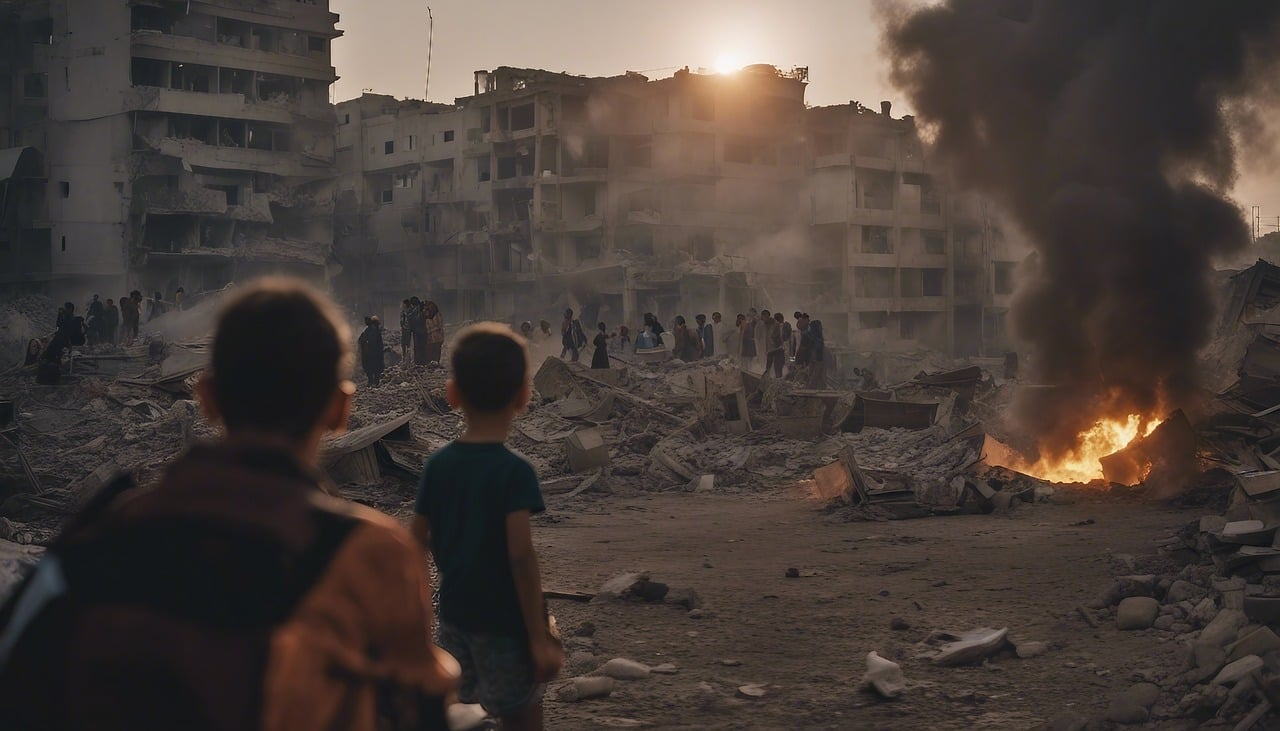
Only a few months later, in July 2025, another major eruption of violence broke out in the southern province of Suwayda, involving the Druze minority and Bedouin armed groups reportedly supported by government forces. The escalation followed months of latent tensions and clashes, which, according to ACLED, amount to nearly 133 recorded incidents between January and July 2025. On 13 July, after a wave of retaliatory kidnappings between Druze and Bedouin tribes, violence intensified dramatically. In just two weeks, reports documented 95 incidents, more than 800 casualties, and hundreds of displacements. Government forces intervened, claiming to be restoring order, but the operation instead deepened insecurity within the Druze community, which accused the military of taking sides with Bedouin groups. In the aftermath of the first ceasefire, Al-Sharaa himself publicly praised Bedouin involvement in restoring calm in the southern province against outlaw armed groups, a statement that sparked strong feelings of injustice within the Druze community and renewed fears of being not only unprotected by the state, but also directly targeted. Video and photographic evidence also suggests the involvement and incitement of hatred by transitional government forces against the Druze community.

This intervention is part of a strategy aimed at centralising state power and challenging local militias and governorates in Syria that want to preserve their autonomy. In March, the president signed a temporary Constitutional Declaration that immediately drew criticism and concern from the country's minorities because it did not reflect ethnic and religious diversity or the autonomy of the country's numerous governorates. In light of this, it is clear that abuses, reprisals and violations of humanitarian law are distancing President Al-Sharaa from his goal of unifying Syria into a free and safe Syria for all and winning the trust of its citizens.

Photo by mohamad alshaekh yosef - pexels.com
The need for Justice, and Minority Protection: Syria’s Crossroads

These two major episodes of violence—along the coastal region and later in Suwayda—serve as stark warning signs of the concrete risks posed by the transitional government’s current security approach for civilians, particularly minority communities. Syria remains a deeply fragmented society, where the idea of centralised authority recalls patterns of oppression typical of the previous dictatorship. It is therefore unrealistic to assume that regime change, especially if it brings a specific niche to power, would not provoke fear and insecurity among those who could once again be marginalised and oppressed. Analysts observing Syria’s fragile transition have repeatedly highlighted this dynamic.

The core challenge for the government of transition is to demonstrate the political will and capacity to integrate all of Syria’s diverse social, ethnic, religious groups into the political and security architecture of the state.Without an inclusive governance and security framework, existing sectarian rifts are likely to deepen rather than heal. Observers have stressed that prioritising domestic credibility and reducing sectarian tensions are essential if the transitional authority is to build trust across the population. Minority inclusion has internal and external dimensions: internally, ending cycles of revenge violence and ensuring accountability are crucial to preventing further retaliation and mistrust; externally, it is important to recognise the risk of regional powers exercising influence at the expense of minority communities.

In conclusion, despite the establishment of commissions tasked with judging and prosecuting violations committed during the Assad era and the massacres of recent months, these bodies have so far proved ineffective and inconsistent, making it necessary to guarantee transparency and impartiality in future trials. An accountable transitional justice mechanism is essential to overcoming the trauma of centuries of abuse and to laying the foundations for reconciliation and, potentially, peace. Secondly, the development of a decentralised and pluralistic security system, as recommended by experts, would help mitigate the risk of further clashes such as those in March and July 2025 and could provide a more solid basis for national reconciliation. Finally, greater political integration, including all minorities within the governmental and constitutional structures of the country, must be accompanied by recognition of the need for decentralisation and a degree of autonomy for minority groups.

April 6, 2024No Comments

Discrimination and the right of a people to self-determination: UN Charter and UniversalDeclarationof Human Rights

Author: Alessandro Peluso - Human Rights Team

Introduction

The humanitarian crisis unfolding in the Middle East, in the Palestinian Territories, is among the most serious in the history of the Mediterranean.

The coexistence of different peoples with different cultures, customs and religious beliefs has accompanied the history of all civilisations that have settled along the shores of the Mediterranean Sea, yet the conflict between the State of Israel and Palestine seems far from seeing a resolution, due to the diplomatic inability of the Western and Eastern blocs to intervene decisively and put an end to a suffering far from the standards of the contemporary world.

The International Court of Justice, whose jurisdiction is recognised by Israel, is examining the case, raised and brought before the court by South Africa, about the possibility of genocide against the Palestinian people at the hands of the State of Israel. However, since this is an open case that will take a long time to see a ruling clarifying the nature of military and non-military operations in the Gaza Strip and the West Bank, the focus in this article will be on the rights of a people, a topic that applies to many other cases of possible persecution of entire populations in other continents,  such as the case of Rohingya and Uyghurs people in Asia.

United Nations Charter and Universal Declaration of Human Rights

It is worth reiterating that the Universal Declaration of Human Rights (UDHR) sets out fundamental rights that should serve as a beacon for action by any individual and State. Articles 1, 2, 3 and 5 lay down principles specific to the human being, understood as an equal and free subject, whose identity must not be a reason for discrimination of any kind; and whose person must not be subjected to inhuman treatment.

For the purposes of this discussion, it seems natural to follow the benchmarks of international law and the commitment made by States. For these reasons, reference should also be made to the UN Charter, which should be read in conjunction with the UDHR in order to get a full understanding of the premises.

Article 1(1) of the UN Charter states that “[The purpose of the United Nations is] to develop friendly relations among nations based on respect for the principle of equal rights and self-determination of peoples, and to take other appropriate measures to strengthen universal peace”.

State recognition and peoples’ rights

At first reading, it is plausible to think that this is a principle that applies to States only, as legal subjects, and in particular to contracting states, (i.e. those that are members of the United Nations). However, not only it applies to contracting States, which have agreed to follow the dictates of the signed papers in the broader context of international relations, but it also serves as a general principle of conduct of peoples and States towards peoples and social groups. After all, International Law is based upon customary law, which also benefits from the signature of documents such as the UDHR or the UN Charter.

This detail is crucial to observe with the right lens the dynamics of any case to be analysed, such as that of the Palestinian people. The Palestinian Territories are recognised as a state in fact by a limited number of States, be it for political or legal reasons. According to international law, in fact, recognition is not a necessary and determining factor for a State to be considered as such; however, it is a very important factor on a political level, as it lays the foundations for diplomatic relations between states. Such a point has been long discussed in doctrine, having jurists and scholars debating whether recognition is required (Constitutive Theory) or not (Declaratory Theory). Notably, the latter argument is supported by the Montevideo Convention (1933), which Article 3 establishes that: 

The political existence of the state is independent of recognition by the other states. Even before recognition, the state has the right to defend its integrity and independence, to provide for its conservation and prosperity, and consequently to organize itself as it sees fit, to legislate upon its interests, administer its services, and to define the jurisdiction and competence of its courts. The exercise of these rights has no other limitation than the exercise of the rights of other states according to international law”.
Source: author safary248 - Pixabay

A State is then considered as such if it has control over an inhabited territory and is endowed with autonomous governing institutions, so that it can effectively exercise its sovereignty over the territory. It also means that the State is enabled to exploit the natural resources of its territory, and to provide services to the citizenry, as the population obtains the citizenship of the State to which it belongs.

Conclusion

One therefore gets the impression that the persecution to the detriment of minority populations may be primarily of a political nature. There is no valid reason for differences between peoples to lead to a sharp division between ethnic groups, and States, which enjoy a strong position concerning minorities, should be reminded of the principles of fundamental human rights. Diplomatic action must be incisive in this regard, because a clear-cut Western and Eastern stance on such issues can change the fate of peoples who are suffering countless casualties and seeing their rights denied.