With a PhD from the European University Institute and extensive expertise in foreign policy analysis, EU-Russia relations, democratisation, and European security, Dr Giusti sheds light on how cultural heritage is being weaponised in the war in Ukraine. The discussion covers Russia’s policies before and after the invasion, deliberate targeting of heritage sites, the trafficking of stolen cultural items, their use in sanctions evasion, and strategies to counter these hybrid threats.
Interviewers: Julia Hodgins and Francesco Pagano - Culture, Society & Security Desk
By Alessia Maira and Francesco Pagano - Culture, Society & Security Desk
Disclaimer: This article edited by Alessia Maira and Francesco Pagano, draws directly from findings of the project “Contemporary Patterns of Terrorist Threats Targeting Cultural Heritage - Mapping Drivers and Trends of Terror Crimes against Cultural Heritage” The text below reflects key insights, data, and recommendations outlined in the report, recently released _[See document]_ offering a synthesised and accessible overview for a broader audience.
Introduction
In recent decades, the protection of tangible cultural heritage has garnered increasing international attention, not only as a matter of historical preservation but also as a pressing political and legal concern. From the looting of ancient artefacts, to the deliberate destruction of monuments during armed conflict, cultural heritage is under threat on multiple fronts. These acts are not only symbolic, as they often represent deeper efforts to erase collective memory, weaken identities, and fund criminal or extremist activity.
Amidst efforts to protect cultural heritage, the challenge of prosecution and jurisdictional issues exacerbate the already complex environment of international and domestic heritage conservation and protection. The global nature of cultural heritage crimes, including trafficking, looting, terrorism, and destruction, further complicates the legal landscape. While the international community has made efforts to address these challenges through conventions and agreements, such as the UNESCO 1970 Convention on the Means of Prohibiting and Preventing the Illicit Import, Export and Transfer of Ownership of Cultural Property and the UNIDROIT 1995 Convention on Stolen or Illegally Exported Cultural Objects, the implementation and enforcement of these agreements vary widely among signatory states, leading to inconsistent levels of protection and prosecution. In many countries, inadequate legal frameworks struggle to keep pace with the continuous threats, leaving cultural heritage even more vulnerable. Differing national laws and enforcement mechanisms can hinder cross-border cooperation in prosecuting offenders and repatriating stolen artefacts. One prominent example is the difficulty in prosecuting traffickers of looted antiquities, as the illicit trade in cultural heritage often involves complex networks of smugglers, dealers, and buyers operating across multiple countries, platforms, and jurisdictions. This fragmentation renders tracing the origin of looted items and holding perpetrators accountable extremely difficult. Legal loopholes, varying security priorities, corruption, and insufficient penalties in some jurisdictions may fail to effectively deter criminal activities.
Barriers to the prosecution of cultural heritage crimes
Prosecuting individuals involved in cultural heritage crimes poses significant challenges, especially in active war zones. These crimes, which as mentioned include the deliberate destruction of cultural sites, the illicit trafficking of artefacts, and looting, are committed by various actors, including terrorist organisations, insurgent groups, and opportunistic criminals. The seriousness of such offences lies in their impact on the collective identity, history, and values of affected communities. However, achieving successful investigations and prosecutions remains difficult, owing to multiple factors.
Firstly, the complexities of gathering evidence in conflict zones are the most relevant issue. War-torn areas are often inaccessible, making it difficult and extremely unsafe for investigators to collect physical evidence or conduct thorough site inspections. Additionally, the chaotic nature of active conflict zones means that evidence could be easily hidden, tampered with, or destroyed, complicating efforts to build a solid case. Secondly, the investigation of cultural heritage crimes remains insufficient and often deprioritised. Such failures can be attributed to limited resources and expertise dedicated to these cases, sometimes combined with a lack of evidence. Law enforcement agencies and judicial bodies prioritise other pressing issues, such as immediate threats to human life and national security, leaving cultural heritage protection under-resourced.
Trafficking networks and the demand-side of tangible artefacts
The threats faced by cultural heritage are primarily demand-oriented. This demand prompts the formation of creative and discrete networks through which objects are smuggled out of their home territory into the hands of private collectors. The methods and players involved in those collections are diverse. Looters could be terrorist groups like ISIS, organised criminal gangs, or traffickers, helped by facilitators (e.g., unaware or corrupt law enforcement officers who do not prioritise cultural heritage removal and smuggling). Nonetheless, they effortlessly find markets, not only due to the pre-existing demand for these artefacts but also through easily accessible platforms such as eBay and other online marketplaces. These channels, often lacking strict oversight, facilitate the discreet sale of looted items to unsuspecting or complicit buyers. Looted items are smuggled into private collectors’ hands through traffic networks, freeports, and porous borders. Underlying motivations for engaging in the looting and destruction of cultural heritage are often opportunistic, driven by factors such as terrorism, political instability, inadequate legislation, lack of policy prioritisation, or the need to fund political causes and alleviate economic hardship.
The way forward
Addressing the intricate issues surrounding the prosecution, regulation, and jurisdictional challenges in cultural heritage protection necessitates a multifaceted approach. While international conventions like the UNESCO 1970 Convention and the UNIDROIT 1995 Convention lay essential groundwork, their implementation and enforcement remain inconsistent across signatory states. This inconsistency undermines the efficiency of protective efforts, highlighting the imperative to strengthen legal frameworks at both the national and international levels, particularly given the dynamic, transnational nature of cultural heritage crimes and the heightened impact of cyberspace. The complex and fragmented networks involved in the illicit trade of cultural heritage objects demand more robust cross-border cooperation, including harmonised legal frameworks, improved information sharing, and coordinated law enforcement activities. For instance, the difficulties in prosecuting traffickers of looted antiquities often stem from varied national laws and enforcement mechanisms, which impede effective cross-border action. Addressing these discrepancies through stronger international partnerships and agreements can significantly improve the efficacy of global heritage protection efforts.
Pixabay image by Nguyen Hoang Thach
Finally, addressing the demand side of the illicit trade in cultural heritage is essential. Implementing stricter regulations on the procurement and sale of cultural heritage objects, coupled with robust monitoring and enforcement mechanisms, could deter demand, and thus illegal trade. Additionally, promoting research and public awareness about the ethical implications of acquiring looted artefacts could reduce the demand. Education campaigns aimed at collectors and institutions about the provenance and legality of cultural items can play a significant role in curbing the market for illicitly obtained artefacts.
In conclusion, the protection of cultural heritage against illicit trade and destruction requires comprehensive legal reforms, international cooperation, active participation from civil society, and stringent regulation of the demand market. By addressing these multifaceted challenges through a coordinated approach, significant progress can be made in safeguarding the world's tangible cultural heritage for future generations.
Between the end of 2018 and the beginning of 2019, the debate on cultural decolonization processes resumed. This is an expression by which we mean the return, to the countries of origin, of works of art and objects stolen in times of conquest or colonialism. With increasing insistence, there has been talk of ways, laws and times for returning works preserved in Europe to their countries of origin.
The protection of African cultural heritage
Almost 90% of Africa's heritage is outside the continent, in particular, 80-90% of it can be found in European museums. African countries have had to face the problem of the removal of cultural properties from the continent to other parts of the world over many decades and perhaps centuries. The end of colonization has witnessed the repatriation of cultural objects from the colonial powers to the colonized countries. Examples include return of objects by Belgium to Democratic Republic of Congo, by the Netherlands to Indonesia, and by Australia and New Zealand to Papua New Guinea. The process involved in the restitution of cultural properties is usually difficult and long. Negotiation for the return of the Makonde Mask to Tanzania, for example, lasted 20 years. While other stolen memorials were returned to Kenya from the United States after 22 years. After almost 70 and 30 years Rome returned the Obelisk of Aksum to Ethiopia, and the Monument to the Lion of Judah.
Africa’s cultural heritage has attracted and will continue to attract great interest from all over the world. Each Member State needs to have a national strategy that needs to be integrated as well in new opportunities for international cooperation.
Changing mindsets throughout Europe
In recent years it is possible to find a strong global debate about the rightful place of cultural objects. One after another Western countries began to announce the return of cultural property to the countries of origin. Just a few months ago there was the return to Ethiopia of ten important artifacts from the Battle of Maqdala, looted by British troops during the punitive expedition in 1868. Governments themselves are starting to take actions regarding the matter of long-ago acquired artifacts, many of which are now held in public museums. Nanette Snoep, anthropologist and curator from the Rautenstrauch-Joest-Museum in Cologne, said, “museums and politicians have become aware of the fact that it is really necessary to decolonize museums, and decolonizing also means restitution.”
United Kingdom
Last summer, the British Scheherazade Foundation got the Maqdala artifacts back and handed them over to the Ethiopian ambassador to the UK. The list of artifacts includes a handwritten Ethiopian religious text, crosses, and an imperial shield. They represent only a small part of the many precious Ethiopian objects that the English army stole after the Battle of Maqdala in 1868. The ambassador Teferi Melesse, during the restitution ceremony declared that Maqdala was still an open wound for them. The Maqdala objects, treasures, or artifacts represent a possibility for the Ethiopians to mourn and process what they lost. Also in a statement, Alula Pankhurst, a member of Ethiopia’s National Heritage Restitution Committee, calls the objects’ restitution the “single most significant heritage restitution in Ethiopia’s history.”
Germany
In April this year Germany reached a deal to return to Nigeria Benin Bronzes next year. These ancient works of art were looted in the 19th century and are currently on display in German museums. The developments in recent months are themselves the cumulative result of many years of difficult discussions and negotiations. The first formal request for the return of artifacts looted during the 1897 raid was made in 1936 by the Oba of Benin. The Benin Court and the Nigerian government then sought to secure the return of the Benin antiquities on various occasions since Nigeria's independence in 1960. In 2010 a multilateral international collaborative working group, known as the Benin Dialogue Group, was formed. The members are representatives of Western museums together with delegates of the Nigerian Government, the Royal Court of Benin, and the Nigerian National Commission for Museums and Monuments. Its objectives are cooperation between museums that possess Nigerian cultural heritage in Western countries and the return of illegally obtained works of art, including the Benin Bronzes.
The engagement of these entities have been really important in the context of recent events.
In 2019, during a meeting of the group, the members decided to plan the establishment of a new museum to house the Bronzes. After this the Legacy Restoration Trust was founded to develop the new museum, the Edo Museum of West African Art. It has the goal to highlight, rediscover and protect the history and the cultural heritage of West African culture. So for now the German government and the Nigerian National Commission for Museums and Monuments have signed a memorandum of understanding for the restitution of the artifacts of the royal palace of Benin. The agreement provides for the signing of a contract to be signed by the end of the year. It will transfer ownership of the Benin bronzes from German museums to Nigeria in the second quarter of 2022.
France
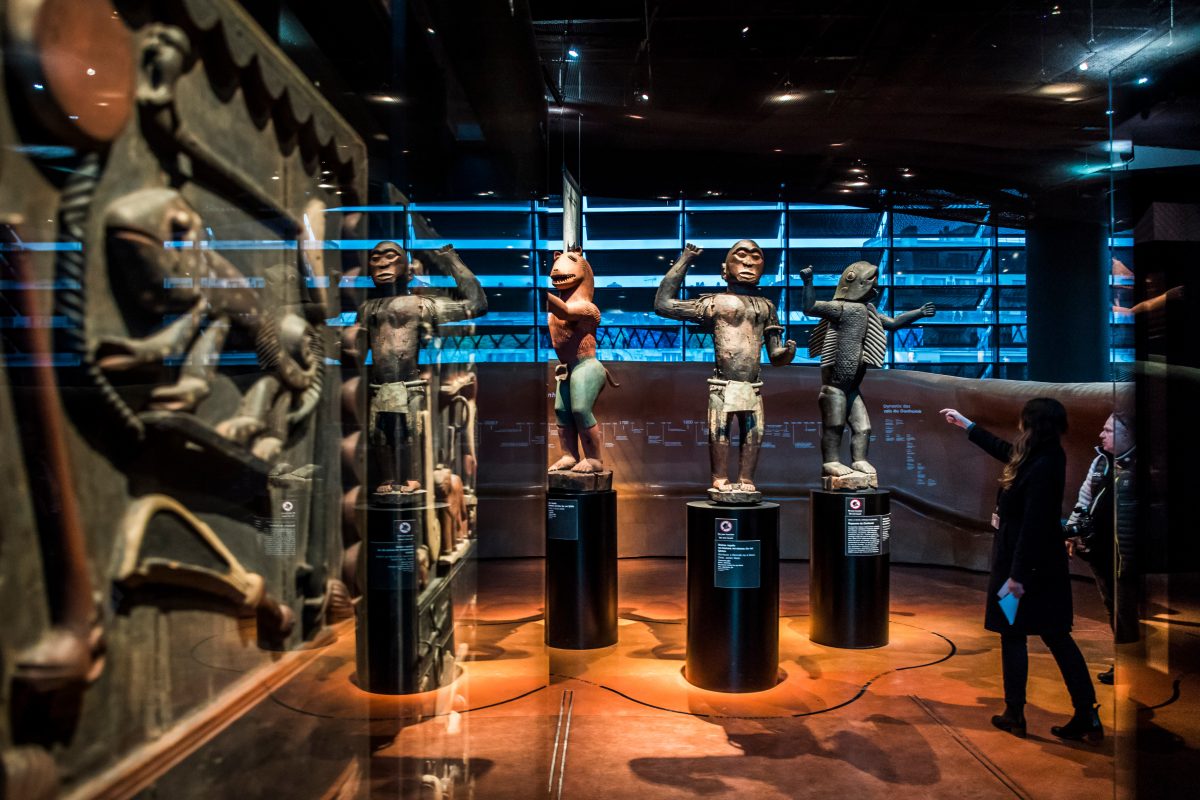
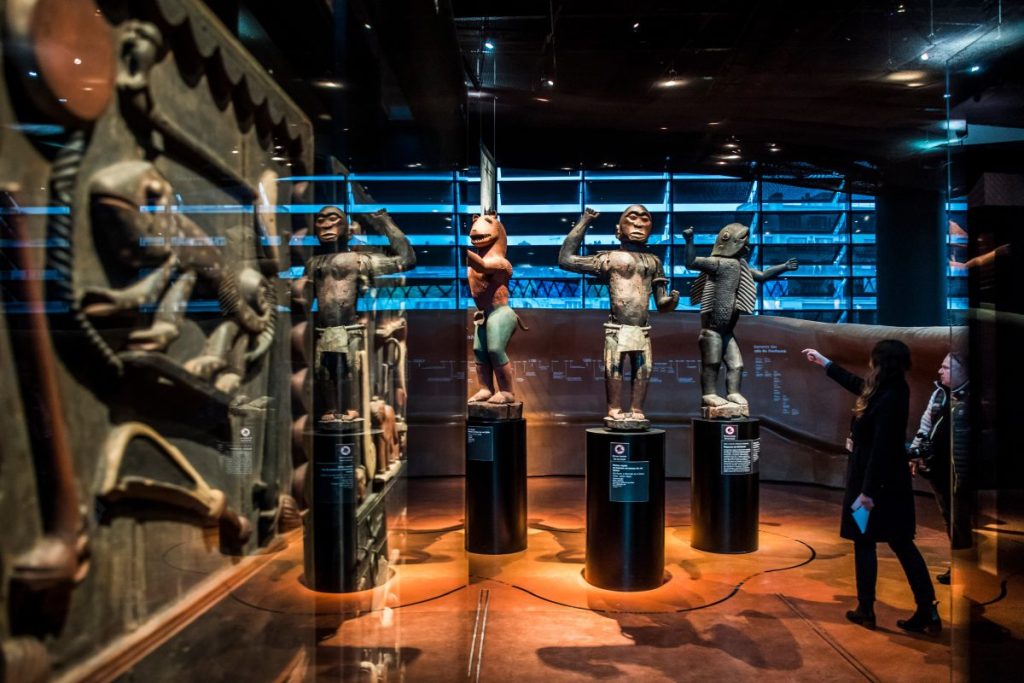
In 2017, French President Macron, during a visit to the Ki-Zerbo University of Ouagadougou (Burkina Faso), declared his commitment to make possible, within five years, the conditions for the temporary or permanent restitution of African heritage in France. This led to the report by Felwine Sarr and Bénédicte Savoy who, on the official request of the president, on 23 November 2018 presented a long report on the French government's decision to return the works claimed by the Benin authorities. To make refunds possible, the French Parliament approved a law on 24 December 2020 that allows for derogations from the principle of inalienability of objects that are part of state collections. Underlying this commitment is the idea that Africans should have access to their heritage in Africa. The 26 objects from the royal treasures of the Danhomé kingdom and taken by the French during the Benin colonization war of 1890-1894 were on display at the Musée du Quai Branly in Paris for a week, from 26 to 31 October. They have now been officially returned from France to Benin. The return of the works to Benin represents an important precedent that could soon lead to the conclusion of new returns from other European countries and beyond.
Restitution step by step
The hope is that this trend will continue in order to focus more on this form of decolonization, and this regardless of the requests for restitution by the countries of origin. It is not just a question of returning artifacts, but rather of recognizing the fact that countries, regions and communities of origin have the right to manage and preserve these artifacts. For all the parties involved it is a question of working in favor of a new shape and a new orientation of the museum, which is more permeable to external interest groups and which takes on wider social functions. To achieve this, close collaboration, exchange and knowledge transfer in both directions are required.